
Rainy Season
From October to April, expect heavy rainfall and humidity.

Travel guide
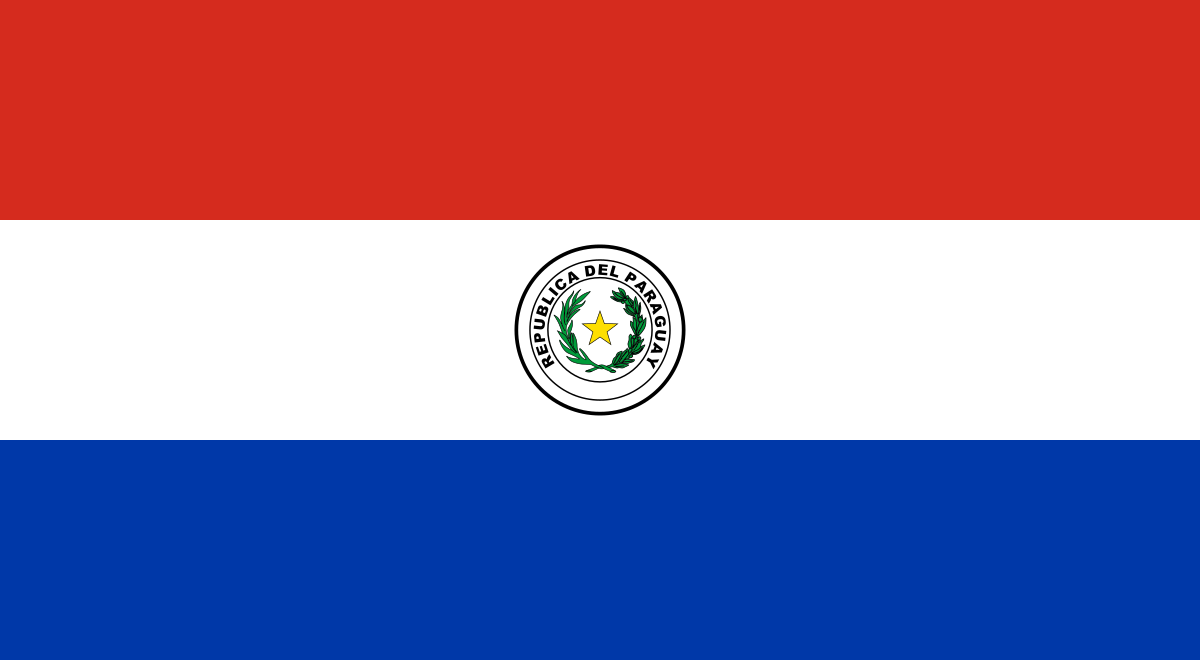
Paraguay, a landlocked country in South America, offers a rich tapestry of culture, history, and natural beauty. Beyond its capital, Asunción, visitors can explore vibrant cities, lush landscapes, and indigenous heritage.
Greg Schechter from San Francisco, USA · CC BY 2.001
The best time to visit Paraguay is during the cooler months from May to September, when temperatures are more comfortable for outdoor activities.
From October to April, expect heavy rainfall and humidity.
From May to September, enjoy cooler temperatures and less rain.
March and October serve as transitions between wet and dry seasons.
02
Pick the neighbourhood by how you want the day to start and end, not by distance to one museum.
The capital city offers a mix of modern and colonial architecture, parks, and cultural sites.
Busy urban environment.
Known for its beautiful waterfront and vibrant nightlife, it's a great spot for relaxation and entertainment.
Can be crowded during festivals.
A bustling trade city near the border with Brazil, famous for shopping and the nearby Itaipu Dam.
Busy with tourists and locals.
A charming town surrounded by nature, ideal for outdoor activities and exploring local culture.
Quieter than larger cities.
Located in the northern region, it offers a glimpse into traditional Paraguayan life and access to the Pilcomayo River.
Limited tourist infrastructure.
A border town with a lively atmosphere, known for its markets and cultural exchanges.
Can be hectic at times.
A popular summer destination with beautiful lakes and recreational activities.
Best visited in summer.
A small town known for its artisanal pottery and proximity to the Ypacaraí Lake.
Less touristy, more authentic.
03
Everyday food, eaten the way locals do. Look for a busy place rather than a ranked list.
A traditional cornbread made with cheese and onions, found in local markets and restaurants.
→ Try it at family-run eateries.
Breaded and fried meat, often served with rice or salad, available in many local diners.
→ A popular comfort food.
Cheese bread made from manioc flour, commonly sold by street vendors.
→ Perfect for a quick snack.
A fish soup made with local river fish, typically served in coastal towns.
→ Best enjoyed fresh.
A traditional herbal drink made from yerba mate, enjoyed cold, widely available in social settings.
→ Join locals for a shared experience.
Coconut drink popular in the coastal regions, often found at beachside stalls.
→ Refreshing on hot days.
04
An order that works on foot, with the trip out of the first city at the end.
One of the largest hydroelectric dams in the world, located near Ciudad del Este.
A UNESCO World Heritage site showcasing Jesuit missions from the 18th century.
A monument dedicated to Paraguay's national heroes, located in Asunción.
A picturesque lake popular for water sports and relaxation, near San Bernardino.
The remains of a Jesuit mission, offering insight into Paraguay's colonial history.
A large park in Asunción, perfect for picnics and outdoor activities.
A national park with diverse wildlife and hiking trails, located in the north.
The presidential palace, an architectural gem in Asunción.
Showcases Paraguayan art and culture, located in Asunción.
A historical fort offering views of the Paraná River.
A stunning waterfall near Ciudad del Este, perfect for nature lovers.
Another UNESCO site, known for its well-preserved Jesuit ruins.
A beautiful garden and zoo showcasing local flora and fauna.
A national park known for its wildlife and conservation efforts.
The main cathedral of Asunción, an important religious site.
A museum dedicated to Paraguayan art and crafts, located in Asunción.
05
Airport to city, across the city, and onward to the next region.
The main airports are Silvio Pettirossi International Airport (ASU) in Asunción and Guarani International Airport (AGT) in Ciudad del Este.
Buses connect major cities and towns, providing an affordable way to travel across the country.
Available in urban areas, offering convenient transportation options.
For longer distances, domestic flights can save time and provide scenic views.
06
Type C and Type I plugs are used in Paraguay.
The local currency is the Paraguayan guaraní. Credit cards are accepted in many places, but cash is preferred in smaller towns.
Tipping is appreciated but not mandatory; rounding up the bill is common.
Spanish and Guaraní are the official languages. Basic Spanish phrases can be helpful.
A travel eSIM covers maps and tickets after landing, ensuring connectivity.
A week is ideal to explore the main attractions and experience local culture.