
Dry Season
The dry season lasts from May to October, offering pleasant weather for outdoor activities.

Travel guide
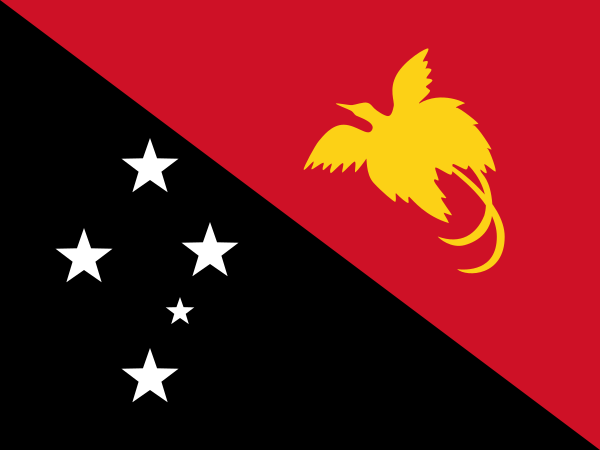
Papua New Guinea is a diverse country known for its rich cultural heritage, stunning landscapes, and vibrant marine life. Beyond the capital, Port Moresby, the country offers a plethora of experiences ranging from traditional festivals to breathtaking hikes.
http://veton.picq.fr · CC BY-SA 3.001
The best time to visit is during the dry season from May to October when the weather is cooler and less humid.
The dry season lasts from May to October, offering pleasant weather for outdoor activities.
The wet season runs from November to April, characterized by heavy rainfall and humidity.
Various cultural festivals occur throughout the year, showcasing the rich heritage of the country.
02
Pick the neighbourhood by how you want the day to start and end, not by distance to one museum.
The capital city offers a mix of urban amenities and cultural experiences.
Be cautious of your surroundings.
Known for its beautiful coastline and diving spots.
Ideal for water sports enthusiasts.
Famous for its vibrant cultural festivals and highland scenery.
Visit during the annual cultural show.
A gateway to the beautiful islands and WWII history.
Explore the nearby volcanic landscapes.
The second-largest city, known for its markets and industry.
Experience local life in the markets.
A historic town with stunning views of volcanoes.
Check out the local museums.
Famous for its fjords and diving opportunities.
Great for eco-tourism.
Home to the Goroka Show and beautiful highland scenery.
Plan your visit around the festival.
03
Everyday food, eaten the way locals do. Look for a busy place rather than a ranked list.
A traditional dish made with meat and vegetables cooked in an underground oven. Look for it at local festivals.
→ Try it at cultural events.
A sweet potato dish often served with fish or meat. Found in highland markets.
→ A staple in the highlands.
A starchy food derived from the sago palm, often served with fish. Available in coastal areas.
→ A unique local delicacy.
A fresh fish salad with lime and vegetables, popular in coastal regions.
→ Best enjoyed at seaside eateries.
A root vegetable often boiled or roasted, found in local markets.
→ Try it with coconut milk.
Chicken cooked in bamboo tubes, a traditional cooking method. Look for it at local gatherings.
→ A must-try for meat lovers.
04
An order that works on foot, with the trip out of the first city at the end.
A famous trekking route with historical significance.
The highest peak in Papua New Guinea, offering stunning views.
Spectacular fjords known for diving and snorkeling.
An active volcano with historical sites and stunning views.
Showcases the rich cultural heritage of Papua New Guinea.
A beautiful island perfect for relaxation and marine activities.
An annual cultural festival showcasing traditional dances and costumes.
Known for its unique cultures and traditional art.
A serene lake surrounded by lush rainforest.
A small coastal town known for its natural beauty.
A sanctuary for native flora and fauna.
A lodge offering birdwatching opportunities in the highlands.
05
Airport to city, across the city, and onward to the next region.
Domestic flights connect major cities and remote areas.
Ferries and boats operate between islands and coastal towns.
Road conditions can vary; 4WD vehicles are recommended for rural areas.
Limited public transport options are available in urban areas.
Walking is a great way to explore local markets and towns.
06
Type I plugs are used in Papua New Guinea.
ATMs are available in cities, but carry cash in rural areas.
Tipping is not customary but appreciated for good service.
Tok Pisin is widely spoken, along with English and Hiri Motu.
A travel eSIM covers maps and tickets after landing.
A trip of at least 10 days is recommended to explore various regions.
Maps, ferries and tickets are easier with data as soon as you land.