
Spring
Spring brings mild weather and blooming landscapes, making it ideal for outdoor activities.

Travel guide
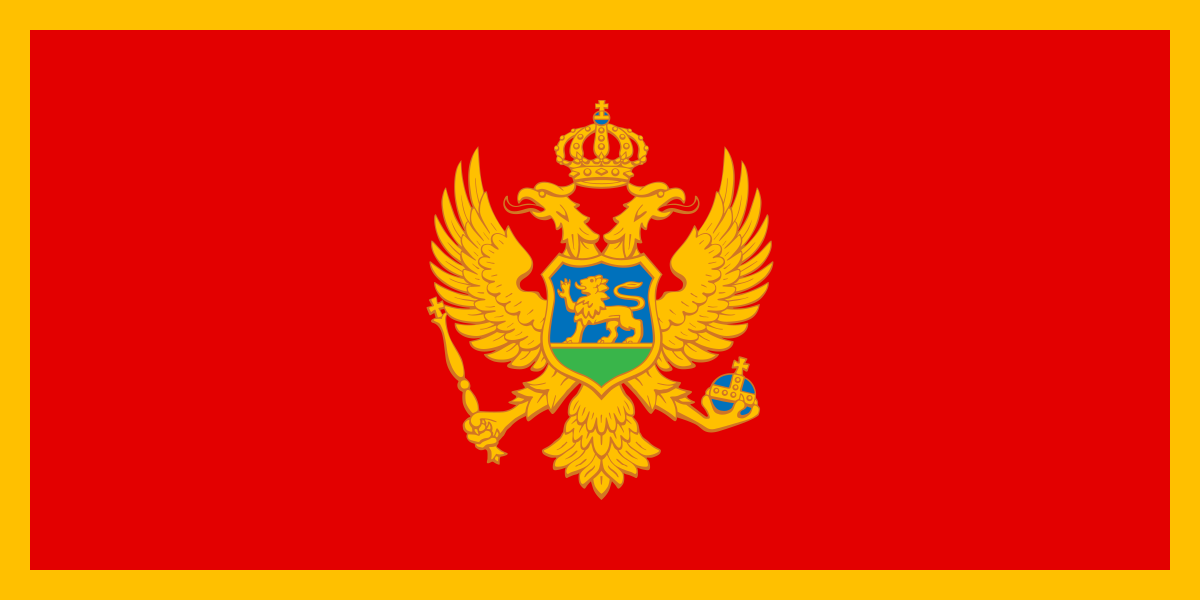
Montenegro, a stunning Balkan gem, offers breathtaking landscapes, rich history, and vibrant culture. From the dramatic mountains to the serene Adriatic coast, explore its diverse regions beyond the capital, Podgorica.
Dirk.heldmaier Derivative work by Globe-trotter · CC BY-SA 3.001
The best time to visit Montenegro is during spring (April to June) and early autumn (September to October) when the weather is pleasant and tourist crowds are smaller.
Spring brings mild weather and blooming landscapes, making it ideal for outdoor activities.
Summer is hot and bustling, perfect for beach lovers and vibrant nightlife.
Autumn offers cooler temperatures and stunning fall foliage, ideal for sightseeing.
02
Pick the neighbourhood by how you want the day to start and end, not by distance to one museum.
A UNESCO World Heritage site known for its well-preserved medieval architecture and stunning bay views.
Expect crowds during peak season.
Famous for its beaches and nightlife, Budva is a vibrant coastal town with a rich history.
Best for those who enjoy nightlife.
Home to the luxurious Porto Montenegro marina, Tivat offers a mix of modern amenities and natural beauty.
Ideal for luxury travelers.
The historical capital of Montenegro, Cetinje is rich in cultural heritage and surrounded by stunning landscapes.
Less touristy than coastal areas.
Located in the Durmitor National Park, Žabljak is perfect for outdoor enthusiasts and nature lovers.
Best for hiking and skiing.
Known for its charming old town and beautiful botanical gardens, Herceg Novi offers a laid-back atmosphere.
Great for a peaceful getaway.
The capital city, Podgorica, features a mix of modern and historical sites, including the Millennium Bridge.
A good base for exploring.
A coastal town with a rich history, Bar is known for its ancient ruins and beautiful beaches.
Less crowded than other coastal towns.
03
Everyday food, eaten the way locals do. Look for a busy place rather than a ranked list.
A traditional smoked ham from the Njeguši region, best enjoyed in local konobas (taverns).
→ Pair with local cheese for a delightful experience.
Salted cod, often served during festive occasions, can be found in many coastal restaurants.
→ Try it with potatoes and olives.
Cabbage rolls filled with minced meat and rice, a hearty dish available in many homes and eateries.
→ A comforting winter dish.
Freshly caught fish grilled to perfection is a must-try along the coast, especially in towns like Budva and Kotor.
→ Ask for the catch of the day.
A flaky pastry filled with cheese or pumpkin, commonly found in bakeries throughout Montenegro.
→ Perfect for a quick snack.
Sample local wines, particularly Vranac, in wine bars and vineyards across the country.
→ Don't miss the wine tasting tours.
04
An order that works on foot, with the trip out of the first city at the end.
A stunning fjord-like bay surrounded by mountains, perfect for scenic views and boat tours.
A UNESCO World Heritage site known for its breathtaking landscapes, hiking trails, and glacial lakes.
A well-preserved medieval town with narrow streets, historic buildings, and a fortress overlooking the bay.
A picturesque island resort connected to the mainland by a narrow isthmus, known for its stunning views.
A remarkable Orthodox monastery built into a cliff, attracting pilgrims and tourists alike.
The largest lake in the Balkans, known for its diverse wildlife and beautiful scenery, ideal for boat trips.
Located on Mount Lovćen, this mausoleum offers panoramic views and is a tribute to the national hero Petar II Petrović Njegoš.
A charming coastal town with baroque architecture and stunning views of the surrounding islands.
A natural sea cave on the Lustica Peninsula, famous for its vibrant blue waters.
One of the deepest canyons in the world, offering thrilling rafting experiences and stunning views.
The ruins of the ancient town of Bar, showcasing its rich history and archaeological significance.
A modern architectural marvel in Podgorica, connecting the two banks of the Morača River.
05
Airport to city, across the city, and onward to the next region.
Montenegro is served by two main airports: Podgorica Airport (TGD) and Tivat Airport (TIV). Both offer international and domestic flights.
Buses connect major cities and towns, providing a reliable and affordable way to travel around the country.
Renting a car is a popular option for exploring Montenegro's scenic routes and hidden gems.
Ferries operate between coastal towns and islands, offering a unique way to explore the Adriatic Sea.
06
Montenegro uses type C and F plugs, with a standard voltage of 230V.
The currency is the Euro. Credit cards are widely accepted, but it's advisable to carry some cash.
Tipping is customary, typically around 10% in restaurants.
The official language is Montenegrin, but English is commonly spoken in tourist areas.
A travel eSIM covers maps and tickets after landing.
A week is ideal to explore the main attractions and relax.