
Spring
A time of blooming flowers and mild weather, ideal for outdoor activities.

Travel guide
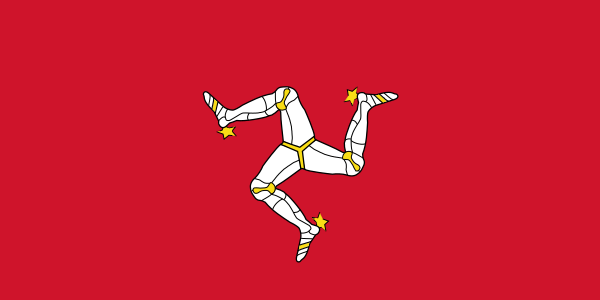
The Isle of Man is a self-governing British Crown dependency located in the Irish Sea, known for its rugged coastline, medieval castles, and the famous TT motorcycle races. Beyond the capital, Douglas, the island offers picturesque villages, scenic landscapes, and rich cultural heritage.
Finn Bjorklid · CC001
The best time to visit is between late spring and early autumn when the weather is milder and outdoor activities are plentiful.
A time of blooming flowers and mild weather, ideal for outdoor activities.
Warm temperatures and vibrant festivals make summer a popular time to visit.
A season of colorful foliage and cooler temperatures, perfect for hiking.
02
Pick the neighbourhood by how you want the day to start and end, not by distance to one museum.
The capital city with a vibrant waterfront and easy access to attractions.
Busy during TT races.
A charming coastal town known for its historic castle and fishing harbor.
Great for seafood lovers.
A picturesque village with beautiful beaches and scenic walks.
Ideal for families.
Home to the famous Laxey Wheel, the largest working waterwheel in the world.
Visit the mines nearby.
A vibrant town with a lovely harbor and access to the northern hills.
Less crowded than Douglas.
A suburb of Douglas with parks and local amenities.
Close to the capital.
The ancient capital with a rich history and the impressive Castle Rushen.
Explore the local shops.
A small village known for its traditional Manx cottages and rural charm.
Visit the folk museum.
03
Everyday food, eaten the way locals do. Look for a busy place rather than a ranked list.
Smoked herring, best enjoyed at local markets or seafood restaurants.
→ Try them for breakfast.
Local scallops, often found in coastal eateries and seafood festivals.
→ A must-try delicacy.
A unique breed of sheep, available in many restaurants across the island.
→ Savor the local flavor.
Delicious clotted cream, perfect with scones at tea rooms.
→ Pair with local jams.
A simple yet hearty dish found in pubs and cafes.
→ Comfort food at its best.
Classic dish available at various seaside shops.
→ Enjoy by the beach.
04
An order that works on foot, with the trip out of the first city at the end.
The largest working waterwheel in the world, a symbol of the island's mining heritage.
A well-preserved medieval castle located in Castletown.
Famous motorcycle races held annually, attracting visitors worldwide.
A historic castle overlooking the sea, with stunning views.
A beautiful coastal area with views of the Calf of Man.
The site of the island's parliament, steeped in history.
A picturesque glen with walking trails and a waterfall.
A stunning bay known for its dramatic cliffs and wildlife.
A preserved village showcasing traditional Manx life.
Offers insights into the island's history and culture.
The highest point on the island, offering panoramic views.
A small island with beautiful landscapes and wildlife.
05
Airport to city, across the city, and onward to the next region.
The main airport, serving flights from the UK and Ireland.
Regular ferries connect the Isle of Man with England, Scotland, and Ireland.
Buses and the historic steam railway provide convenient travel options.
Available for those who wish to explore the island independently.
The island has numerous trails for walking and cycling enthusiasts.
06
The Isle of Man uses type G plugs, similar to the UK.
Credit cards are widely accepted, but it's good to have some cash for small purchases.
Tipping is appreciated but not mandatory; rounding up the bill is common.
English is the primary language spoken on the island.
A travel eSIM covers maps and tickets after landing.
A stay of 5 to 7 days is recommended to explore the island fully.