_banner.jpg)
Dry Season
November to April offers pleasant weather and low rainfall.

Travel guide
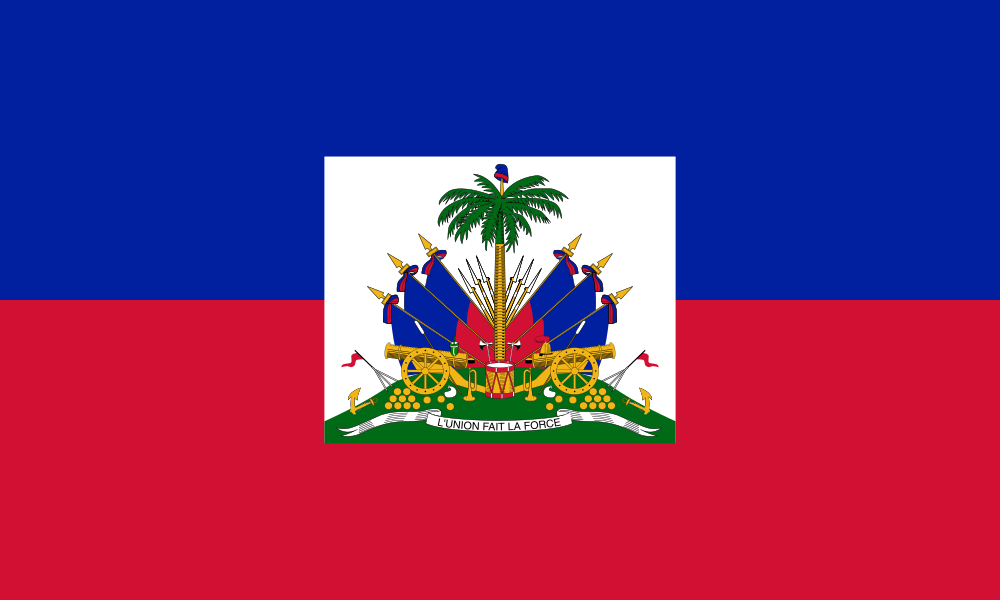
Haiti, a vibrant Caribbean nation, offers a rich tapestry of culture, history, and natural beauty. Beyond its capital, Port-au-Prince, explore stunning landscapes, historic sites, and warm local communities.
Santiagockn · CC001
The best time to visit Haiti is during the dry season from November to April, when temperatures are milder and rainfall is minimal.
November to April offers pleasant weather and low rainfall.
May to October brings higher humidity and rain, especially in the afternoons.
June to November is hurricane season; be cautious during this time.
02
Pick the neighbourhood by how you want the day to start and end, not by distance to one museum.
A suburb of Port-au-Prince known for its upscale hotels, restaurants, and vibrant nightlife.
Can be busy with tourists.
A coastal town famous for its art scene, beautiful beaches, and historic architecture.
Quieter than the capital.
The second-largest city, known for its colonial architecture and proximity to the Citadelle Laferrière.
Less touristy than Port-au-Prince.
A charming coastal town with beautiful beaches and access to nearby islands.
Limited nightlife options.
A less-visited town with beautiful beaches and a laid-back atmosphere.
Fewer amenities available.
Known for its historical significance and vibrant local culture.
Limited tourist infrastructure.
A town known for its agricultural surroundings and local markets.
Less developed for tourists.
A coastal city with a rich history and beautiful beaches.
Can be crowded during festivals.
03
Everyday food, eaten the way locals do. Look for a busy place rather than a ranked list.
Fried marinated pork, often served with rice and beans. Look for it at local street vendors.
→ A must-try dish.
Rice cooked with black mushrooms, giving it a unique flavor. Available in many restaurants.
→ Pair with grilled chicken.
Spicy pickled vegetable relish, often served as a side dish. Found in most eateries.
→ Great for adding flavor.
Fried beef or goat, usually served with fried plantains. Popular in local markets.
→ Enjoy with a cold drink.
Fried malanga fritters, a popular snack. Look for them at street stalls.
→ Perfect for on-the-go.
A mix of fried foods, including plantains and meat. Commonly found at roadside stands.
→ Great for a quick bite.
04
An order that works on foot, with the trip out of the first city at the end.
A UNESCO World Heritage site and symbol of Haitian independence.
The ruins of a royal palace, showcasing Haiti's rich history.
A bustling market in Port-au-Prince, perfect for local crafts and food.
A private beach resort known for its stunning views and water activities.
A beautiful beach known for its artistic vibe and local festivals.
A series of stunning blue pools and waterfalls near Jacmel.
A historic fort with panoramic views of Port-au-Prince.
Showcases the rich artistic heritage of Haiti.
A vibrant neighborhood known for its street art and local culture.
A waterfall and pilgrimage site, known for its beauty and cultural significance.
The former presidential palace, now a symbol of resilience.
A hub for local artists and cultural events.
05
Airport to city, across the city, and onward to the next region.
Transfers from Toussaint Louverture International Airport (PAP) and Cap-Haïtien International Airport (CAP) are available via taxis and shuttles.
Tap-taps and buses are common for getting around cities and towns.
Renting a car provides flexibility to explore remote areas.
Domestic flights connect major cities, saving travel time.
06
Haiti uses Type A and B plugs, with a standard voltage of 110V.
US dollars are widely accepted, but local currency (gourde) is preferred for small purchases.
Tipping is customary; 10-15% is appreciated in restaurants.
The official languages are Haitian Creole and French.
A travel eSIM covers maps and tickets after landing.
A week is ideal to explore the main attractions.