Dry Season
Enjoy sunny weather and fewer rain showers, perfect for outdoor activities.
Travel guide
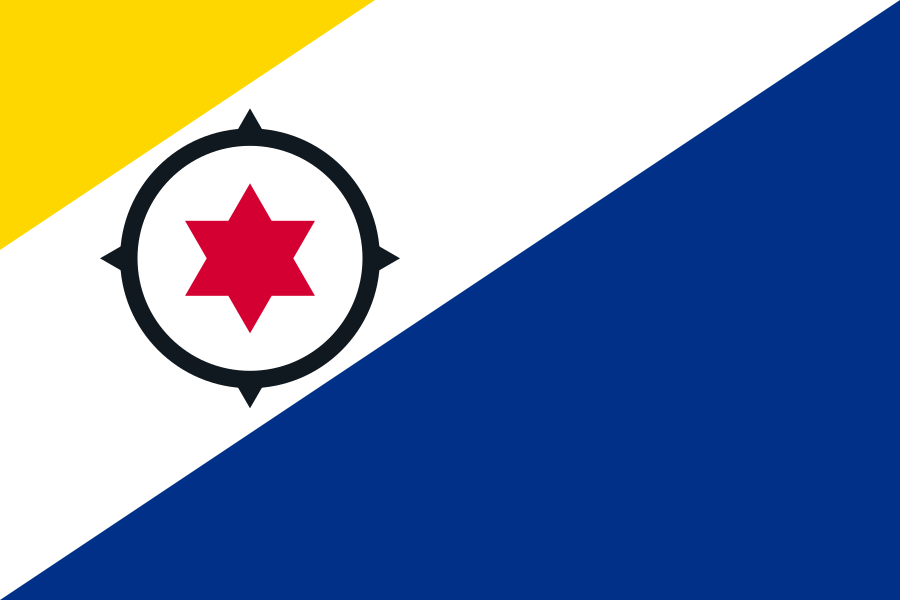
The Caribbean Netherlands, comprising Bonaire, Sint Eustatius, and Saba, offers stunning natural beauty, rich culture, and a laid-back atmosphere. Each island has its unique charm, from Bonaire's diving spots to Saba's hiking trails and Sint Eustatius's historical sites.
01
The best time to visit is during the dry season, from December to April, when the weather is pleasant and activities abound.
Enjoy sunny weather and fewer rain showers, perfect for outdoor activities.
Expect more rain, but also lush landscapes and fewer tourists.
Be aware of potential storms; plan accordingly.
02
Pick the neighbourhood by how you want the day to start and end, not by distance to one museum.
The capital of Bonaire, known for its colorful buildings and vibrant waterfront.
Busy during peak season.
A natural reserve offering stunning landscapes and wildlife.
Limited accommodation options.
The capital of Sint Eustatius, rich in history and local culture.
Small town feel.
The main village on Saba, known for its charming streets and proximity to hiking trails.
Higher elevation, cooler temperatures.
A picturesque village on Saba with stunning views and access to hiking.
Popular with hikers.
A residential area in Bonaire known for its luxury villas and quiet atmosphere.
Requires transport to reach attractions.
A historical site in Sint Eustatius with remnants of colonial architecture.
Explore the surrounding area.
A beautiful beach on Bonaire, perfect for relaxation and snorkeling.
Less crowded than other beaches.
03
Everyday food, eaten the way locals do. Look for a busy place rather than a ranked list.
A traditional dish made with fish, often found in local eateries.
→ Try it at beachside shacks.
Fried dough often served with various fillings, popular across the islands.
→ Look for them at local markets.
Deep-fried conch balls, a must-try delicacy.
→ Available at seafood restaurants.
Freshly caught lobster, celebrated for its flavor.
→ Best enjoyed at local seafood spots.
A flatbread served with curried meat or vegetables, popular in the Caribbean.
→ Find it in casual dining places.
A staple dish often served with chicken or fish.
→ Commonly found in local homes.
04
An order that works on foot, with the trip out of the first city at the end.
A stunning national park in Bonaire with diverse wildlife and landscapes.
A protected marine area ideal for diving and snorkeling.
Historical fortifications in Sint Eustatius with panoramic views.
An extinct volcano on Sint Eustatius, great for hiking.
Unique salt flats that attract flamingos and other wildlife.
The highest point in the Caribbean Netherlands, located on Saba.
A vibrant area with shops and restaurants along the water.
A historical site in Sint Eustatius with a rich past.
A beautiful beach in Bonaire, perfect for swimming.
A scenic drive in Bonaire with stunning views.
A challenging hike offering breathtaking views of the island.
A park showcasing the island's natural beauty and history.
05
Airport to city, across the city, and onward to the next region.
The main airports are Flamingo Airport (Bonaire), F.D. Roosevelt Airport (Sint Eustatius), and Juancho E. Yrausquin Airport (Saba).
Taxis and rental cars are the most common ways to get around the islands.
Biking is a popular way to explore Bonaire, with many rental options available.
Many attractions are within walking distance in the smaller towns.
06
Type A and B plugs are used; voltage is 110V.
US dollars are widely accepted, but local currency is also used.
A tip of 10-15% is customary in restaurants.
Dutch is the official language, but English is widely spoken.
A travel eSIM covers maps and tickets after landing.
A stay of 5-7 days is recommended to explore the islands.
Maps, ferries and tickets are easier with data as soon as you land.