Dry Season
From November to February, this season offers cooler temperatures and less rain, making it ideal for sightseeing.
Travel guide
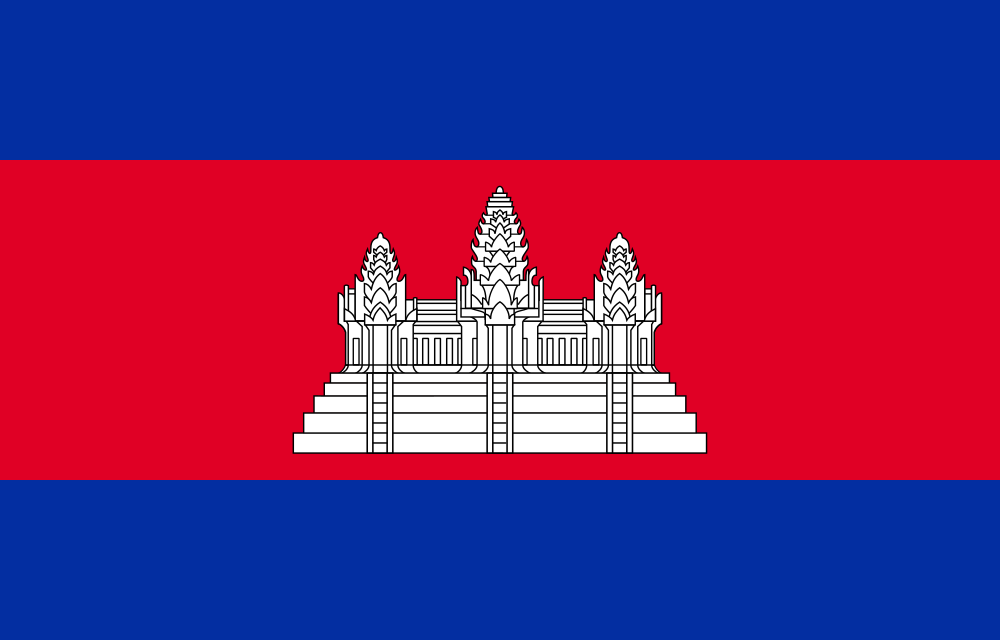
Cambodia, known for its rich history and stunning landscapes, offers travelers a unique blend of ancient temples, vibrant cities, and serene countryside. Beyond the capital, Phnom Penh, explore the majestic Angkor Wat, the charming town of Siem Reap, and the beautiful beaches of Sihanoukville.
01
The best time to visit Cambodia is during the dry season from November to February when temperatures are cooler and rainfall is minimal.
From November to February, this season offers cooler temperatures and less rain, making it ideal for sightseeing.
From May to October, expect heavy rain and humidity, but the countryside is lush and vibrant.
March to April brings high temperatures, making it less comfortable for outdoor activities.
02
Pick the neighbourhood by how you want the day to start and end, not by distance to one museum.
The bustling capital city with a mix of modern and traditional culture.
Stay near the riverside for great views.
Gateway to the Angkor Wat temple complex, filled with vibrant markets and nightlife.
Book accommodations in advance during peak season.
A coastal city known for its beaches and islands.
Expect a lively atmosphere, especially during holidays.
A charming town with colonial architecture and a relaxed vibe.
Explore the countryside by bamboo train.
Famous for its pepper plantations and riverside views.
Try the local pepper crab.
An island paradise with stunning beaches and clear waters.
Limited amenities, so plan accordingly.
Known for the rare Irrawaddy dolphins in the Mekong River.
Best visited during the dry season.
Home to the ancient temple of the same name, perched on a mountaintop.
Access can be challenging; consider a guided tour.
03
Everyday food, eaten the way locals do. Look for a busy place rather than a ranked list.
A traditional Cambodian curry made with fish or chicken, often served in a banana leaf.
→ Try it at local markets for authentic flavors.
Stir-fried beef served with rice and a tangy dipping sauce.
→ Look for it in restaurants across the country.
A milder curry made with coconut milk, meat, and vegetables.
→ Best enjoyed with rice or bread.
A popular breakfast dish of rice noodles topped with green curry and vegetables.
→ Street vendors serve the best versions.
Grilled pork served over rice, often eaten for breakfast.
→ Look for stalls in the morning for fresh options.
Fermented fish paste used as a condiment in many dishes.
→ Try it in local restaurants for an authentic taste.
04
An order that works on foot, with the trip out of the first city at the end.
The largest religious monument in the world, a UNESCO World Heritage site.
A stunning complex showcasing traditional Khmer architecture.
A memorial site to the victims of the Khmer Rouge regime.
A national park with stunning landscapes and wildlife.
The largest freshwater lake in Southeast Asia, known for its floating villages.
Home to a collection of Buddhist artifacts and a beautiful garden.
An ancient temple located on a mountaintop with stunning views.
Famous for their white sand and clear waters.
A hilltop temple and the tallest religious structure in Phnom Penh.
A unique ride on a bamboo platform along old railway tracks.
An ancient temple complex that is less crowded than Angkor.
Home to waterfalls and ancient temples, a perfect day trip from Siem Reap.
A social enterprise showcasing traditional Cambodian crafts.
A bustling market with a variety of goods and street food.
A scenic river perfect for boat rides and sunset views.
05
Airport to city, across the city, and onward to the next region.
Cambodia is served by two main international airports: Phnom Penh International Airport (PNH) and Siem Reap International Airport (REP).
Buses and taxis are common for travel between cities, with several companies offering reliable services.
Tuk-tuks are a popular and fun way to get around cities, especially in tourist areas.
For a quicker ride, motorbike taxis are widely available in urban areas.
Renting a bicycle is a great way to explore cities and the countryside at your own pace.
06
Cambodia uses Type A, C, and G plugs, with a standard voltage of 230V.
US dollars are widely accepted, but it's good to have Cambodian riel for small purchases.
Tipping is appreciated but not mandatory; round up the bill or leave small change.
Khmer is the official language, but English is commonly spoken in tourist areas.
A travel eSIM covers maps and tickets after landing.
A week is ideal to explore the main attractions comfortably.