Dry Season
The dry season lasts from November to February, offering pleasant temperatures and minimal rainfall.
Travel guide
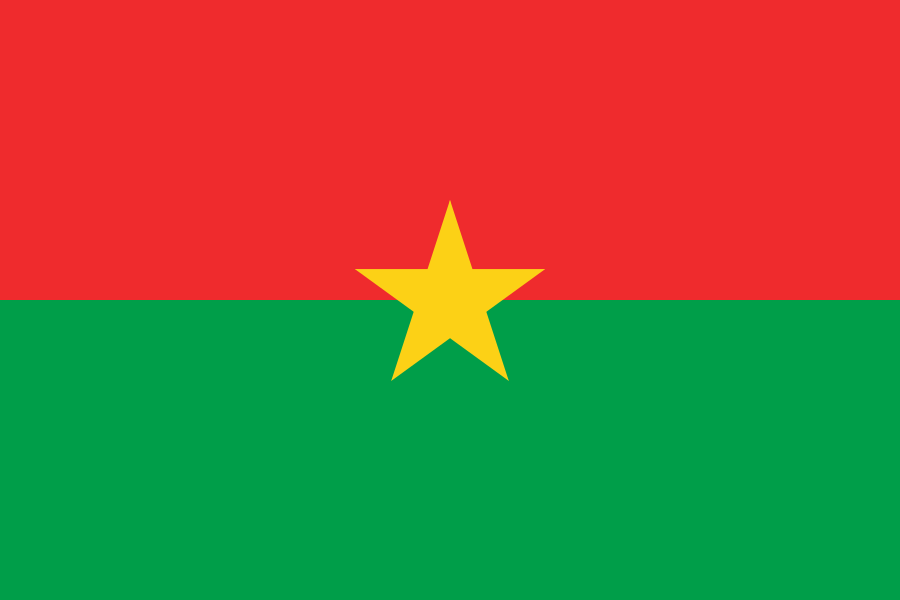
Burkina Faso, a landlocked country in West Africa, is known for its vibrant culture, diverse landscapes, and rich history. Beyond the capital, Ouagadougou, visitors can explore bustling markets, traditional villages, and stunning natural parks.
01
The best time to visit Burkina Faso is during the dry season from November to February when temperatures are cooler and rainfall is minimal.
The dry season lasts from November to February, offering pleasant temperatures and minimal rainfall.
From May to October, this season brings heavy rains and high humidity, affecting travel plans.
A dry and dusty trade wind season from December to February, characterized by cooler temperatures.
02
Pick the neighbourhood by how you want the day to start and end, not by distance to one museum.
The capital city offers a mix of modern amenities and traditional culture, with various accommodations ranging from guesthouses to boutique hotels.
Book in advance during festivals.
Known for its vibrant music scene and colonial architecture, this city provides a unique cultural experience.
Explore local music venues.
A smaller city that offers a glimpse into everyday life in Burkina Faso, with local markets and friendly communities.
Visit the artisan market.
This town is known for its traditional crafts and is a great place to experience local culture.
Look for handmade goods.
Famous for its natural beauty, including waterfalls and lakes, ideal for nature lovers.
Visit the Cascades de Karfiguéla.
A gateway to the Sahel region, offering a unique landscape and cultural experiences.
Engage with local communities.
Known for its historical significance and proximity to various cultural sites.
Explore the local history.
A city rich in history and culture, with access to traditional festivals.
Check local calendars.
03
Everyday food, eaten the way locals do. Look for a busy place rather than a ranked list.
A traditional rice dish often served with meat and vegetables, commonly found in local eateries.
→ Try it at local markets.
A staple made from millet or sorghum, usually accompanied by a sauce, available in many restaurants.
→ Pair it with a spicy sauce.
Grilled chicken that is a local favorite, often sold by street vendors.
→ Look for roadside stalls.
A refreshing drink made from hibiscus flowers, widely available in local cafes.
→ Enjoy it chilled.
A starchy side dish made from cassava or yams, served with various sauces.
→ Best enjoyed with friends.
A slow-cooked chicken stew, rich in flavor, found in many traditional restaurants.
→ Ask for extra spices.
A local dish named after Thomas Sankara, often made with beans and served with rice.
→ Try it at community gatherings.
04
An order that works on foot, with the trip out of the first city at the end.
An open-air museum featuring stunning sculptures created by artists from around the world.
A vibrant market in the north, showcasing local crafts, textiles, and food.
A beautiful natural site perfect for picnics and relaxation.
Offers insights into the country's history and culture through various exhibits.
An architectural marvel and a significant religious site in the city.
A UNESCO World Heritage site known for its wildlife and biodiversity.
Ancient ruins that reflect the historical significance of the region.
Stunning waterfalls that are a must-see for nature lovers.
Famous for its unique architecture and vibrant murals.
An annual event showcasing African cinema and culture.
A unique cultural site where crocodiles are revered and protected.
The official residence of the president, showcasing traditional architecture.
A vibrant market area where local artisans sell handmade crafts.
A stunning desert landscape ideal for exploration.
An annual celebration of traditional music and dance.
05
Airport to city, across the city, and onward to the next region.
The main airports are Ouagadougou (OUA) and Bobo-Dioulasso (BOY).
Buses and shared taxis are common for intercity travel, while motorbike taxis are popular for local transport.
Many cities are walkable, allowing for an immersive experience of local life.
Bicycles can be rented in some areas, providing a unique way to explore the surroundings.
Car rentals are available but may require a local driver due to road conditions.
06
Type C and E plugs are used in Burkina Faso.
Local currency is the West African CFA franc; cash is preferred for most transactions.
Tipping is appreciated but not mandatory; rounding up the bill is common.
French is the official language, with many local languages spoken.
A travel eSIM covers maps and tickets after landing.
A week is ideal to explore the main attractions.