Spring
Spring brings blooming flowers and mild temperatures, making it a great time for outdoor activities.
Travel guide
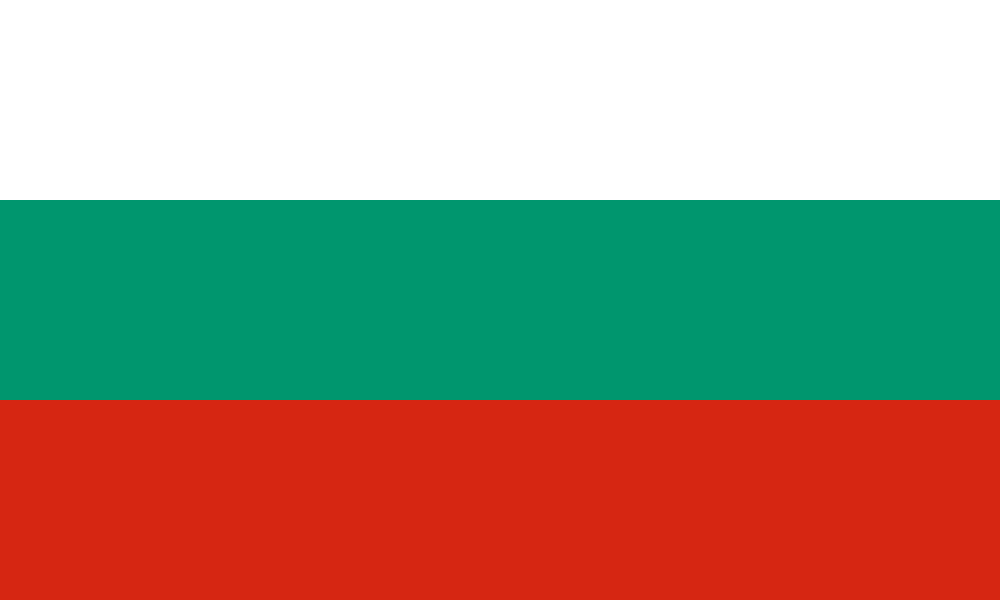
Bulgaria, a country rich in history and natural beauty, offers diverse landscapes from the Black Sea coast to the majestic mountains. Explore ancient ruins, vibrant cities, and picturesque villages.
01
The best time to visit Bulgaria is during spring (April to June) and fall (September to October) when the weather is mild and the tourist crowds are smaller.
Spring brings blooming flowers and mild temperatures, making it a great time for outdoor activities.
Summer is hot and perfect for beach vacations along the Black Sea coast.
Fall offers beautiful foliage and pleasant weather, ideal for exploring the countryside.
02
Pick the neighbourhood by how you want the day to start and end, not by distance to one museum.
The capital city, known for its historical sites and vibrant culture.
Busy urban environment.
One of the oldest cities in Europe, famous for its Roman theater and charming old town.
Can get crowded during festivals.
A coastal city on the Black Sea, known for its beaches and nightlife.
Best visited in summer.
Another Black Sea city, offering a relaxed atmosphere and beautiful parks.
Less touristy than Varna.
A UNESCO World Heritage site, located in the Rila Mountains, known for its stunning architecture.
Remote location requires planning.
The historical capital of Bulgaria, famous for its medieval fortress and scenic views.
Hilly terrain, wear comfortable shoes.
Known for its natural beauty and the nearby Perperikon archaeological site.
Less known, offers tranquility.
A popular ski resort in winter and a hiking destination in summer.
Busy during ski season.
03
Everyday food, eaten the way locals do. Look for a busy place rather than a ranked list.
A traditional pastry filled with cheese and eggs, found in bakeries across the country.
→ Try it for breakfast.
A refreshing salad made with tomatoes, cucumbers, peppers, and feta cheese, popular in restaurants.
→ Perfect for summer.
A slow-cooked meat dish with vegetables, often served in clay pots.
→ A hearty meal option.
A cold soup made with yogurt, cucumbers, and garlic, ideal for hot days.
→ Enjoy as an appetizer.
A baked dish made with layers of potatoes and minced meat, commonly found in local eateries.
→ A filling choice.
A spicy vegetable spread made from tomatoes and peppers, often served with bread.
→ Great as a snack.
Stuffed cabbage leaves, a traditional dish enjoyed during holidays.
→ Try it during festive seasons.
04
An order that works on foot, with the trip out of the first city at the end.
A stunning Orthodox cathedral located in Sofia, known for its impressive architecture.
A UNESCO World Heritage site, famous for its beautiful frescoes and serene surroundings.
An ancient Roman theater that still hosts performances, showcasing the city’s rich history.
A UNESCO World Heritage site, known for its well-preserved medieval churches and charming streets.
A stunning group of glacial lakes in the Rila Mountains, perfect for hiking and nature lovers.
One of the oldest monasteries in Bulgaria, known for its beautiful frescoes and peaceful atmosphere.
A historic town with colorful houses and a rich cultural heritage from the Bulgarian Revival.
A popular destination for hiking and skiing, offering stunning views of Sofia.
A UNESCO World Heritage site, famous for its well-preserved Thracian tomb and frescoes.
Known for its beautiful beaches and resorts, perfect for summer vacations.
A medieval Bulgarian Orthodox church, recognized for its remarkable frescoes, located near Sofia.
Famous for its rose oil production, especially during the rose-picking season.
A unique museum in Sofia showcasing art from the socialist period in Bulgaria.
A popular ski resort in the Pirin Mountains, known for its winter sports and summer hiking.
A natural phenomenon featuring stone columns, located near Varna.
05
Airport to city, across the city, and onward to the next region.
The main airports are Sofia (SOF), Varna (VAR), and Burgas (BOJ).
Bulgaria has an extensive network of buses and trains connecting major cities and towns.
Renting a car is a good option for exploring rural areas and national parks.
Many cities offer bicycle rentals, making it easy to explore at your own pace.
06
Bulgaria uses type C and F plugs, with a standard voltage of 230V.
The local currency is the Bulgarian Lev (BGN). Credit cards are widely accepted, but having cash is advisable.
Tipping is customary in restaurants and cafes, usually around 10% of the bill.
The official language is Bulgarian. English is commonly spoken in tourist areas.
A travel eSIM covers maps and tickets after landing, ensuring connectivity.
A week is ideal to explore the main attractions and regions.