Spring
A beautiful time when flowers bloom and temperatures rise, perfect for outdoor activities.
Travel guide
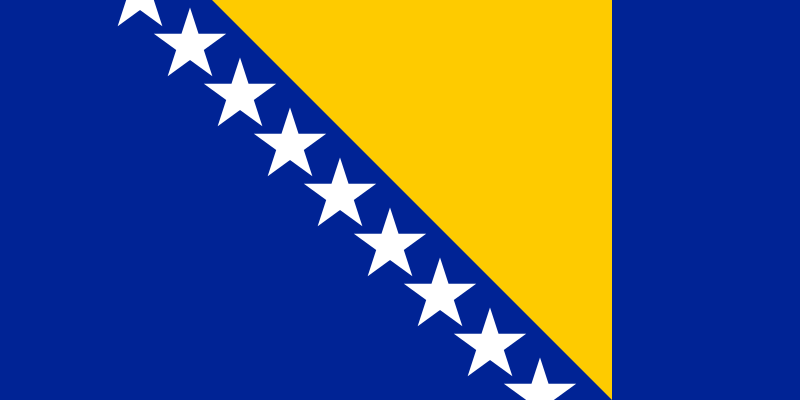
Bosnia & Herzegovina offers a rich tapestry of history, culture, and natural beauty. From the stunning landscapes of the Dinaric Alps to the vibrant streets of Sarajevo, this country is a hidden gem in the Balkans. Explore its diverse regions, each with unique attractions and culinary delights.
01
The best time to visit is during spring (April to June) and autumn (September to October) when the weather is mild and the landscapes are vibrant.
A beautiful time when flowers bloom and temperatures rise, perfect for outdoor activities.
Warm weather ideal for exploring cities and enjoying nature, though it can get hot.
A picturesque season with colorful foliage, great for hiking and sightseeing.
02
Pick the neighbourhood by how you want the day to start and end, not by distance to one museum.
The historic bazaar area of Sarajevo, filled with traditional shops and cafes.
Can be crowded during peak tourist season.
The old town of Mostar, famous for its iconic bridge and Ottoman architecture.
Best explored on foot.
Known for its salt lakes and vibrant cultural scene.
Less touristy, offering authentic experiences.
A popular ski resort in the winter and hiking destination in the summer.
Great for both winter sports and summer hikes.
The administrative center of Republika Srpska, known for its parks and cafes.
Explore the local nightlife.
A small town known for its beautiful river and outdoor activities.
Ideal for adventure seekers.
Home to the mysterious Bosnian pyramids and archaeological sites.
Visit the pyramids for a unique experience.
A town with a poignant history, offering memorials and educational sites.
Important for understanding recent history.
03
Everyday food, eaten the way locals do. Look for a busy place rather than a ranked list.
Grilled minced meat sausages, a staple found in many local eateries.
→ Try them with somun bread.
Savory pastry filled with meat or cheese, available in bakeries.
→ Best enjoyed hot from the oven.
Stuffed onions with rice and meat, a traditional dish.
→ Often served at family gatherings.
Fresh fish from the Neretva River, found in many restaurants.
→ Pair with local wine for a delightful meal.
Sweet pastry made of layers of filo filled with nuts and honey.
→ A perfect dessert to end your meal.
A traditional Bosnian dessert made from baked apples and walnuts.
→ Try it at local cafes.
A strong fruit brandy, often served as an aperitif.
→ Enjoy responsibly.
04
An order that works on foot, with the trip out of the first city at the end.
The iconic Old Bridge in Mostar, a UNESCO World Heritage Site.
A museum dedicated to the tunnel that connected Sarajevo during the siege.
A natural spring and park near Sarajevo, ideal for picnics and walks.
Stunning waterfalls located near Ljubuški, perfect for swimming.
A beautiful mosque in Sarajevo, showcasing Ottoman architecture.
A historic fortress offering panoramic views of the city.
A Dervish monastery located at the source of the Buna River.
A memorial dedicated to the victims of the Srebrenica genocide.
A stunning national park known for its diverse flora and fauna.
A museum dedicated to the history of the Old Bridge in Mostar.
A gallery dedicated to the victims of the Srebrenica genocide.
A historic white fort offering views of Sarajevo.
A stunning example of Moorish architecture and a cultural center.
A monument commemorating the victims of World War II in Sarajevo.
The river that flows through Mostar, perfect for rafting and kayaking.
05
Airport to city, across the city, and onward to the next region.
The main airports are Sarajevo International Airport (SJJ) and Tuzla International Airport (TZL).
Buses and trams operate in major cities, providing convenient access to attractions.
Taxis are widely available, but it's best to agree on a fare before starting your journey.
Renting a car is a good option for exploring rural areas and national parks.
Many cities are pedestrian-friendly, making walking a pleasant way to explore.
06
Type C and F plugs are used, with a standard voltage of 230V.
The currency is the Bosnian Convertible Mark (BAM).
Tipping around 10% is customary in restaurants.
The official languages are Bosnian, Croatian, and Serbian.
A travel eSIM covers maps and tickets after landing.
A week is recommended to explore the main attractions.
Maps, ferries and tickets are easier with data as soon as you land.