Spring
Spring is a vibrant season in Bhutan, with blooming flowers and pleasant weather, ideal for trekking and sightseeing.
Travel guide
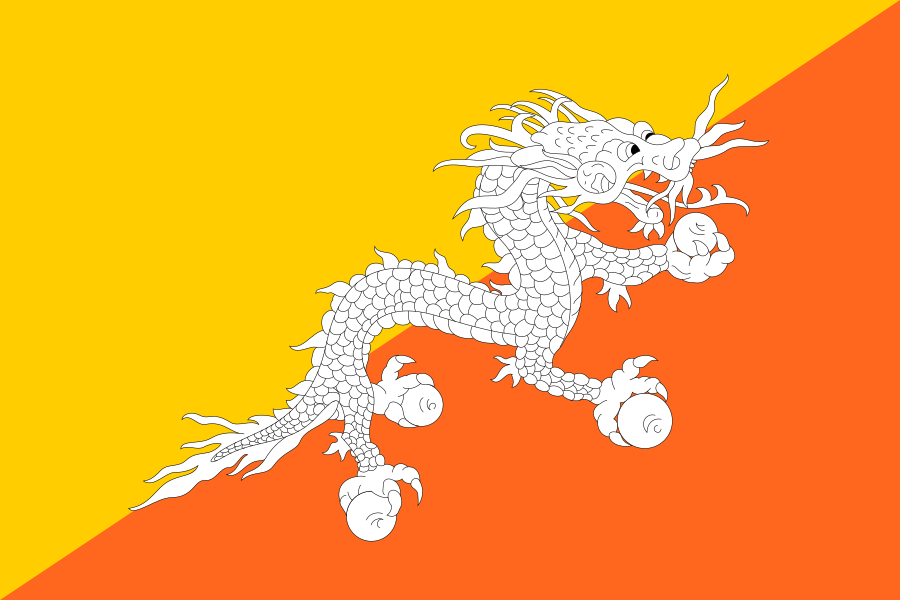
Bhutan, the Land of the Thunder Dragon, is a unique Himalayan kingdom known for its stunning landscapes, rich culture, and commitment to preserving its environment and traditions. Visitors are drawn to its monasteries, fortresses, and vibrant festivals, making it a destination for those seeking both adventure and tranquility.
01
The best time to visit Bhutan is during the spring (March to May) and autumn (September to November) when the weather is mild and the landscapes are vibrant.
Spring is a vibrant season in Bhutan, with blooming flowers and pleasant weather, ideal for trekking and sightseeing.
Autumn offers clear skies and stunning landscapes, making it a popular time for festivals and outdoor activities.
Winter brings cold temperatures and snow in the mountains, but it's also a time for unique festivals and fewer tourists.
02
Pick the neighbourhood by how you want the day to start and end, not by distance to one museum.
The capital city offers a mix of modernity and tradition, with attractions like the Tashichho Dzong and the National Memorial Chorten.
Busy during festivals.
Home to the iconic Tiger's Nest Monastery, Paro is a picturesque valley with stunning views and rich history.
Great for hiking.
Known for the Punakha Dzong and its beautiful river valley, Punakha is a serene destination for relaxation and exploration.
Visit in winter for clear skies.
This region is considered the spiritual heart of Bhutan, with numerous temples and stunning landscapes.
Less touristy, more authentic.
Famous for its impressive Trongsa Dzong, this town offers breathtaking views and a glimpse into Bhutan's history.
A bit remote, but worth it.
A glacial valley known for its black-necked cranes and stunning natural beauty, perfect for nature lovers.
Best visited in winter.
A lesser-known gem with beautiful landscapes and traditional Bhutanese culture, ideal for a peaceful retreat.
Fewer tourists, more tranquility.
A border town with a unique blend of cultures, offering a different perspective of Bhutan.
Gateway to India.
03
Everyday food, eaten the way locals do. Look for a busy place rather than a ranked list.
A spicy cheese and chili dish, often considered the national dish. Look for it in local eateries.
→ Try it with rice.
Pork cooked with radish and chili, a hearty meal found in traditional restaurants.
→ Perfect for meat lovers.
A spicy chicken stew, popular in many homes and restaurants across Bhutan.
→ Ask for extra spice!
Delicious dumplings filled with meat or vegetables, available at street stalls and restaurants.
→ Great snack on the go.
A traditional Bhutanese rice dish with a variety of toppings, commonly found in local diners.
→ A filling option.
Butter tea made from tea leaves, butter, and salt, often served in homes.
→ An acquired taste.
04
An order that works on foot, with the trip out of the first city at the end.
Perched on a cliff, this iconic monastery is a must-visit for breathtaking views and spiritual significance.
One of the most beautiful dzongs in Bhutan, located at the confluence of two rivers.
A massive Buddha statue overlooking Thimphu, offering panoramic views of the valley.
A stupa built in memory of the third king of Bhutan, a popular site for locals and tourists alike.
Famous for its 108 chortens and stunning views of the Himalayas.
A significant monastery in the Phobjikha Valley, known for its beautiful architecture and serene surroundings.
A fertility temple dedicated to the Divine Madman, attracting visitors seeking blessings.
A historical fortress that offers insight into Bhutan's governance and architecture.
A lesser-known dzong with stunning views and rich history, perfect for a quiet visit.
Known as the 'Castle of the White Bird', this dzong is a beautiful example of Bhutanese architecture.
An impressive dzong that offers a glimpse into Bhutanese history and architecture.
A stunning glacial valley known for its black-necked cranes and beautiful landscapes.
05
Airport to city, across the city, and onward to the next region.
The main entry point is Paro International Airport (PBH), which connects Bhutan to several international destinations.
Domestic flights connect major cities, while buses and taxis are available for ground transportation.
Be prepared for winding roads and varying conditions, especially in rural areas.
Allow extra time for travel between regions due to the mountainous terrain.
06
Type D and G plugs are used in Bhutan, with a standard voltage of 230V.
Ngultrum is the local currency. Credit cards are accepted in major towns but carry cash for rural areas.
Tipping is appreciated but not mandatory. Round up your bill or leave small change.
Dzongkha is the official language, but English is widely spoken, especially in urban areas.
A travel eSIM covers maps and tickets after landing, making navigation easier.
A week is ideal to explore the main attractions and experience Bhutan's culture.