Spring
Spring in Argentina brings blooming flowers and mild temperatures, making it a great time for outdoor activities.
Travel guide
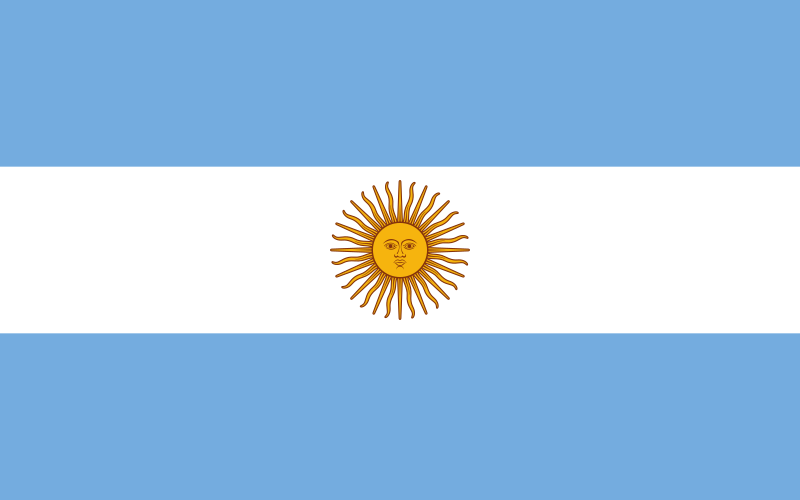
Argentina, a vast country known for its diverse landscapes, rich culture, and vibrant cities, offers travelers a unique blend of experiences from the Andes mountains to the Pampas plains and the stunning Patagonia region.
01
The best time to visit Argentina is during the spring (September to November) and fall (March to May) when the weather is mild and pleasant.
Spring in Argentina brings blooming flowers and mild temperatures, making it a great time for outdoor activities.
Summer can be hot, especially in the north, but it's perfect for beachgoers and outdoor festivals.
Fall offers cooler temperatures and stunning autumn foliage, ideal for sightseeing.
02
Pick the neighbourhood by how you want the day to start and end, not by distance to one museum.
A trendy neighborhood in Buenos Aires known for its parks, nightlife, and artistic vibe.
Great for nightlife but can be noisy.
Famous for its antique market and tango culture, this historic area offers a glimpse into Buenos Aires' past.
Can be crowded on weekends.
An upscale neighborhood with elegant architecture, parks, and the famous Recoleta Cemetery.
Higher accommodation costs.
Nestled in the Andes, known for its stunning lakes and mountains, perfect for outdoor activities.
Best for nature lovers.
The heart of Argentina's wine country, famous for Malbec and beautiful vineyards.
Plan for wine tours.
The southernmost city in the world, gateway to Tierra del Fuego National Park.
Weather can be unpredictable.
Known for its colonial architecture and stunning landscapes, a cultural hub in the northwest.
Higher altitude, be prepared.
Famous for whale watching and the nearby Valdés Peninsula, a UNESCO World Heritage site.
Best visited during whale season.
03
Everyday food, eaten the way locals do. Look for a busy place rather than a ranked list.
A traditional Argentine barbecue, best enjoyed at local parrillas (steakhouses).
→ Try to join a local family for a true experience.
Savory pastries filled with meat, cheese, or vegetables, commonly found in bakeries.
→ Look for regional variations.
A sweet caramel-like spread, popular in desserts and pastries throughout the country.
→ Perfect on toast or in alfajores.
Breaded and fried meat cutlet, often served with mashed potatoes or salad.
→ A comfort food staple.
A sausage sandwich typically served with chimichurri sauce, found at street vendors.
→ Best enjoyed at a street fair.
Grilled provolone cheese, often served as an appetizer at barbecues.
→ A must-try for cheese lovers.
04
An order that works on foot, with the trip out of the first city at the end.
One of the largest and most spectacular waterfall systems in the world, located on the border with Brazil.
A stunning glacier in Los Glaciares National Park, known for its dynamic ice calving.
Experience the passionate dance in Buenos Aires, especially in San Telmo and La Boca.
An iconic monument located in the heart of Buenos Aires, symbolizing the city.
A colorful street museum in La Boca, famous for its vibrant buildings and tango performances.
A stunning valley in the northwest known for its colorful hills and indigenous culture.
A UNESCO World Heritage site, known for its diverse marine wildlife including whales.
The main Catholic church in Buenos Aires, showcasing beautiful architecture.
A vibrant neighborhood known for its colorful buildings and street art.
A stunning mountain in Patagonia, popular among hikers and climbers.
An architectural gem in Buenos Aires, inspired by Dante's Divine Comedy.
A major ski resort in Patagonia, offering stunning views and winter sports.
05
Airport to city, across the city, and onward to the next region.
Argentina's major airports include Ezeiza International Airport (EZE) and Jorge Newbery Airport (AEP).
Long-distance buses connect major cities and are a popular way to travel across the country.
Renting a car is a great option for exploring remote areas and national parks.
Domestic flights are available for quicker travel between distant regions.
Cities like Buenos Aires have extensive public transport systems including buses and subways.
06
Argentina uses type C and I plugs, with a standard voltage of 220V.
Credit cards are widely accepted, but it's advisable to carry cash for smaller purchases.
Tipping is customary, usually around 10% in restaurants.
Spanish is the official language, but English is spoken in tourist areas.
SIM cards are available for purchase, and Wi-Fi is common in urban areas.
A trip of at least 10 days is recommended to explore the main attractions.