Dry Season
From May to October, this season features cooler temperatures and less rainfall, making it ideal for outdoor activities.
Travel guide
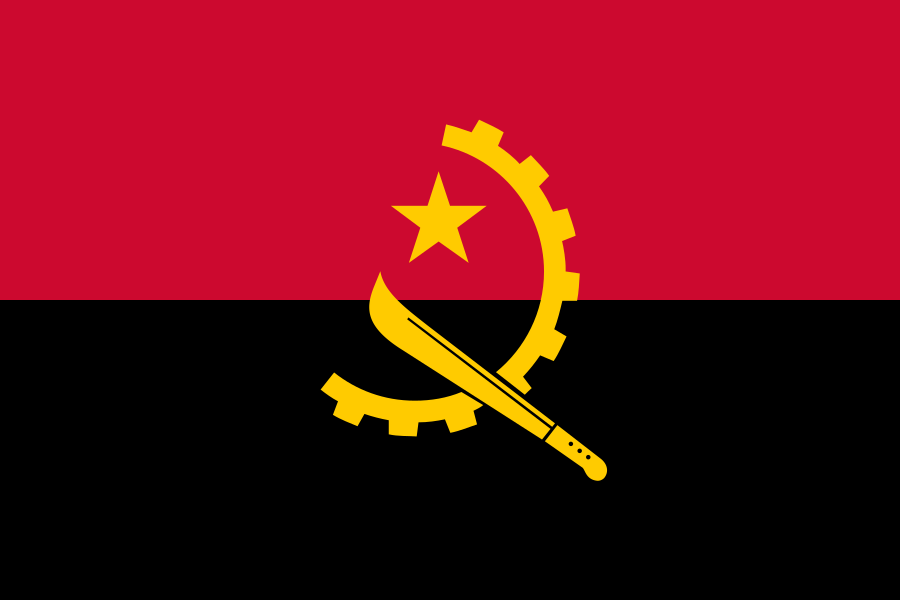
Angola, a country rich in culture and natural beauty, offers diverse experiences from its vibrant cities to stunning landscapes. Explore beyond Luanda to discover its hidden gems.
01
The best time to visit Angola is during the dry season from May to October when the weather is cooler and more pleasant for outdoor activities.
From May to October, this season features cooler temperatures and less rainfall, making it ideal for outdoor activities.
From November to April, expect heavy rains and higher humidity, particularly in the north.
The months between the wet and dry seasons can be unpredictable, offering a mix of weather conditions.
02
Pick the neighbourhood by how you want the day to start and end, not by distance to one museum.
The bustling capital city with a vibrant nightlife and cultural attractions.
Busy and expensive, but full of amenities.
A coastal city known for its beautiful beaches and desert landscapes.
Quieter than Luanda, ideal for relaxation.
A city surrounded by mountains, rich in history and agriculture.
Cooler climate, great for hiking.
Famous for its stunning scenery and the Cristo Rei statue.
Higher altitude, cooler temperatures.
A charming coastal town with colonial architecture and beaches.
Less crowded than Luanda, perfect for a getaway.
Known for its historical significance and local markets.
Authentic local experience.
Gateway to the stunning Kalandula Falls and beautiful landscapes.
Great for nature lovers.
An enclave with lush vegetation and a unique cultural blend.
Less touristy, offering a unique experience.
03
Everyday food, eaten the way locals do. Look for a busy place rather than a ranked list.
A traditional chicken stew made with palm oil and okra, commonly found in local restaurants.
→ Try it with funge.
A hearty fish stew, popular along the coast, available in seaside eateries.
→ Best enjoyed fresh.
A staple made from cassava flour, often served with various stews.
→ A must-try accompaniment.
Spicy grilled chicken, widely available in restaurants and street vendors.
→ Ask for extra sauce if you like it spicy.
A dish made from pumpkin leaves, often served with fish or meat.
→ A nutritious choice.
Corn cake, a popular snack found in local markets.
→ Perfect for a quick bite.
04
An order that works on foot, with the trip out of the first city at the end.
One of Africa's largest waterfalls, located near Malanje.
A giant statue of Christ overlooking Lubango, offering panoramic views.
A historic fortress in Luanda with stunning views of the city.
A beautiful island near Luanda, perfect for beach activities.
A breathtaking viewpoint near Lubango, known for its dramatic cliffs.
A historic railway offering scenic train rides through the countryside.
A museum in Luanda dedicated to the history of slavery in Angola.
A stunning desert landscape with unique flora and fauna.
A popular beach destination known for its clear waters.
A charming area showcasing colonial architecture and local life.
Home to diverse wildlife and beautiful landscapes.
A museum in Luanda featuring Angola's natural history.
05
Airport to city, across the city, and onward to the next region.
Major airports include Luanda (LAD), Benguela (BGU), and Cabinda (CAB). Domestic flights are available for longer distances.
Road conditions can vary greatly; it's advisable to use reputable transport services for safety.
Buses and taxis are available in cities, but may not always be reliable.
Car rentals are available in major cities, but driving can be challenging due to road conditions.
06
Type C and F plugs are used, with a standard voltage of 220V.
Local currency is the Angolan Kwanza. Credit cards are accepted in major cities.
Tipping is customary, typically around 10% in restaurants.
Portuguese is the official language. English is spoken in tourist areas.
Mobile data is available, but coverage may vary in rural areas.
A stay of at least one week is recommended to explore the highlights.