Spring
Mild temperatures and blooming landscapes make spring an ideal time for exploration.
Travel guide
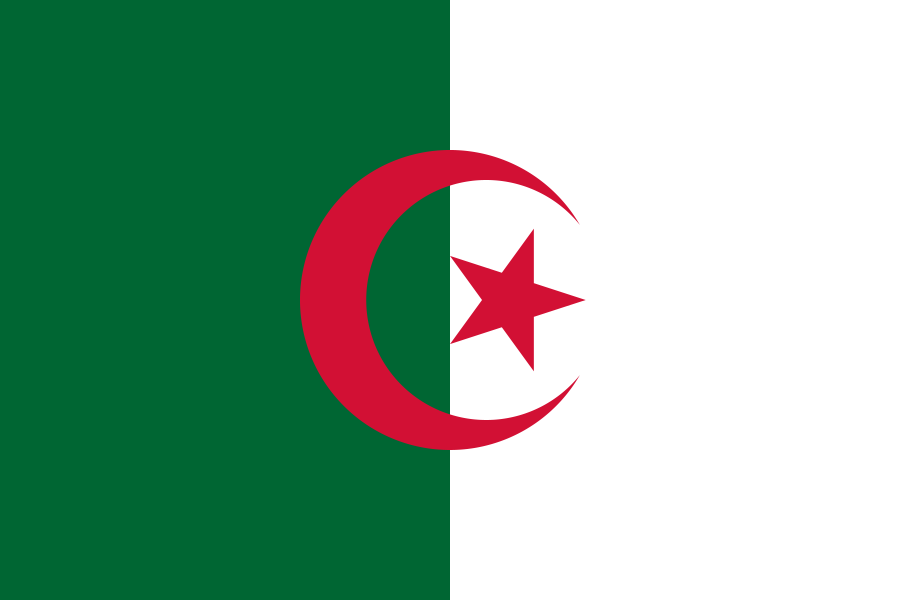
Algeria, a country rich in history and diverse landscapes, offers travelers a mix of ancient ruins, stunning deserts, and vibrant cities beyond its capital, Algiers.
01
The best time to visit Algeria is during the spring (March to May) and fall (September to November) when temperatures are mild and pleasant.
Mild temperatures and blooming landscapes make spring an ideal time for exploration.
Hot and dry, summer is best for coastal visits and desert adventures.
Cooler temperatures and vibrant colors make fall perfect for sightseeing.
02
Pick the neighbourhood by how you want the day to start and end, not by distance to one museum.
A vibrant neighborhood in Algiers known for its historical architecture and proximity to the Kasbah.
Can be crowded during peak tourist season.
Nestled in the Kabylie region, this area is known for its beautiful mountains and Berber culture.
Less touristy, offering an authentic experience.
A coastal city famous for its Spanish colonial architecture and lively music scene.
Enjoy the Mediterranean vibe.
Known as the 'City of Bridges', it boasts stunning views and rich history.
Steep terrain; wear comfortable shoes.
Part of the M'zab Valley, this town is a UNESCO World Heritage site with unique architecture.
Best explored on foot.
A coastal town with Roman ruins and beautiful beaches, perfect for a day trip from Algiers.
Visit early to avoid crowds.
Known as the gateway to the Sahara, it offers a unique desert experience.
Hot temperatures; stay hydrated.
A coastal city with stunning views of the Kabylie mountains and rich history.
Explore the nearby national park.
03
Everyday food, eaten the way locals do. Look for a busy place rather than a ranked list.
A staple dish made from semolina, often served with vegetables and meat. Look for it in local homes and restaurants.
→ Try it on Fridays for a traditional experience.
A dish of torn flatbread mixed with a spicy meat and tomato sauce, popular in the south.
→ Best enjoyed in local eateries.
Whole roasted lamb, often served at celebrations. Seek it out at festive gatherings.
→ A true taste of Algerian hospitality.
Savory pastries filled with meat or vegetables, commonly found in street food stalls.
→ Perfect for a quick snack.
A traditional soup made with lentils, chickpeas, and spices, especially popular during Ramadan.
→ Warm and filling, ideal for cooler evenings.
Sweet semolina pastries filled with dates or nuts, often enjoyed with tea.
→ A delightful dessert to try.
04
An order that works on foot, with the trip out of the first city at the end.
A UNESCO World Heritage site, this historic medina features narrow streets and stunning architecture.
An ancient Roman city with well-preserved ruins, showcasing the grandeur of Roman architecture.
Experience the vastness of the Sahara with its stunning dunes and unique landscapes.
A UNESCO World Heritage site known for its unique architecture and traditional way of life.
Famous for its prehistoric rock art and stunning sandstone formations.
A historic basilica located in Hippo Regius, a site of early Christian significance.
An architectural marvel and one of the largest mosques in Africa.
Enjoy the Mediterranean coast with beautiful beaches and vibrant nightlife.
A historic fortress offering panoramic views of the surrounding area.
Showcases a vast collection of Algerian and international art.
Another UNESCO site, known for its well-preserved Roman ruins.
A beautiful botanical garden in Algiers, perfect for a leisurely stroll.
05
Airport to city, across the city, and onward to the next region.
Algeria's main airports include Houari Boumediene Airport (Algiers), Ahmed Ben Bella Airport (Oran), and Mohamed Boudiaf Airport (Constantine).
Buses and taxis are widely available in cities, providing convenient options for getting around.
Renting a car is a good option for exploring remote areas and the Sahara.
Algeria has a rail network connecting major cities, offering a scenic way to travel.
Domestic flights are available for quicker travel between distant cities.
06
Type C and F plugs are used, with a standard voltage of 230V.
Credit cards are accepted in larger cities, but cash is preferred in rural areas.
Tipping is customary; round up the bill or leave a small amount.
Arabic is the official language, with Berber also recognized. French is widely spoken.
Mobile data is available, but coverage may be limited in remote areas.
A week is ideal to explore the main attractions and regions.