
Spring
A beautiful time when flowers bloom and temperatures rise, making it ideal for sightseeing.

Travel guide
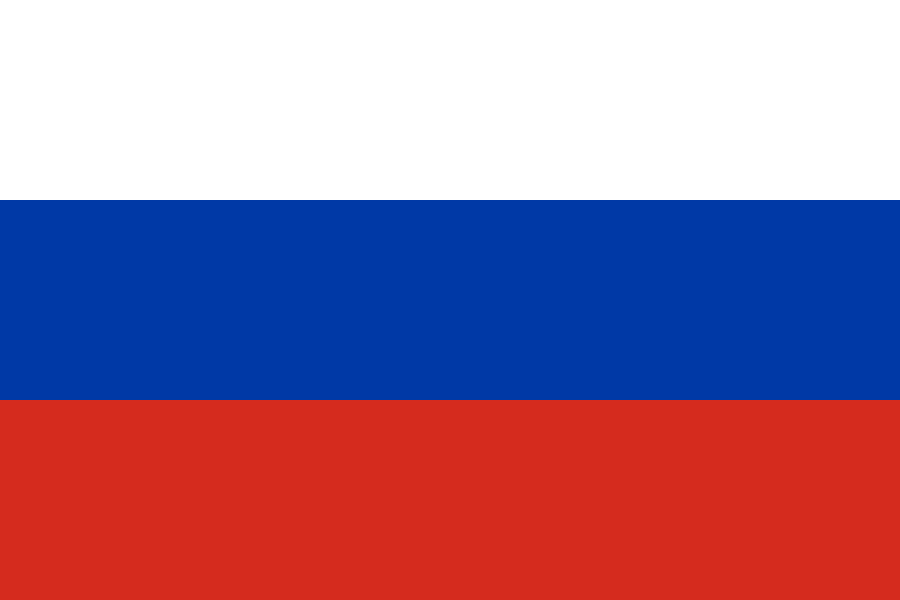
Russia, the largest country in the world, offers a rich tapestry of history, culture, and natural beauty. From the vibrant cities of Moscow and St. Petersburg to the serene landscapes of Siberia, there is much to explore beyond the capital.
Izborsk_landscapes.jpg : Strokin.ru derivative work: Jjtkk · CC BY 3.001
The best time to visit Russia is during the late spring (May to June) and early autumn (September to October) when the weather is mild and the tourist crowds are smaller.
A beautiful time when flowers bloom and temperatures rise, making it ideal for sightseeing.
Warm weather attracts tourists to beaches and outdoor festivals across the country.
A picturesque season with colorful foliage, perfect for exploring cultural sites.
02
Pick the neighbourhood by how you want the day to start and end, not by distance to one museum.
Experience the heart of Russia with its iconic landmarks and vibrant nightlife.
Busy and expensive.
Explore the cultural capital with its stunning architecture and museums.
Tourist-heavy in summer.
A blend of Tatar and Russian cultures, known for its Kremlin and vibrant atmosphere.
Less touristy than Moscow.
A resort city on the Black Sea, famous for its beaches and the 2014 Winter Olympics.
Best in summer.
A port city with stunning views and a unique blend of Russian and Asian influences.
Far from other major cities.
Gateway to Lake Baikal, known for its wooden architecture and historical significance.
Cold winters.
A city with a rich history, known for its role in the Russian Revolution.
Industrial vibe.
A historic city with a beautiful Kremlin and vibrant arts scene.
Less known to tourists.
03
Everyday food, eaten the way locals do. Look for a busy place rather than a ranked list.
A beet soup often served with sour cream, found in many traditional restaurants.
→ Try it homemade.
Dumplings filled with meat, popular in Siberian cuisine, available in local eateries.
→ Look for homemade versions.
Thin pancakes served with various fillings, found at street vendors and cafes.
→ Best with caviar.
A traditional Russian salad made with potatoes, peas, and meat, common at celebrations.
→ A must-try at festive meals.
Baked or fried buns filled with meat, vegetables, or sweet fillings, available at bakeries.
→ Perfect for a snack.
Buckwheat porridge, a staple in Russian cuisine, often served as a side dish.
→ Healthy and filling.
A fermented beverage made from bread, commonly found in markets and cafes.
→ Refreshing in summer.
04
An order that works on foot, with the trip out of the first city at the end.
Moscow's iconic square, home to the Kremlin and St. Basil's Cathedral.
One of the largest and oldest museums in the world, located in St. Petersburg.
The deepest freshwater lake in the world, known for its stunning natural beauty.
The fortified complex in Moscow, a symbol of Russian power and history.
A magnificent palace with beautiful gardens, often referred to as the 'Russian Versailles'.
A group of historic cities northeast of Moscow, showcasing traditional Russian architecture.
The longest railway line in the world, offering breathtaking views of Russia's landscapes.
Famous for its ballet and opera performances, located in Moscow.
An architectural marvel in St. Petersburg, known for its impressive dome.
Located in Moscow, it showcases the history of Russia from ancient times to the present.
A stunning baroque palace located in Tsarskoye Selo, near St. Petersburg.
Known for its volcanic landscapes and diverse wildlife, a paradise for nature lovers.
A UNESCO World Heritage site, showcasing the blend of Tatar and Russian cultures.
A stunning church in St. Petersburg, known for its colorful onion domes.
A large park and exhibition center in Moscow, showcasing Soviet architecture and culture.
The highest peak in Europe, located in the Caucasus Mountains, popular for skiing.
05
Airport to city, across the city, and onward to the next region.
Major airports include Sheremetyevo (SVO), Domodedovo (DME), and Pulkovo (LED).
The Trans-Siberian Railway offers a unique way to see the country, connecting major cities.
Cities have extensive metro and bus networks, making it easy to get around.
Available in major cities, but driving can be challenging due to traffic and road conditions.
06
Russia uses type C and type F plugs, with a standard voltage of 220V.
Credit cards are widely accepted, but it's good to have cash for small purchases.
Tipping is customary, usually around 10% in restaurants.
Russian is the official language; knowing basic phrases can be helpful.
A travel eSIM covers maps and tickets after landing.
A trip of at least 10 days is recommended to explore major attractions.