_banner_Maison_de_la_canne.jpg)
Dry Season
From December to April, the weather is pleasant and dry, ideal for beach activities.

Travel guide
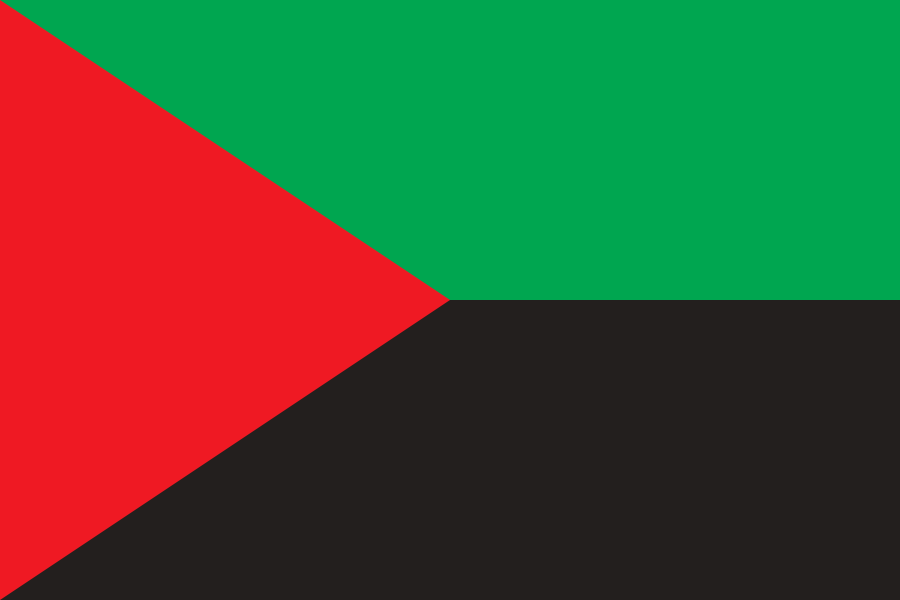
Martinique, a French Caribbean island, offers a blend of vibrant culture, stunning landscapes, and rich history. Beyond its capital, Fort-de-France, explore charming towns, beautiful beaches, and lush rainforests.
Tux-Man · CC001
The best time to visit Martinique is from December to April when the weather is dry and pleasant.
From December to April, the weather is pleasant and dry, ideal for beach activities.
From May to November, expect more rain and humidity, but fewer tourists.
From June to November, be aware of potential storms.
02
Pick the neighbourhood by how you want the day to start and end, not by distance to one museum.
The bustling capital with a mix of urban life and historical sites.
Can be crowded, especially during festivals.
A popular tourist area known for its beaches and golf courses.
Touristy but offers great amenities.
Famous for its beautiful beaches and local markets.
Can get busy on weekends.
Known for its stunning islets and rum distilleries.
Quieter than other tourist spots.
Once the island's capital, now a historical site with ruins.
Rich in history but less nightlife.
A charming town with a vibrant fishing port.
Authentic experience away from tourists.
A small village known for its agricultural landscape.
Ideal for nature lovers.
A laid-back area popular for water sports.
Great for kitesurfing enthusiasts.
03
Everyday food, eaten the way locals do. Look for a busy place rather than a ranked list.
Fried cod fritters, a popular snack found at local markets.
→ Try them from street vendors for authenticity.
A curry-like dish made with meat or fish and spices, often served with rice.
→ Look for it in local eateries.
Blood sausage seasoned with spices, typically enjoyed during festivals.
→ Best found at local food stalls.
A spicy fish salad made with avocado and citrus.
→ Commonly served in beachside restaurants.
Local rum made from sugarcane juice, a must-try.
→ Visit distilleries for tastings.
A meat pie traditionally made for special occasions.
→ Look for it in local bakeries.
Fruit tarts made with local tropical fruits.
→ Perfect for dessert at local cafes.
04
An order that works on foot, with the trip out of the first city at the end.
An active volcano offering hiking trails and stunning views.
A botanical garden showcasing tropical plants and flowers.
The remnants of the city destroyed by a volcanic eruption in 1902.
One of the most beautiful beaches on the island.
A large park in Fort-de-France with lush greenery and monuments.
A picturesque beach known for its clear waters and snorkeling.
A historic rum distillery with beautiful gardens.
A historic fort offering panoramic views of Fort-de-France.
A stunning church perched on a hill with beautiful architecture.
A nature reserve with hiking trails and scenic views.
A serene beach perfect for relaxation.
An architectural gem in Fort-de-France with a rich history.
A charming fishing village with beautiful beaches.
A quaint village known for its local crafts and surf spots.
A remote village with stunning natural beauty.
05
Airport to city, across the city, and onward to the next region.
The main airport is Martinique Aimé Césaire International Airport (FDF), connecting to various international destinations.
Renting a car is the best way to explore the island's diverse landscapes.
Buses are available for intercity travel, but schedules can be irregular.
Taxis are available but can be expensive; agree on a fare beforehand.
Biking is a great way to explore coastal areas and small towns.
06
Type C and E plugs are used; the standard voltage is 230V.
Euros are the official currency; credit cards are widely accepted.
Tipping is appreciated but not mandatory; round up the bill.
French is the official language; English is spoken in tourist areas.
A travel eSIM covers maps and tickets after landing.
A week is ideal to explore the island thoroughly.