_banner_Mosque.jpg)
Winter
Mild temperatures, ideal for exploring.

Travel guide
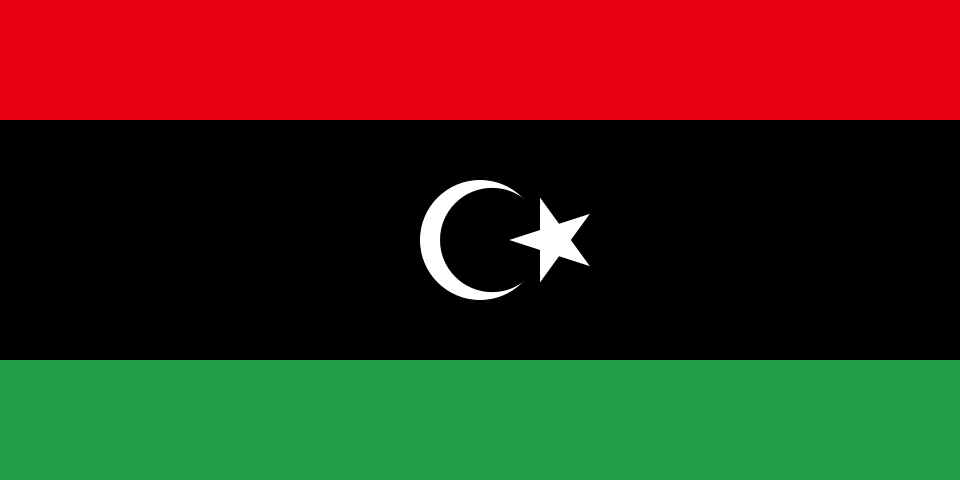
Libya, a country rich in history and natural beauty, offers diverse landscapes from Mediterranean beaches to vast deserts. Explore ancient ruins, vibrant markets, and the stunning Sahara.
Maher A. A. Abdussalam · CC001
The best time to visit Libya is during the cooler months from October to April, avoiding the extreme summer heat.
Mild temperatures, ideal for exploring.
Pleasant weather, perfect for outdoor activities.
High temperatures, best avoided for extensive travel.
02
Pick the neighbourhood by how you want the day to start and end, not by distance to one museum.
The capital city with a mix of modern and historical sites.
Busy and vibrant, but can be crowded.
Libya's second-largest city, known for its coastal views.
Less touristy, offering a more local experience.
Famous for its ancient Roman ruins and Mediterranean beaches.
Limited accommodations, plan ahead.
A UNESCO World Heritage site known for its unique architecture.
Remote, but offers a glimpse into traditional Berber life.
Home to the ancient city of Lepcis Magna, a must-see archaeological site.
Best visited with a guide for deeper insights.
A coastal city with beautiful beaches and a rich history.
Less developed for tourism, but charming.
Gateway to the Sahara, known for its stunning sand dunes.
Ideal for desert excursions.
A mountainous area with beautiful landscapes and historical significance.
Peaceful, but limited amenities.
03
Everyday food, eaten the way locals do. Look for a busy place rather than a ranked list.
A staple dish often served with meat and vegetables, found in local homes and restaurants.
→ Try it at family-run eateries.
A traditional soup made with lamb or chicken, available in many local markets.
→ Perfect for a warm meal.
A Libyan dish made from barley, typically served with sauce and meat.
→ Look for it in rural areas.
Libyan pasta often served with rich sauces, popular in coastal cities.
→ Best enjoyed fresh.
A spicy chili paste used in many dishes, found in local shops.
→ Adds a kick to any meal.
Sweet and nutritious, often sold in markets, especially in the south.
→ A great snack on the go.
04
An order that works on foot, with the trip out of the first city at the end.
An ancient Roman city with well-preserved ruins.
A Roman theater overlooking the Mediterranean Sea.
A prominent Roman arch located in Tripoli.
A UNESCO World Heritage site known for its unique architecture.
An ancient Greek city with stunning ruins and views.
Vast and mesmerizing, ideal for adventure seekers.
A bustling market area filled with shops and local culture.
A historic castle showcasing traditional architecture.
A museum located in Tripoli, offering insights into Libyan history.
A scenic waterfront promenade perfect for strolls.
An ancient site with remnants of Roman architecture.
A stunning range offering hiking and breathtaking views.
A beautiful oasis in the desert, ideal for relaxation.
Showcases Islamic art and culture in Tripoli.
Known for its beaches and vibrant local life.
05
Airport to city, across the city, and onward to the next region.
Main airports include Tripoli International Airport and Benghazi Benina Airport.
Buses and taxis are available in major cities for local travel.
Renting a car can provide more flexibility for exploring remote areas.
Many historical sites in cities are best explored on foot.
06
Libya uses type C and type L plugs.
Cash is widely used; ATMs are available in cities.
Tipping is appreciated but not mandatory.
Arabic is the official language; English is spoken in tourist areas.
A travel eSIM covers maps and tickets after landing.
A week is recommended to explore key sites.