
Dry Season
From December to April, this season offers pleasant weather and minimal rainfall.

Travel guide
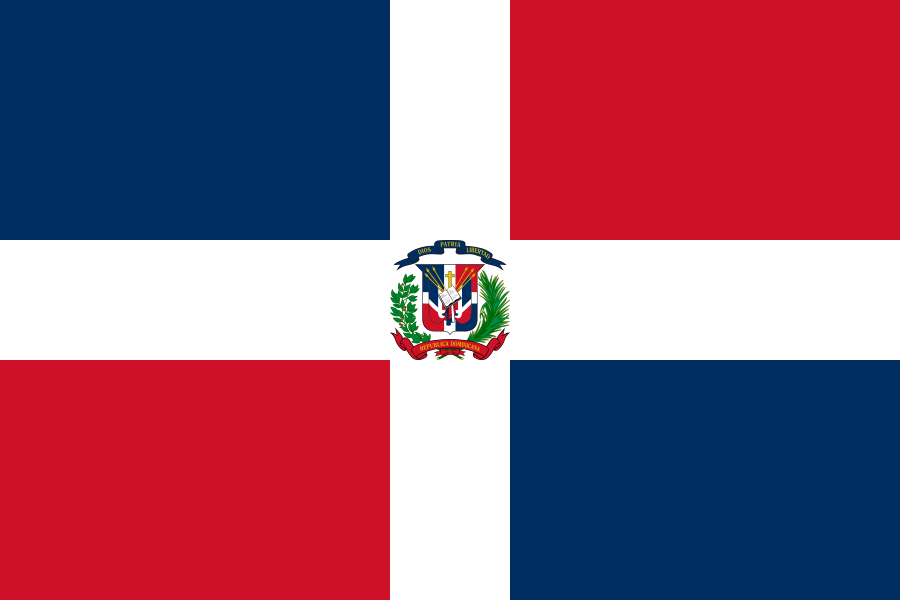
The Dominican Republic, known for its stunning beaches and rich culture, offers a diverse range of experiences beyond its capital, Santo Domingo. From lush mountains to vibrant towns, explore the natural beauty and historical significance of this Caribbean gem.
Tamas Iklodi w:en:User:It419 · CC BY-SA 3.001
The best time to visit is during the dry season from December to April when the weather is pleasant and ideal for outdoor activities.
From December to April, this season offers pleasant weather and minimal rainfall.
From May to November, expect higher humidity and occasional storms.
From June to November, be aware of potential storms.
02
Pick the neighbourhood by how you want the day to start and end, not by distance to one museum.
Experience the historical heart of Santo Domingo with colonial architecture and vibrant nightlife.
Can be crowded with tourists.
Famous for its all-inclusive resorts and beautiful beaches, perfect for relaxation.
More commercialized than other areas.
A picturesque peninsula known for whale watching and stunning natural landscapes.
Less developed, offering a tranquil experience.
Home to beautiful beaches and the historic Fort San Felipe.
Can be busy during peak season.
Known for its golf courses and the nearby Altos de Chavón, a replica of a Mediterranean village.
Limited nightlife options.
A charming fishing village that serves as a gateway to Saona Island.
Quieter than Punta Cana.
Nestled in the mountains, known for its cooler climate and adventure sports.
Requires travel to reach.
A highland town famous for its agricultural produce and stunning mountain views.
Cooler temperatures year-round.
03
Everyday food, eaten the way locals do. Look for a busy place rather than a ranked list.
A hearty stew made with various meats and root vegetables, often found at local eateries.
→ Try it on weekends for the best flavor.
Mashed plantains served with eggs and salami, a popular breakfast dish.
→ Best enjoyed at local diners.
The national dish consisting of rice, beans, and meat, commonly served in homes and restaurants.
→ Look for it in family-run establishments.
Fried green plantains, a common side dish or snack, found at street vendors.
→ Perfect for a quick bite.
Fish cooked in coconut sauce, a specialty in coastal regions.
→ Seek out seaside shacks for authenticity.
A sweet caramel-like dessert, widely available in bakeries.
→ A must-try for dessert lovers.
04
An order that works on foot, with the trip out of the first city at the end.
A stunning series of limestone caves and lagoons located near Santo Domingo.
The highest peak in the Caribbean, offering breathtaking views and hiking opportunities.
A picturesque island known for its pristine beaches and crystal-clear waters.
A replica of a 16th-century Mediterranean village with shops and restaurants.
A historic fortress in Puerto Plata with panoramic views of the ocean.
The oldest cathedral in the Americas, located in Santo Domingo's Colonial Zone.
A series of waterfalls perfect for hiking and swimming.
The largest lake in the Caribbean, known for its unique ecosystem.
Famous for its white sands and turquoise waters, ideal for relaxation.
A vibrant waterfront promenade perfect for strolling and enjoying local life.
A protected area with mangroves, caves, and diverse wildlife.
A museum in Santo Domingo showcasing the history and culture of the Dominican Republic.
05
Airport to city, across the city, and onward to the next region.
The main airports are Las Américas International Airport (SDQ), Punta Cana International Airport (PUJ), and Gregorio Luperón International Airport (POP).
Long-distance buses connect major cities and are a cost-effective way to travel.
Taxis are available in urban areas; agree on a fare before starting your journey.
Renting a car is a great way to explore at your own pace, especially in rural areas.
Domestic flights are available for quicker travel between popular destinations.
06
The country uses type A and B plugs, with a standard voltage of 110V.
US dollars are widely accepted, but it's advisable to have some Dominican pesos for local transactions.
A tip of 10-15% is customary in restaurants and for services.
Spanish is the official language, but English is spoken in tourist areas.
A travel eSIM covers maps and tickets after landing.
A week is ideal to explore the main attractions and relax.