
Dry Season
The dry season offers pleasant weather and is ideal for outdoor activities.

Travel guide
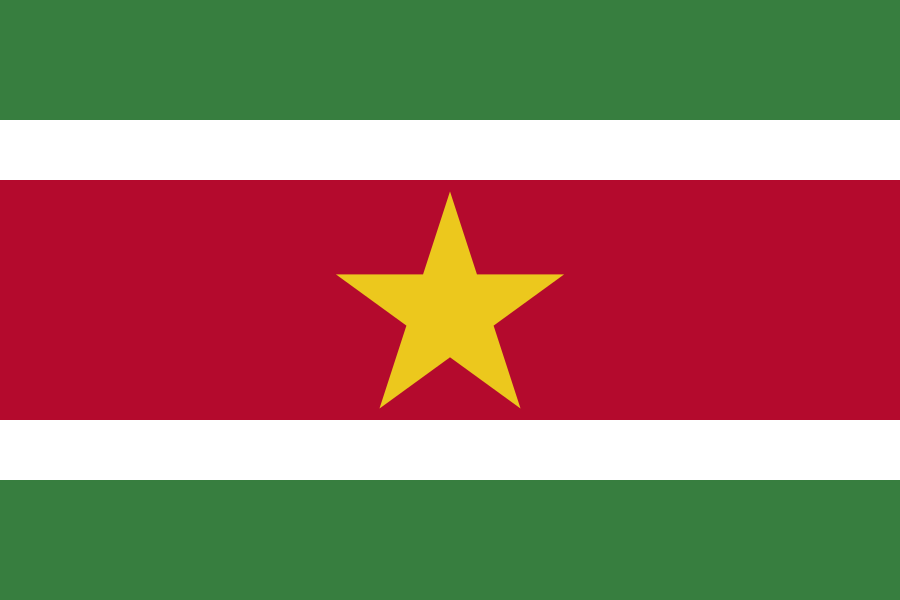
Suriname, a small country on the northeastern coast of South America, is known for its rich cultural diversity, lush rainforests, and vibrant cities. Beyond its capital, Paramaribo, travelers can explore stunning natural landscapes, historical sites, and unique culinary experiences.
WiDi · CC BY-SA 3.001
The best time to visit Suriname is during the dry season, which runs from August to November, offering pleasant weather for outdoor activities.
The dry season offers pleasant weather and is ideal for outdoor activities.
The wet season brings heavy rains, making travel more challenging.
The transitional months between wet and dry seasons can be unpredictable.
02
Pick the neighbourhood by how you want the day to start and end, not by distance to one museum.
The capital city with colonial architecture and a lively atmosphere.
Busy and vibrant, but can be noisy.
A nature reserve with stunning views and hiking trails.
Limited accommodations; book in advance.
A small village known for its beautiful beaches and tranquility.
Fewer amenities; ideal for relaxation.
A border town with a unique blend of cultures and access to French Guiana.
Less touristy; experience local life.
A rural area known for its agricultural landscapes and local communities.
Limited services; prepare accordingly.
Home to the Brokopondo Reservoir and opportunities for fishing and hiking.
Remote; ideal for nature lovers.
A region with rich indigenous culture and beautiful rivers.
Access may be challenging; plan ahead.
A remote area known for its eco-lodges and pristine nature.
Limited access; book eco-lodges in advance.
03
Everyday food, eaten the way locals do. Look for a busy place rather than a ranked list.
A traditional Surinamese dish made with chicken and pomtajer.
→ Try it at local family gatherings or markets.
A flatbread served with various fillings, often enjoyed as street food.
→ Look for roti stands in Paramaribo.
A flavorful chicken soup with spices and vegetables.
→ Popular in local eateries and food stalls.
Fried noodles with vegetables and meat, a common dish in Suriname.
→ Often found in local restaurants.
Grilled chicken skewers served with peanut sauce.
→ A must-try at street food vendors.
A sweet dessert made from cassava and coconut.
→ Look for it at local bakeries.
04
An order that works on foot, with the trip out of the first city at the end.
A historic fort that offers insight into Suriname's colonial past.
A bustling market where you can experience local life and cuisine.
The largest wooden structure in the Western Hemisphere.
A scenic river perfect for boat tours and wildlife spotting.
A stunning park with hiking trails and diverse wildlife.
A historical site of a former Jewish settlement.
A nature reserve with walking trails and rich biodiversity.
A beautiful palm garden in the heart of Paramaribo.
Experience the culture of the Maroon people.
A major river offering boat tours and fishing opportunities.
Learn about the history of pineapple cultivation in Suriname.
A flat-topped mountain offering breathtaking views.
05
Airport to city, across the city, and onward to the next region.
Most international flights arrive at Johan Adolf Pengel International Airport (PBM).
Domestic flights connect Paramaribo with other regions, making travel convenient.
Buses and taxis are available for local travel, while boats are common for river transport.
Car rentals are available in Paramaribo for those who prefer to drive.
Explore the waterways of Suriname through organized boat tours.
06
Type C and F plugs are used; voltage is 127V.
Local currency is the Surinamese dollar; cash is widely accepted.
Tipping is appreciated but not mandatory; 10% is common.
Dutch is the official language; English is widely understood.
A travel eSIM covers maps and tickets after landing.
A stay of 7 to 10 days is recommended to explore the highlights.