
Spring
A time of blooming flowers and mild temperatures, ideal for outdoor activities.

Travel guide
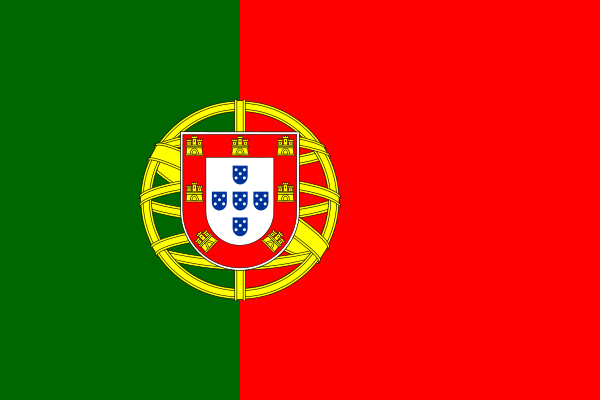
Portugal, a vibrant country on the Iberian Peninsula, offers stunning landscapes, rich history, and diverse culture. From the beaches of the Algarve to the vineyards of the Douro Valley, explore its unique regions and culinary delights.
Tsy1980 · CC BY-SA 4.001
The best time to visit Portugal is during spring (March to May) and fall (September to October) when the weather is mild and the tourist crowds are smaller.
A time of blooming flowers and mild temperatures, ideal for outdoor activities.
Hot weather perfect for beach vacations and festivals.
Cooler temperatures and beautiful autumn colors, great for sightseeing.
02
Pick the neighbourhood by how you want the day to start and end, not by distance to one museum.
The oldest district in Lisbon, known for its narrow streets and Fado music.
Can be crowded with tourists.
A lively neighborhood famous for its nightlife and vibrant atmosphere.
Noisy at night.
A cultural district with shops, cafes, and theaters, perfect for art lovers.
Higher prices for accommodation.
A coastal town with beautiful beaches and a charming marina.
Can be busy in summer.
Known for its romantic 19th-century architecture and stunning palaces.
Best visited early to avoid crowds.
Famous for its port wine and picturesque riverside area.
Hilly terrain may be challenging.
Renowned for its terraced vineyards and scenic river views.
Best explored by boat.
Known for its stunning beaches, cliffs, and warm climate.
Tourist-heavy in summer.
A UNESCO World Heritage site with well-preserved Roman ruins.
Compact and walkable.
Home to one of the oldest universities in Europe and beautiful gardens.
Less touristy than Lisbon and Porto.
03
Everyday food, eaten the way locals do. Look for a busy place rather than a ranked list.
A traditional cod dish made with shredded potatoes and eggs, found in many Lisbon restaurants.
→ Try it at local taverns.
Famous custard tarts originating from Lisbon, best enjoyed at Pastéis de Belém.
→ Go early for the freshest ones.
A hearty sandwich from Porto, layered with meats and topped with a rich sauce.
→ Pair with a local beer.
A traditional green soup made with kale and potatoes, commonly found in the north.
→ Perfect for a light meal.
Spicy grilled chicken, popular in the Algarve region.
→ Best enjoyed with rice.
A pork sandwich seasoned with garlic and spices, a popular street food in Lisbon.
→ Look for food stalls.
04
An order that works on foot, with the trip out of the first city at the end.
An iconic tower in Lisbon, symbolizing Portugal's Age of Discoveries.
A colorful palace in Sintra, known for its Romantic architecture.
A picturesque riverside area in Porto, filled with cafes and vibrant life.
Famous for its scenic beauty and wine tours, perfect for a boat trip.
Known for stunning cliffs and beautiful beaches, ideal for sunbathing.
Well-preserved Roman ruins located in the heart of Évora.
A historic castle in Lisbon offering panoramic views of the city.
One of the oldest universities in Europe, known for its stunning library.
A chapel in Évora decorated with human bones, a unique sight.
Beautiful sandy beaches perfect for swimming and relaxation.
One of the largest aquariums in Europe, showcasing marine life.
A UNESCO World Heritage site known for its stunning Gothic architecture.
05
Airport to city, across the city, and onward to the next region.
Portugal's main airports include Lisbon (LIS), Porto (OPO), and Faro (FAO).
Trains connect major cities, offering scenic views along the way.
Buses provide access to rural areas and smaller towns.
The iconic yellow trams are a fun way to explore the city.
Renting a car is ideal for exploring the Algarve and Douro Valley.
06
Type C and F plugs are used; voltage is 230V.
Credit cards are widely accepted, but carry some cash for small purchases.
Tipping is appreciated but not mandatory; round up the bill or leave small change.
Portuguese is the official language; English is commonly spoken in tourist areas.
A travel eSIM covers maps and tickets after landing.
A week is ideal to explore the main attractions.