
Winter (December to February)
Cool and dry weather, ideal for sightseeing.

Travel guide
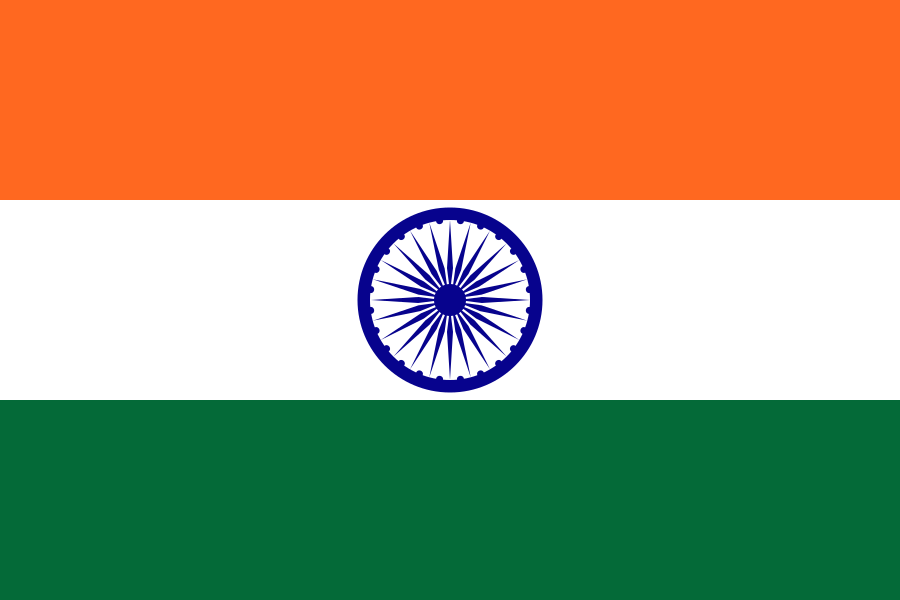
India, a vast country known for its diverse culture, rich history, and stunning landscapes, offers travelers an array of experiences beyond its bustling capital, New Delhi. From the serene backwaters of Kerala to the majestic forts of Rajasthan, India is a land of contrasts and vibrant traditions.
Panoramic View of TajMahal.jpg : Kumaravels derivative work: ויקיג'אנקי · CC BY 2.5 in01
The best time to visit India is during the cooler months from October to March, when the weather is more pleasant for exploring.
Cool and dry weather, ideal for sightseeing.
Heavy rains in many regions, best avoided for travel.
Hot temperatures, especially in northern regions.
02
Pick the neighbourhood by how you want the day to start and end, not by distance to one museum.
Known as the Silicon Valley of India, Bengaluru offers a mix of modernity and tradition with its parks and tech hubs.
Expect a vibrant nightlife.
The Pink City is famous for its historic palaces and forts, showcasing the grandeur of Rajasthan.
Best to visit during winter.
One of the oldest cities in the world, Varanasi is a spiritual hub along the Ganges River.
Experience the Ganga Aarti at sunset.
Famous for its beaches and Portuguese heritage, Goa is a popular destination for relaxation and parties.
Visit during the off-peak season for fewer crowds.
Known for its backwaters and lush landscapes, Kerala offers a tranquil escape with Ayurvedic treatments.
Don't miss a houseboat experience.
Home to the iconic Taj Mahal, Agra is a must-visit for its architectural marvels.
Go early to avoid crowds.
The financial capital of India, Mumbai is known for its bustling streets, Bollywood, and diverse cuisine.
Explore local street food.
Known as the Yoga Capital of the World, Rishikesh is a serene destination for spiritual seekers.
Ideal for yoga retreats.
03
Everyday food, eaten the way locals do. Look for a busy place rather than a ranked list.
A fragrant rice dish with meat or vegetables, best found in Hyderabad.
→ Try the local variations.
A crispy rice crepe filled with spiced potatoes, popular in South India.
→ Best enjoyed with chutney.
A creamy tomato-based curry, a staple in North Indian cuisine.
→ Pair with naan for a complete meal.
A flavorful lamb curry from Kashmir, known for its rich spices.
→ Perfect with steamed rice.
A popular street snack consisting of hollow puris filled with spicy water.
→ Enjoy from local vendors.
A deep-fried pastry filled with spiced potatoes, widely available across India.
→ Great as a snack or appetizer.
A savory snack made with potatoes, chickpeas, and various chutneys, found in street stalls.
→ Try different regional varieties.
04
An order that works on foot, with the trip out of the first city at the end.
An iconic symbol of love, this white marble mausoleum in Agra is a UNESCO World Heritage Site.
Known as the Palace of Winds, this stunning structure features intricate latticework.
The steps leading to the Ganges River are a spiritual hub for pilgrims.
A network of lagoons and lakes, ideal for houseboat cruises amidst lush scenery.
A historic archway in Mumbai, overlooking the Arabian Sea.
A sacred Sikh shrine in Amritsar, known for its stunning architecture and serene atmosphere.
Ancient rock-cut caves featuring intricate sculptures and frescoes, located in Maharashtra.
A suspension bridge offering stunning views of the Ganges and surrounding hills.
A historical palace known for its grand architecture and beautiful gardens.
A UNESCO World Heritage Site, showcasing the ancient Mayan civilization.
A magnificent garden tomb in Delhi, a precursor to the Taj Mahal.
The largest mangrove forest in the world, home to diverse wildlife including the Bengal tiger.
An architectural marvel dedicated to the Sun God, located in Odisha.
A living fort in the heart of the Thar Desert, known for its yellow sandstone architecture.
A historic railway station in Mumbai, recognized for its Victorian Gothic architecture.
A picturesque valley in Ladakh, known for its stunning landscapes and unique sand dunes.
05
Airport to city, across the city, and onward to the next region.
India's major airports include Indira Gandhi International (DEL) and Chhatrapati Shivaji Maharaj International (BOM).
The Indian Railways network is one of the largest in the world, offering extensive connectivity across the country.
State-run and private buses connect cities and towns, providing an affordable travel option.
Rickshaws, taxis, and app-based ride services are widely available in urban areas.
Renting a car is an option for those who prefer to drive, but be aware of local traffic rules.
06
India uses Type C, D, and M plugs. Voltage is 230V.
While cards are accepted in many places, carrying cash is advisable for small vendors.
Tipping is customary; around 10% is appreciated in restaurants.
Hindi and English are widely spoken, along with numerous regional languages.
A travel eSIM covers maps and tickets after landing.
A stay of at least 10 days is recommended to explore major attractions.