
Dry Season
May to October offers cooler temperatures and less rain, ideal for wildlife viewing.

Travel guide
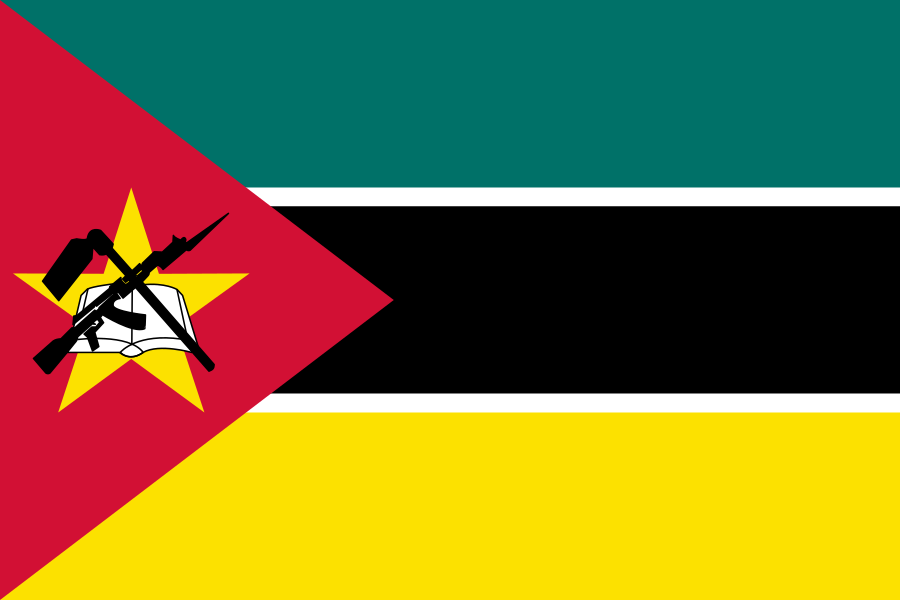
Mozambique is a stunning country located on the southeastern coast of Africa, known for its beautiful beaches, rich culture, and diverse wildlife. Beyond its capital, Maputo, Mozambique offers a variety of experiences across its regions, from the islands of the Bazaruto Archipelago to the bustling markets of Beira.
Boats_outside_Island_of_Mozambique.jpg : Stig Nygaard derivative work: Jjtkk · CC BY 2.001
The best time to visit Mozambique is during the dry season from May to October, when the weather is cooler and wildlife is more easily spotted.
May to October offers cooler temperatures and less rain, ideal for wildlife viewing.
November to April brings heavy rains, but the landscape is lush and vibrant.
April and October are transitional months with variable weather.
02
Pick the neighbourhood by how you want the day to start and end, not by distance to one museum.
The vibrant capital city offers a mix of colonial architecture, markets, and nightlife.
Busy and lively, especially on weekends.
Known for its stunning beaches and historical significance, Inhambane is a great spot for relaxation and exploration.
Quieter than Maputo, perfect for a laid-back stay.
A group of islands offering pristine beaches and excellent diving opportunities.
Access is primarily by boat or small plane.
Mozambique's second-largest city, known for its port and colonial architecture.
Less touristy, offering a glimpse into local life.
A coastal city in the north, serving as a gateway to the Quirimbas Archipelago.
Great for diving and exploring marine life.
Located along the Zambezi River, Tete is rich in history and culture.
Less frequented by tourists, offering authentic experiences.
A charming town known for its access to the Bazaruto Archipelago and vibrant local markets.
Ideal for water sports and local cuisine.
A cultural hub in northern Mozambique, known for its diverse population and markets.
Explore local crafts and traditions.
03
Everyday food, eaten the way locals do. Look for a busy place rather than a ranked list.
A spicy grilled chicken dish, commonly found at local eateries.
→ Try it at street vendors for an authentic taste.
A traditional dish made with cassava leaves, peanuts, and coconut milk.
→ Best enjoyed in coastal towns.
A flavorful dish featuring fresh seafood and coconut milk.
→ Look for it in beachside restaurants.
A staple made from cornmeal, often served with stews.
→ A must-try for a true local experience.
A hearty bean stew with meat, popular across Mozambique.
→ Enjoy it at family-run restaurants.
Rice cooked with coconut milk, a common side dish.
→ Pair it with any seafood dish.
Locally caught fish grilled to perfection, available at coastal markets.
→ Best enjoyed with a squeeze of lime.
04
An order that works on foot, with the trip out of the first city at the end.
A biodiversity hotspot with a variety of wildlife and stunning landscapes.
Famous for its beautiful islands and rich marine life.
A protected area home to elephants and other wildlife.
A group of islands known for their natural beauty and cultural heritage.
Showcases the history and culture of the Inhambane region.
A historic fort in the city of Mozambique Island.
An architectural gem and a hub of local transport.
A popular beach known for its surf and diving spots.
A vibrant market where you can find local crafts and food.
One of the largest lakes in Africa, ideal for fishing and relaxation.
A UNESCO World Heritage site with rich history and architecture.
A stunning beach destination known for its diving and marine life.
An iconic tree species found throughout the country.
A beautiful mountain range perfect for hiking and nature lovers.
A historic bridge offering scenic views of the Zambezi River.
A historic lighthouse that is a symbol of Beira.
An architectural landmark and a hub for local transport.
05
Airport to city, across the city, and onward to the next region.
Main airports include Maputo International Airport (MPM) and Nampula Airport (APL).
Buses and chapa (shared taxis) are the primary modes of transport within cities.
Ferries connect the mainland to various islands and coastal towns.
Available in major cities for those wishing to explore at their own pace.
Biking is a popular way to explore coastal areas and towns.
06
Type C and F plugs are commonly used.
Mozambican Metical (MZN) is the local currency.
Tipping is appreciated but not mandatory.
Portuguese is the official language.
A travel eSIM covers maps and tickets after landing.
A stay of at least 7-10 days is recommended.