
Dry Season
From November to April, this season offers the best weather for travel.

Travel guide
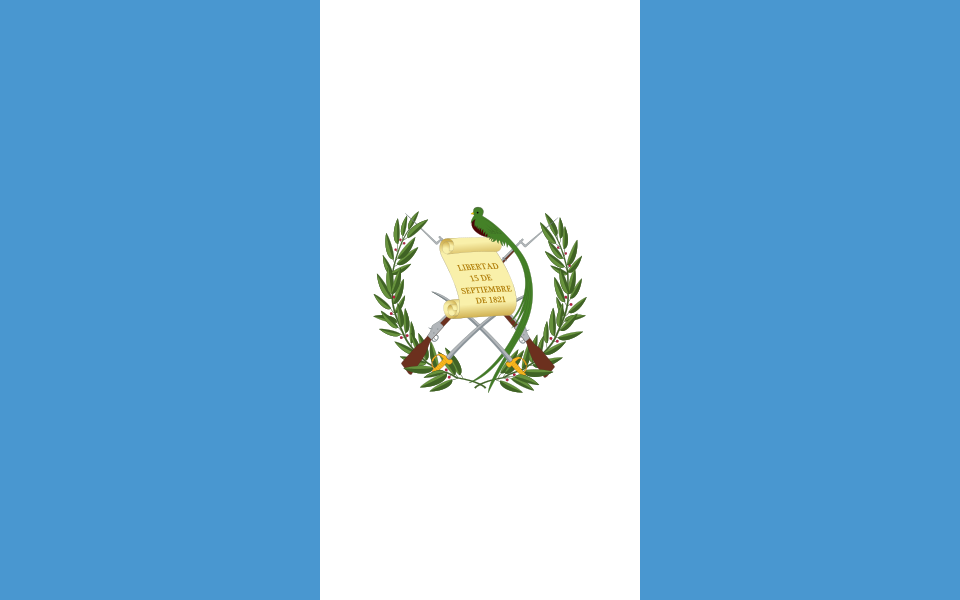
Guatemala, known for its rich Mayan heritage and stunning landscapes, offers a diverse array of experiences beyond its capital, Guatemala City. Explore ancient ruins, vibrant markets, and breathtaking natural wonders throughout the country.
Arjuno3 · CC BY 2.001
The best time to visit Guatemala is during the dry season from November to April, when the weather is pleasant and ideal for outdoor activities.
From November to April, this season offers the best weather for travel.
From May to October, expect rain, especially in the afternoons.
September and October can be unpredictable with varying weather.
02
Pick the neighbourhood by how you want the day to start and end, not by distance to one museum.
A UNESCO World Heritage site known for its colonial architecture and cobblestone streets.
Can be crowded with tourists.
Surrounded by volcanoes, this picturesque lake offers stunning views and local culture.
Access to villages by boat.
Known as Xela, it's a hub for language schools and indigenous culture.
Higher altitude may affect some visitors.
A charming island town on Lake Petén Itzá, close to Tikal National Park.
Can be busy during peak season.
Home to ancient Mayan ruins and dense jungle, a must-visit for history enthusiasts.
Early visits recommended to avoid heat.
A Caribbean town known for its Garifuna culture and beautiful beaches.
Access by boat only.
Famous for its natural limestone pools and lush surroundings.
Requires some hiking to reach.
The capital offers museums, parks, and a vibrant urban scene.
Traffic can be heavy.
03
Everyday food, eaten the way locals do. Look for a busy place rather than a ranked list.
A traditional stew made with chicken or beef, often found in local markets.
→ Try it at street vendors for authentic flavors.
A spicy turkey soup, popular in the highlands.
→ Look for it in local restaurants.
A green chicken stew made with tomatillos and cilantro.
→ Best enjoyed with rice.
Corn dough filled with meats or vegetables, wrapped in banana leaves.
→ Available at many street stalls.
Stuffed peppers, often served with rice and tomato sauce.
→ A common dish in family-run eateries.
The national beer, perfect for cooling off.
→ Widely available in stores and restaurants.
04
An order that works on foot, with the trip out of the first city at the end.
An ancient Mayan city with impressive temples and wildlife.
Known for its stunning views and surrounding volcanoes.
Famous for its well-preserved colonial architecture.
A natural monument with turquoise pools and waterfalls.
A vibrant market known for handicrafts and local culture.
An active volcano that offers hiking opportunities.
A city rich in indigenous culture and history.
A unique town with Caribbean influences and beautiful beaches.
A viewpoint in Antigua offering panoramic views of the city.
Known for its lush landscapes and coffee plantations.
An archaeological site with impressive Mayan ruins.
A historic church in Antigua with beautiful architecture.
05
Airport to city, across the city, and onward to the next region.
The main international airports are La Aurora International Airport (GUA) and Mundo Maya International Airport (FRS).
Buses are a popular and economical way to travel between cities and towns.
Shared shuttles provide convenient transport to popular tourist destinations.
Taxis are available in urban areas, but agree on a fare before starting your journey.
Services like Uber operate in Guatemala City for added convenience.
06
Type A and B plugs are used, with a standard voltage of 120V.
The local currency is the Guatemalan quetzal. ATMs are widely available.
A tip of 10-15% is customary in restaurants.
Spanish is the official language, with many indigenous languages spoken.
A travel eSIM covers maps and tickets after landing.
A trip of 7-10 days is recommended to explore major attractions.