_banner_Beach.jpg)
Dry Season
From January to May, characterized by sunny days and minimal rainfall.

Travel guide
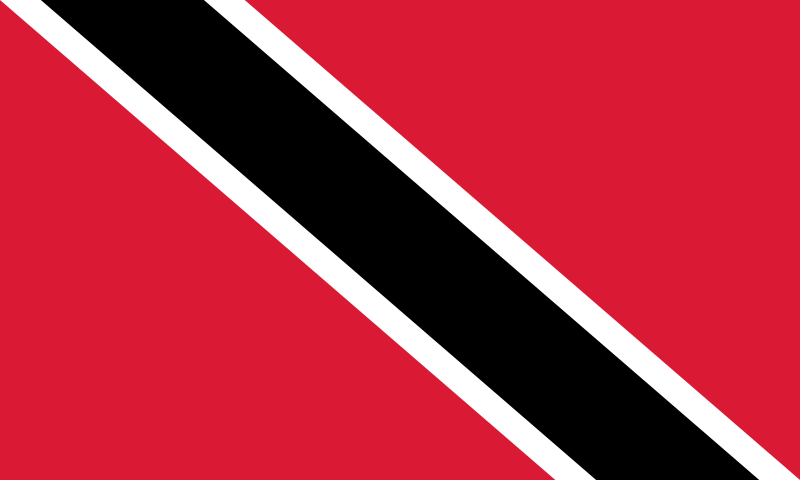
Trinidad & Tobago, a twin-island nation in the Caribbean, offers a rich tapestry of culture, stunning beaches, and vibrant festivals. Beyond the capital, Port of Spain, explore the diverse landscapes, from lush rainforests to coral reefs, and indulge in the local cuisine that reflects the islands' multicultural heritage.
Wikifurn · CC001
The best time to visit is during the dry season from January to May, when the weather is pleasant and ideal for outdoor activities.
From January to May, characterized by sunny days and minimal rainfall.
From June to December, featuring higher humidity and occasional storms.
Typically held in February, a vibrant celebration of music, dance, and culture.
02
Pick the neighbourhood by how you want the day to start and end, not by distance to one museum.
The bustling capital with a mix of modernity and history, offering easy access to attractions.
Busy during Carnival season.
A vibrant city known for its markets and local culture, located south of Port of Spain.
Less touristy than the capital.
The smaller island known for its stunning beaches and laid-back atmosphere.
Quieter than Trinidad.
The capital of Tobago, offering access to local shops and the ferry terminal.
Good base for exploring Tobago.
A growing town with a mix of residential and commercial areas, known for its lively markets.
Experience local life.
A town with rich history and culture, close to the Northern Range mountains.
Great for hiking enthusiasts.
A popular tourist area in Tobago, known for its beaches and nightlife.
Busy during peak season.
A coastal town known for its oil industry and beautiful beaches.
Less crowded beaches.
03
Everyday food, eaten the way locals do. Look for a busy place rather than a ranked list.
A popular street food made of two flatbreads filled with curried chickpeas, found at food stalls.
→ Try it with various chutneys.
A traditional dish made from leafy greens, often served as a soup or side, available in local restaurants.
→ A must-try for its unique flavor.
A fried shark sandwich served in a fried dough, commonly found at Maracas Beach.
→ Customize with various toppings.
A flatbread filled with curried meats or vegetables, popular in Trinidad, available at local eateries.
→ Great for a hearty meal.
A pickled dish made with chicken or pork, often enjoyed as a snack, found at roadside vendors.
→ Perfect for a light bite.
A staple dish often served with meats, available in many local restaurants.
→ A comforting local favorite.
04
An order that works on foot, with the trip out of the first city at the end.
Famous for its scenic beauty and vibrant atmosphere, ideal for swimming and relaxation.
The largest natural deposit of asphalt in the world, located in La Brea.
A protected rainforest area with hiking trails and diverse wildlife.
A historic fort in Tobago offering panoramic views and a glimpse into colonial history.
A large public park in Port of Spain, perfect for picnics and outdoor activities.
A wetland area home to numerous bird species, ideal for birdwatching tours.
A row of historic mansions in Port of Spain showcasing Victorian architecture.
A shallow lagoon in Tobago, perfect for swimming and snorkeling.
A renowned eco-tourism site in the Northern Range, great for birdwatching.
A stunning beach in Tobago known for its crystal-clear waters and water sports.
A Hindu temple built on stilts in the sea, located in Waterloo.
Another view of the famous Pitch Lake, showcasing its unique geological features.
05
Airport to city, across the city, and onward to the next region.
Trinidad & Tobago is served by two main airports: Piarco International Airport (POS) and ANR Robinson International Airport (TAB).
Regular ferry services operate between Trinidad and Tobago, providing a scenic route between the islands.
Buses and taxis are available for local travel, with routes connecting major towns and attractions.
Car rentals are available for those who prefer to explore at their own pace.
06
Type G plugs are used; the standard voltage is 115V.
Credit cards are widely accepted, but carry cash for small purchases and local markets.
Tipping is customary; around 10-15% is appreciated in restaurants.
English is the official language, with a rich mix of local dialects.
A travel eSIM covers maps and tickets after landing.
A stay of 7 to 10 days is recommended to explore both islands.