
Dry Season
The dry season runs from December to April, offering the best weather for outdoor activities.

Travel guide
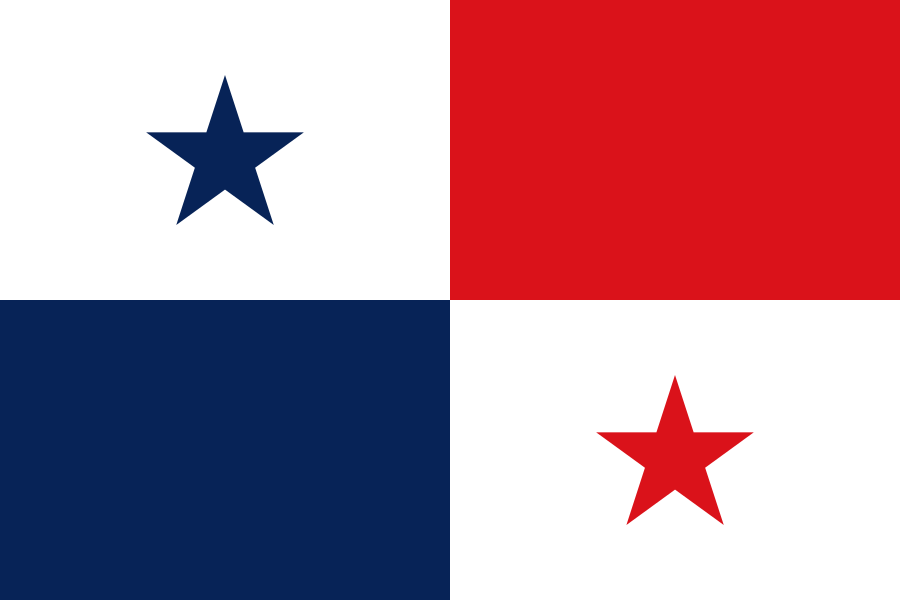
Panama, a vibrant Central American country, offers a rich blend of culture, history, and stunning natural beauty. From the iconic Panama Canal to lush rainforests and beautiful beaches, there's much to explore beyond the capital city of Panama City.
Panama_canal_panoramic_view_from_the_top_of_Ancon_hill.jpg : Brian Gratwicke der · CC BY 2.001
The best time to visit Panama is during the dry season, which runs from December to April. This period offers pleasant weather and is ideal for outdoor activities.
The dry season runs from December to April, offering the best weather for outdoor activities.
The wet season lasts from May to November, with frequent rain but lush landscapes.
Temperatures are cooler in the highlands, making it a great time for hiking and exploring.
02
Pick the neighbourhood by how you want the day to start and end, not by distance to one museum.
A historic district with colonial architecture, vibrant nightlife, and cultural attractions.
Can be crowded with tourists.
A lively neighborhood known for its restaurants, bars, and proximity to public transport.
Busy atmosphere, especially at night.
A beautiful archipelago famous for its beaches, diving, and laid-back vibe.
Requires a flight or long bus ride.
A charming mountain town known for coffee plantations and hiking trails.
Cooler temperatures at higher altitudes.
The capital of Chiriquí province, offering a mix of urban and rural experiences.
Less touristy than other areas.
An archipelago known for its indigenous culture and stunning beaches.
Access requires a boat trip.
A port city with historical significance and access to the Panama Canal.
Less developed than Panama City.
A small town near the Panama Canal, ideal for nature lovers and birdwatching.
Limited accommodation options.
03
Everyday food, eaten the way locals do. Look for a busy place rather than a ranked list.
A traditional chicken soup, best enjoyed at local eateries.
→ Try it on a rainy day for comfort.
Fresh fish marinated in citrus, commonly found at beachside shacks.
→ Look for the freshest catches.
Shredded beef stew, often served with rice and plantains.
→ A hearty local favorite.
Fried green plantains, a popular snack or side dish.
→ Perfect with ceviche.
Corn dough filled with meat or vegetables, wrapped in banana leaves.
→ Great for breakfast.
Chicken and rice dish seasoned with spices, found in many homes.
→ A comforting classic.
A sweet corn drink, perfect for cooling off.
→ Look for street vendors.
04
An order that works on foot, with the trip out of the first city at the end.
An engineering marvel that connects the Atlantic and Pacific Oceans.
A UNESCO World Heritage site with charming streets and historic buildings.
Known for its stunning beaches and vibrant marine life.
A UNESCO World Heritage site with rich biodiversity and beautiful islands.
A green oasis in Panama City, offering hiking trails and wildlife.
A scenic road with views of the city skyline and the canal.
A picturesque town in a volcanic crater, known for its markets and hiking.
Famous for their pristine beaches and indigenous culture.
A remote area with diverse ecosystems and indigenous communities.
A resort offering access to the rainforest and wildlife tours.
A museum dedicated to Panama's biodiversity and natural history.
A historic fort with views of the Chagres River and Caribbean Sea.
The ruins of the original Panama City, rich in history.
A hill offering panoramic views of the city and canal.
A UNESCO site shared with Costa Rica, known for its biodiversity.
05
Airport to city, across the city, and onward to the next region.
Tocumen International Airport (PTY) and David Airport (DAV) serve as the main gateways to Panama.
Buses are an affordable way to travel between cities and regions.
Taxis are readily available in urban areas, but agree on a fare beforehand.
The Metro in Panama City is efficient and connects key areas.
Consider domestic flights for longer distances, especially to islands.
06
Type A and B plugs are used, with a standard voltage of 110V.
The US dollar is widely accepted, but it's good to have some local currency.
Tip around 10% in restaurants and for services.
Spanish is the official language, but English is spoken in tourist areas.
A travel eSIM covers maps and tickets after landing.
A week is ideal to explore the main attractions.