
Dry Season
From May to October, the weather is pleasant and ideal for outdoor activities.

Travel guide
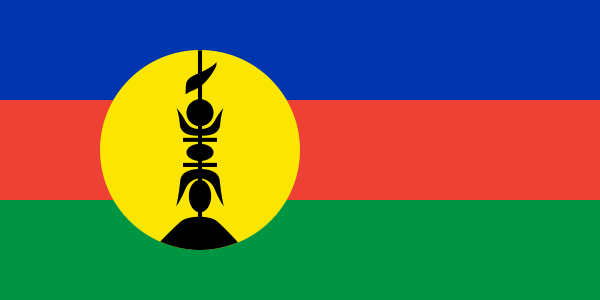
New Caledonia, a stunning archipelago in the South Pacific, offers a unique blend of French and Melanesian cultures, pristine beaches, and vibrant coral reefs. Beyond its capital, Nouméa, visitors can explore diverse landscapes, from lush mountains to idyllic islands.
Col_de_Prony.jpg : Fourrure derivative work: Inkey · CC BY-SA 2.001
The best time to visit New Caledonia is during the dry season from May to October when the weather is pleasant and ideal for outdoor activities.
From May to October, the weather is pleasant and ideal for outdoor activities.
From November to April, expect higher humidity and rainfall.
April and November can be unpredictable, with mixed weather.
02
Pick the neighbourhood by how you want the day to start and end, not by distance to one museum.
The capital city offers a mix of urban life, beaches, and cultural attractions.
Busy city life with amenities.
Known for its stunning beaches and clear waters, perfect for relaxation.
More remote, less nightlife.
A beautiful island with rich cultural heritage and natural beauty.
Limited accommodation options.
Famous for its surf spots and stunning landscapes.
Less touristy, more local vibe.
Known for its dramatic cliffs and natural beauty.
Limited services available.
A quieter area with beautiful beaches and local culture.
Far from major attractions.
Offers a glimpse into traditional Kanak culture and beautiful landscapes.
Less developed infrastructure.
A small town known for its natural beauty and tranquility.
Limited tourist facilities.
03
Everyday food, eaten the way locals do. Look for a busy place rather than a ranked list.
A traditional dish made with meat and vegetables wrapped in banana leaves, found at local markets.
→ Try it at a local festival.
A delicacy often found in coastal restaurants, known for its sweet meat.
→ Best enjoyed fresh.
Freshly caught seafood served in many beachside eateries.
→ Look for daily specials.
French-style crepes available in cafes, both sweet and savory.
→ Perfect for a light meal.
A root vegetable commonly used in local dishes, found in markets.
→ Try it boiled or fried.
Fresh fish served raw, available in many restaurants.
→ Best with local catch.
Reflecting French influence, available in many bistros.
→ Pair with local wine.
04
An order that works on foot, with the trip out of the first city at the end.
An iconic lighthouse located on a small island, offering stunning views.
Known for its beautiful beaches and clear waters, ideal for snorkeling.
Dramatic cliffs with breathtaking ocean views, perfect for photography.
A cultural center showcasing Kanak culture and art.
A beautiful park with hiking trails and diverse wildlife.
Famous for its stunning beaches and crystal-clear waters.
A vibrant market where you can find local produce and crafts.
A scenic river perfect for kayaking and exploring nature.
A historical site that offers insight into the island's colonial past.
A beautiful beach known for its calm waters, ideal for swimming.
Fascinating caves that can be explored for a unique experience.
Unique geological formations that are a must-see.
A stunning natural arch located in Hienghène.
Famous for its vibrant coral reefs, perfect for diving and snorkeling.
A provincial park known for its stunning landscapes and hiking trails.
Iconic palm trees that create a picturesque landscape.
05
Airport to city, across the city, and onward to the next region.
The main airports are Nouméa Magenta and Nouméa La Tontouta, connecting to various international destinations.
Renting a car is the best way to explore the islands and remote areas at your own pace.
Limited public transport options are available in urban areas.
Biking is a great way to explore coastal areas and enjoy the scenery.
Many attractions in cities are within walking distance, making it easy to explore on foot.
06
Type I plugs are used; ensure you have the right adapter.
Credit cards are widely accepted, but carry cash for local markets.
Tipping is appreciated but not mandatory; rounding up the bill is common.
French is the official language; basic English is spoken in tourist areas.
A travel eSIM covers maps and tickets after landing.
A week is ideal to explore the main attractions and relax.