
Summer
Experience long days and mild weather, perfect for outdoor activities.

Travel guide
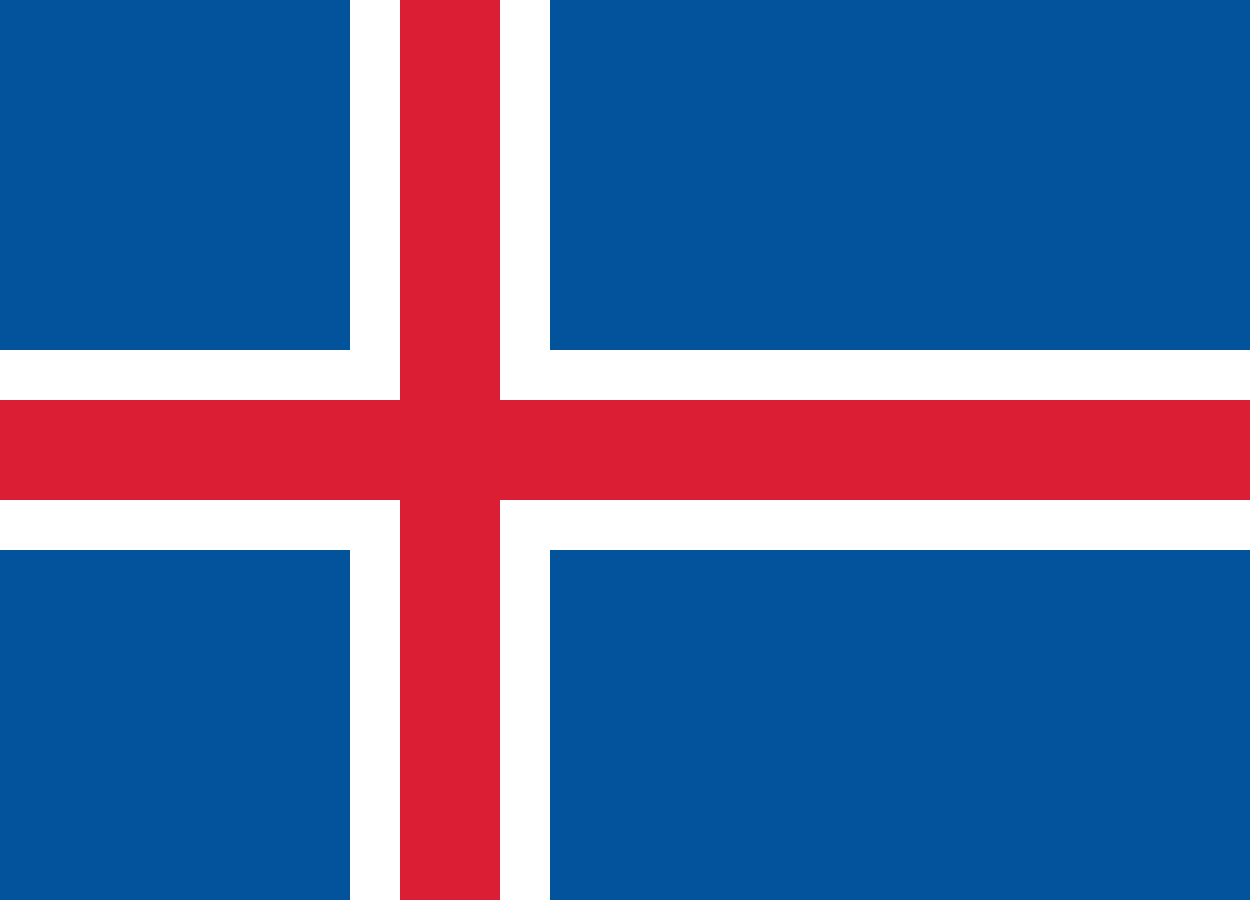
Iceland, known for its stunning landscapes and unique geological features, offers a rich blend of natural wonders and cultural experiences beyond its capital, Reykjavik. From the Blue Lagoon to the Golden Circle, travelers can explore geysers, waterfalls, and volcanic landscapes.
Hansueli Krapf · CC BY-SA 3.001
The best time to visit is during the summer months for milder weather and extended daylight, while winter offers a chance to see the Northern Lights.
Experience long days and mild weather, perfect for outdoor activities.
A magical time to see the Northern Lights and enjoy winter sports.
Witness stunning fall colors and fewer crowds.
02
Pick the neighbourhood by how you want the day to start and end, not by distance to one museum.
The vibrant capital with a mix of culture, nightlife, and history.
Busy and lively, especially in summer.
Known as the 'Capital of the North', it offers beautiful gardens and a charming town center.
Quieter than Reykjavik.
A picturesque village near black sand beaches and dramatic cliffs.
Popular with tourists, especially in summer.
The largest town in East Iceland, serving as a gateway to the East Fjords.
Less crowded, ideal for nature lovers.
A charming town located near the Golden Circle attractions.
Good base for day trips.
Famous for whale watching and beautiful coastal scenery.
Best for marine enthusiasts.
A quaint town on the Snæfellsnes Peninsula, known for its stunning views.
Great for exploring nearby natural wonders.
A small town with historical significance and beautiful landscapes.
Less touristy, offers local experiences.
03
Everyday food, eaten the way locals do. Look for a busy place rather than a ranked list.
A traditional Icelandic dish, best found in local diners.
→ Try it on a cold day.
A creamy yogurt-like dairy product, available in supermarkets.
→ Great for breakfast or snacks.
Look for it in coastal towns like Vik and Húsavík.
→ Enjoy it at local fish markets.
Available at street stalls, especially in Reykjavik.
→ A must-try for a quick bite.
Often served with butter or herring, found in bakeries.
→ Try it with smoked salmon.
Available during the Þorrablót festival, featuring various local delicacies.
→ Experience Icelandic culture through food.
04
An order that works on foot, with the trip out of the first city at the end.
A popular tourist route featuring Þingvellir National Park, Geysir, and Gullfoss waterfall.
A geothermal spa known for its mineral-rich waters.
Famous for its floating icebergs and stunning views.
Known for its black sands and basalt columns.
An iconic church in Reykjavik with a unique design.
Home to Europe's largest glacier and diverse landscapes.
A UNESCO World Heritage site with geological significance.
One of Europe's most powerful waterfalls.
Offers hiking trails and stunning glacier views.
The tallest waterfall in Iceland, accessible via hiking.
A beautiful garden showcasing Icelandic flora.
Known for its glacier and diverse ecosystems.
05
Airport to city, across the city, and onward to the next region.
The main international gateway to Iceland, located about 50 km from Reykjavik.
The second largest airport, serving domestic flights and some international routes.
Renting a car is the best way to explore Iceland's diverse landscapes.
Buses connect major towns, but schedules can be infrequent.
Consider flying between regions for quicker travel.
06
Iceland uses type F plugs, with a standard voltage of 230V.
Credit cards are widely accepted; cash is not necessary.
Tipping is not customary in Iceland.
Icelandic is the official language, but English is widely spoken.
A travel eSIM covers maps and tickets after landing.
A week is ideal to explore the main attractions.