
Dry Season
The dry season runs from June to September, offering the best weather for outdoor activities.

Travel guide
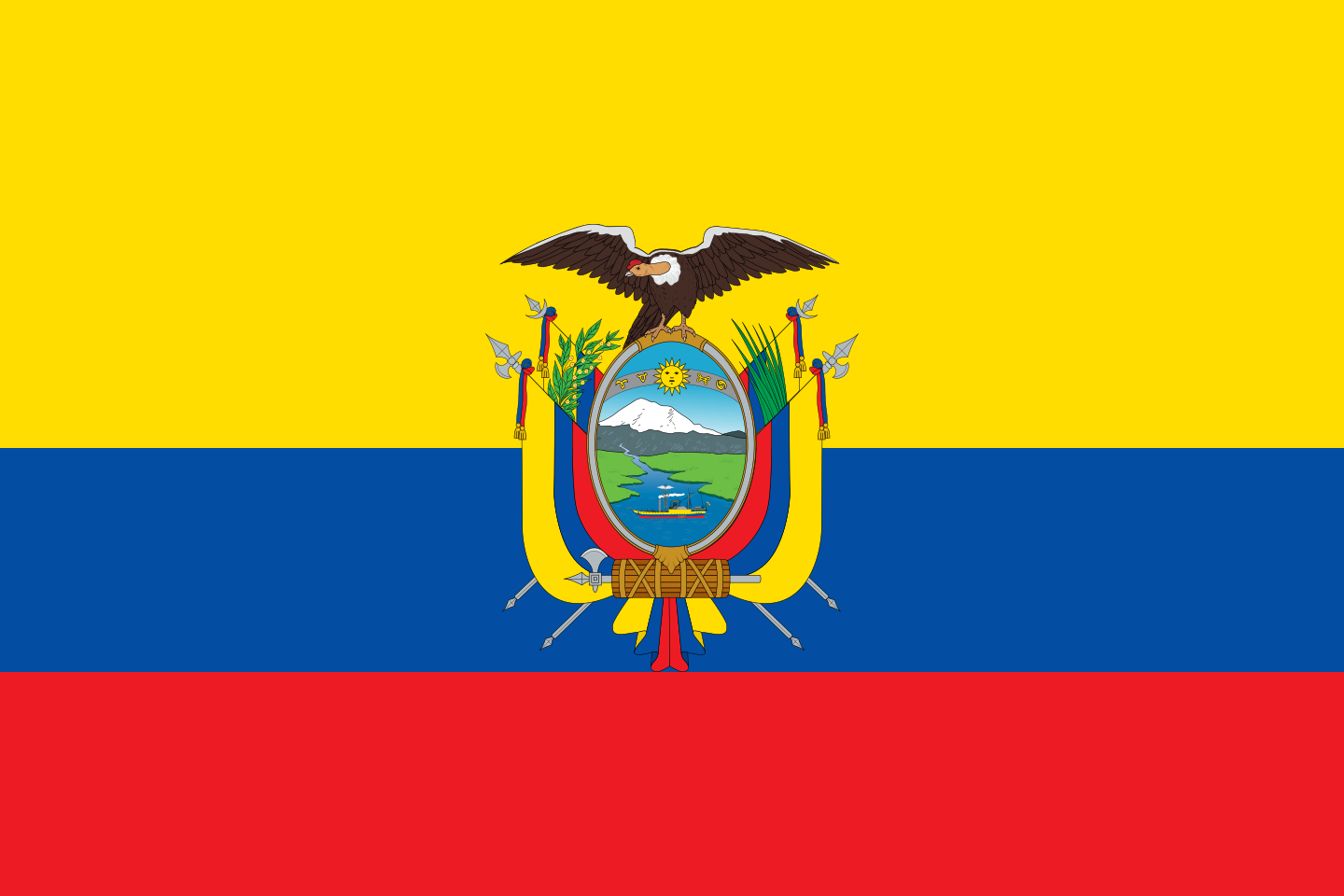
Ecuador, a country of diverse landscapes and rich culture, offers travelers a unique blend of experiences from the Amazon rainforest to the Andes mountains and the Galápagos Islands.
Phelipemancheno · CC001
The best time to visit Ecuador is during the dry season, from June to September, although the climate varies significantly by region.
The dry season runs from June to September, offering the best weather for outdoor activities.
From October to May, expect more rain, especially in the Amazon and coastal regions.
The months between wet and dry seasons can be unpredictable, with varying weather.
02
Pick the neighbourhood by how you want the day to start and end, not by distance to one museum.
A vibrant neighborhood in Quito known for its nightlife, restaurants, and art galleries.
Can be noisy at night.
A UNESCO World Heritage site with colonial architecture, churches, and museums.
Best explored on foot.
A suburban area near Quito, known for its upscale homes and dining options.
Quieter than downtown.
Famous for its hot springs and adventure sports, nestled in the Andes.
Can be crowded on weekends.
A beach town popular with surfers and backpackers, known for its laid-back vibe.
Lively nightlife.
A charming city with a rich history, known for its colonial architecture and nearby Cajas National Park.
Higher altitude, so prepare for altitude sickness.
An archipelago known for its unique wildlife and pristine landscapes.
Book tours in advance.
Famous for its indigenous market, where you can find local crafts and textiles.
Best visited on Saturdays.
03
Everyday food, eaten the way locals do. Look for a busy place rather than a ranked list.
A popular dish made with fresh seafood marinated in citrus juices, found in coastal regions.
→ Try the shrimp ceviche in Esmeraldas.
A hearty potato soup with cheese and avocado, commonly served in the highlands.
→ Best enjoyed in Quito.
A traditional soup made during Easter, featuring grains and fish.
→ Only available during Holy Week.
Roasted pork served with potatoes and salad, a favorite in the Sierra region.
→ Try it in Ambato.
Savory pastries filled with meat or cheese, found throughout the country.
→ Look for them at local markets.
Corn on the cob served with cheese, popular in the Andes.
→ A great snack while exploring.
A breakfast dish made with ripe plantains and eggs, typical in the coastal region.
→ Best found in Guayaquil.
04
An order that works on foot, with the trip out of the first city at the end.
A UNESCO World Heritage site known for its unique wildlife and ecosystems.
Home to one of the highest active volcanoes in the world, offering hiking opportunities.
A monument marking the equator, located just outside Quito.
A stunning volcanic crater lake known for its turquoise waters.
The largest Inca ruins in Ecuador, showcasing ancient architecture.
A national park known for its beautiful landscapes and diverse wildlife.
One of the largest indigenous markets in South America, famous for textiles.
A scenic train ride through the Andes with breathtaking views.
A monument marking the equator, with a museum and cultural exhibits.
A mountain range offering stunning views and outdoor activities.
A waterfront promenade with parks, shops, and restaurants.
A UNESCO World Heritage site with colonial architecture and museums.
A unique plant species native to Ecuador, found in the highlands.
The highest mountain in Ecuador, offering challenging hikes.
A biodiverse region with opportunities for eco-tourism and wildlife watching.
05
Airport to city, across the city, and onward to the next region.
Ecuador's main airports are Mariscal Sucre International Airport (UIO) in Quito and José Joaquín de Olmedo International Airport (GYE) in Guayaquil.
Buses are a popular and affordable way to travel between cities, with extensive networks throughout the country.
Taxis are widely available in urban areas and are a convenient way to get around cities.
For reaching remote areas or the Galápagos Islands, domestic flights are commonly used.
In some cities, bicycle rentals are available for exploring at a leisurely pace.
06
Ecuador uses Type A and B plugs, with a standard voltage of 120V.
The US dollar is the official currency, and cash is widely accepted.
Tipping is customary, typically around 10% in restaurants.
Spanish is the official language, but indigenous languages are also spoken.
A travel eSIM covers maps and tickets after landing.
A 10 to 14-day trip is ideal to explore the main attractions.