_banner.jpg)
Dry Season
The dry season is ideal for outdoor activities and exploring the country.

Travel guide
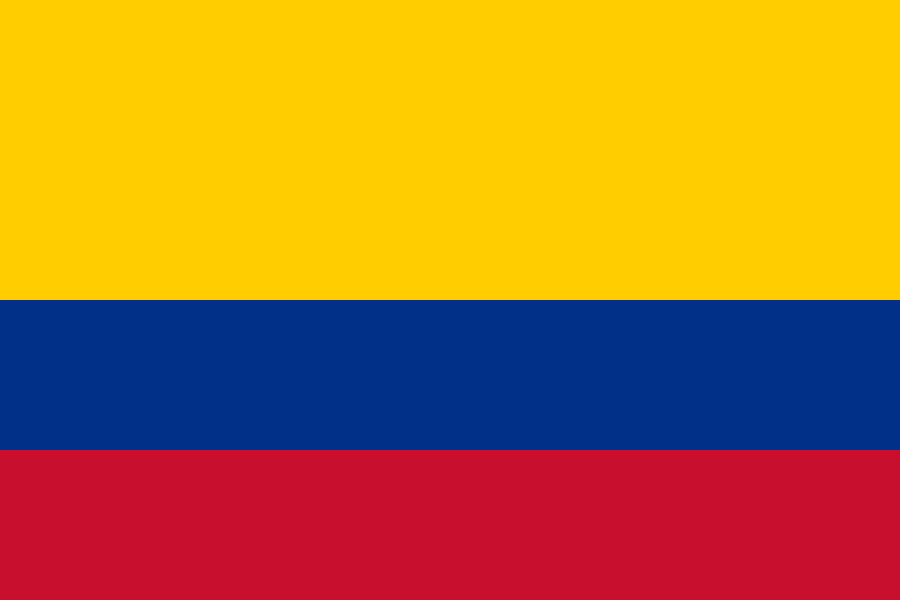
Colombia is a vibrant country known for its diverse landscapes, rich culture, and warm hospitality. From the bustling streets of Bogotá to the serene beaches of Cartagena, Colombia offers a variety of experiences for every traveler.
Julien H · CC BY-SA 2.001
The best time to visit Colombia is during the dry season, which typically runs from December to March and July to August. However, the country's diverse geography means that weather can vary significantly by region.
The dry season is ideal for outdoor activities and exploring the country.
The wet season brings heavy rains, particularly in the Amazon and Pacific regions.
The cool season offers pleasant temperatures, especially in the highlands.
02
Pick the neighbourhood by how you want the day to start and end, not by distance to one museum.
Explore the historic heart of Bogotá with its colonial architecture and cultural institutions.
Can be busy with tourists.
A trendy neighborhood in Medellín known for its nightlife and dining options.
Can be noisy at night.
A UNESCO World Heritage site filled with colorful buildings and rich history.
Crowded during peak season.
A picturesque town in the Coffee Region, famous for its coffee farms and stunning landscapes.
Limited nightlife options.
Known for its vibrant Carnival, this city offers a lively atmosphere and cultural experiences.
Best visited during Carnival season.
A coastal city that serves as a gateway to Tayrona National Park and the Sierra Nevada mountains.
Can be hot and humid.
Located in the Coffee Triangle, this city is known for its coffee culture and beautiful views.
Higher altitude, cooler temperatures.
A city known for its parks and pleasant climate, offering a relaxed atmosphere.
Less touristy than other cities.
03
Everyday food, eaten the way locals do. Look for a busy place rather than a ranked list.
A staple dish made from corn dough, found in various forms throughout the country.
→ Try them with different fillings.
A hearty platter featuring beans, rice, meat, and avocado, typical of the Antioquia region.
→ Best enjoyed in Medellín.
A traditional soup made with meat, plantains, and yucca, popular in many regions.
→ Look for local variations.
A chicken and potato soup, especially popular in Bogotá.
→ Perfect for cool weather.
Fried or baked pastries filled with meat, cheese, or vegetables, commonly found at street stalls.
→ Great for a quick snack.
Fresh seafood marinated in citrus juices, often served with onions and cilantro.
→ Try coastal variations.
A popular soft drink brand in Colombia, often enjoyed with meals.
→ Look for unique flavors.
04
An order that works on foot, with the trip out of the first city at the end.
The main square in Bogotá, surrounded by important government buildings and the Cathedral.
A museum in Bogotá showcasing pre-Columbian gold artifacts.
A stunning park on the Caribbean coast known for its beaches and biodiversity.
A neighborhood known for its street art and transformation story.
The first free town in the Americas, known for its rich African heritage.
An underground cathedral built within a salt mine, located near Bogotá.
Famous for its towering wax palms and beautiful hiking trails.
A fortress that offers panoramic views of the city and the sea.
A national park known for its snow-capped mountains and diverse ecosystems.
A nature reserve located just outside Medellín, ideal for hiking and picnicking.
A beautiful garden showcasing the region's flora, located in the Coffee Region.
One of the biggest carnivals in the world, celebrated with parades and music.
An ancient archaeological site in the Sierra Nevada, accessible via a multi-day trek.
A theme park dedicated to coffee culture, located in Quindío.
A park known for its stunning canyon views and adventure activities.
Another name for the Gold Museum, showcasing Colombia's rich history.
05
Airport to city, across the city, and onward to the next region.
Colombia's main airports include El Dorado International Airport (BOG), José María Córdova International Airport (MDE), and Rafael Núñez International Airport (CTG).
Domestic flights are a convenient way to cover long distances quickly, especially between major cities.
Buses are a popular and economical way to travel between cities and regions.
Taxis and rideshare services like Uber are widely available in urban areas.
Car rentals are available for those who prefer to explore at their own pace.
06
Colombia uses Type A and B plugs, with a standard voltage of 110V.
Credit cards are widely accepted, but it's advisable to carry cash for small purchases.
Tipping is customary in restaurants, typically around 10% of the bill.
Spanish is the official language, but English is spoken in tourist areas.
A travel eSIM covers maps and tickets after landing.
A trip of at least 10 days is recommended to explore multiple regions.