
Spring
Spring brings blooming flowers and mild temperatures, ideal for outdoor activities.

Travel guide
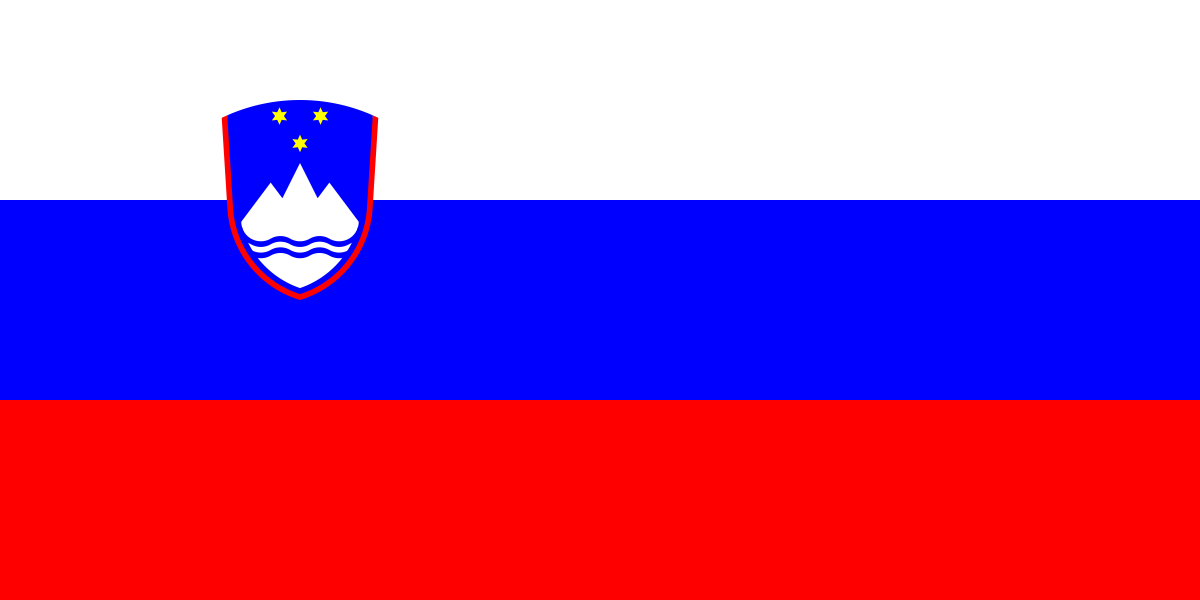
Slovenia is a picturesque country in Central Europe, known for its stunning landscapes, charming towns, and rich cultural heritage. From the Julian Alps to the Adriatic coast, Slovenia offers diverse experiences for travelers.
Izlake_panorama.jpg : Z.K. derivative work: Jjtkk · CC BY 3.001
The best time to visit Slovenia is during the spring and early autumn months when the weather is mild and the landscapes are vibrant.
Spring brings blooming flowers and mild temperatures, ideal for outdoor activities.
Summer offers warm weather, perfect for exploring lakes and coastal areas.
Autumn showcases vibrant foliage and harvest festivals, a beautiful time to visit.
02
Pick the neighbourhood by how you want the day to start and end, not by distance to one museum.
The capital city with a vibrant cultural scene and beautiful architecture.
Great for first-time visitors.
Famous for its stunning lake and castle, perfect for outdoor activities.
Can be crowded in summer.
A coastal town with Venetian architecture and beautiful sea views.
Best visited in the off-season.
Known for its wine culture and the oldest vine in the world.
Less touristy than Ljubljana.
A popular ski resort in winter and hiking destination in summer.
Ideal for sports enthusiasts.
A historic town with a medieval castle and charming old town.
Rich in cultural heritage.
Home to the famous Postojna Cave and Predjama Castle.
Must-see natural wonders.
Known for its emerald-green river and outdoor activities.
Stunning scenery year-round.
03
Everyday food, eaten the way locals do. Look for a busy place rather than a ranked list.
A traditional nut roll pastry, often found in bakeries.
→ Try it during festive seasons.
Dough rolls filled with various fillings, available in many restaurants.
→ A versatile dish enjoyed by locals.
A Slovenian sausage, best enjoyed at local markets.
→ Perfect for meat lovers.
A hearty stew made with sauerkraut and beans, found in traditional inns.
→ Ideal for cold days.
A layered cake with cheese, apples, and poppy seeds, popular in bakeries.
→ A sweet treat to try.
Slovenia has a rich wine culture; visit local vineyards for tastings.
→ Don't miss the local varieties.
04
An order that works on foot, with the trip out of the first city at the end.
A stunning glacial lake with a picturesque island and castle.
A remarkable karst cave system with an underground train.
A dramatic castle built into a cliff, near Postojna.
Slovenia's only national park, offering breathtaking landscapes.
A medieval castle overlooking the capital, accessible by funicular.
A charming coastal town with narrow streets and a rich history.
A beautiful gorge with wooden walkways and stunning views.
Explore the oldest vine in the world and local wine culture.
A well-preserved medieval castle with panoramic views.
Known for its emerald color, perfect for kayaking and rafting.
A UNESCO World Heritage site with impressive underground canyons.
A large park ideal for leisurely walks and picnics.
05
Airport to city, across the city, and onward to the next region.
The main airports are Ljubljana Jože Pučnik Airport and Maribor Edvard Rusjan Airport.
Trains connect major cities, making it easy to explore the country.
Buses are available for regional travel and are often reliable.
Renting a car provides flexibility to explore remote areas.
06
Type C and F plugs are used in Slovenia.
Credit cards are widely accepted, but carry some cash for small purchases.
Tipping is appreciated but not mandatory; rounding up the bill is common.
Slovenian is the official language; English is commonly spoken in tourist areas.
A travel eSIM covers maps and tickets after landing.
A week is ideal to explore Slovenia's highlights.