
Dry Season
From May to September, characterized by cooler temperatures and less humidity.

Travel guide
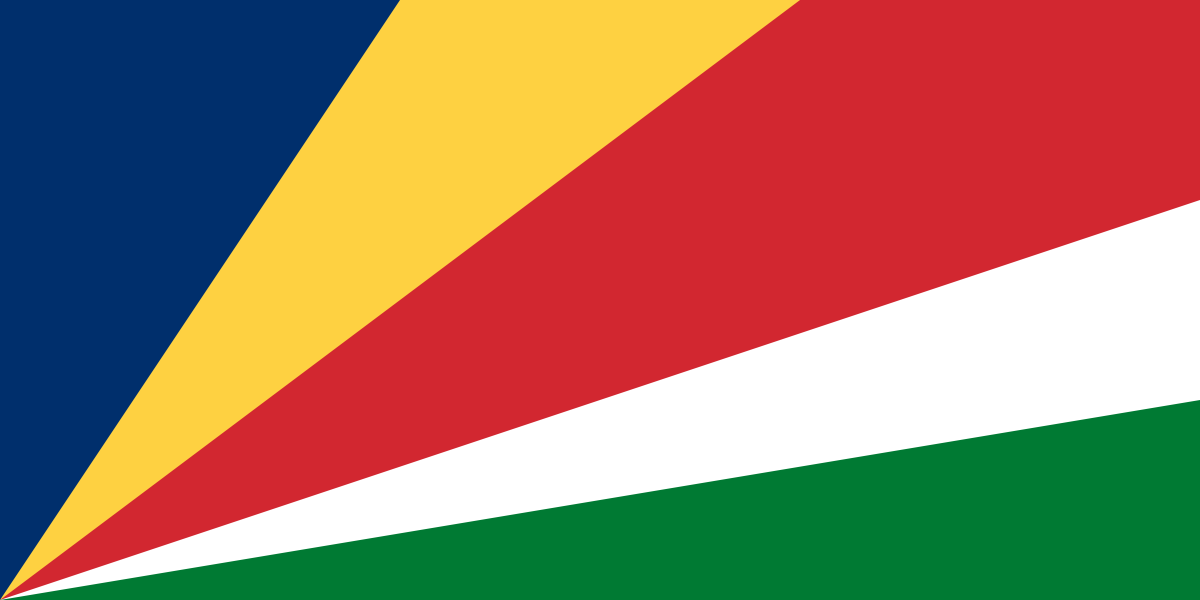
Seychelles, an archipelago of 115 islands, offers stunning beaches, lush jungles, and vibrant marine life. Beyond its capital, Victoria, explore diverse landscapes and rich culture.
NOTE: This image is a panorama of Seychelles consisting of multiple frames that · CC BY-SA 3.001
The best time to visit Seychelles is from April to May and October to November when the weather is mild and ideal for outdoor activities.
From May to September, characterized by cooler temperatures and less humidity.
From November to March, featuring warmer temperatures and occasional rain.
April and October are transitional months with mild weather.
02
Pick the neighbourhood by how you want the day to start and end, not by distance to one museum.
A popular beach destination known for its water sports and nightlife.
Busy during peak season.
Famous for its stunning beaches like Anse Source d'Argent and laid-back atmosphere.
Limited accommodation options.
Offers a mix of local life and beautiful beaches, perfect for families.
Can be crowded on weekends.
Home to the Vallée de Mai, a UNESCO World Heritage site with unique palm trees.
Best explored by bike.
Known for its giant tortoises and nature trails, accessible by boat.
Limited facilities.
A secluded getaway with hiking trails and pristine beaches.
Requires planning to reach.
A nature reserve ideal for birdwatching and snorkeling.
Day trips only.
Features quiet beaches and local markets, perfect for a cultural experience.
Less touristy.
03
Everyday food, eaten the way locals do. Look for a busy place rather than a ranked list.
A staple dish made with fresh local fish, often found in local eateries.
→ Try it with rice.
Grilled fish seasoned with local spices, available at beach shacks.
→ Best enjoyed fresh.
A creamy curry made with coconut milk, found in many restaurants.
→ Vegetarian-friendly.
A refreshing salad made with tender octopus, often served at local markets.
→ Perfect for a light meal.
Crispy snacks made from breadfruit, available at street vendors.
→ Great for snacking.
Local rum that can be sampled at distilleries or bars.
→ A must-try for rum lovers.
04
An order that works on foot, with the trip out of the first city at the end.
A UNESCO World Heritage site on Praslin, home to the Coco de Mer palm.
One of the most photographed beaches in the world, located on La Digue.
A bustling market in the capital, showcasing local produce and crafts.
The largest national park in Seychelles, offering hiking trails and stunning views.
Known for its giant tortoises and nature trails, accessible by boat.
A nature reserve with diverse bird species and pristine beaches.
A historical site on La Digue showcasing traditional coconut oil production.
Renowned for its beauty, this beach is perfect for swimming and snorkeling.
A beautiful garden in Victoria featuring endemic plants and giant tortoises.
A nature reserve ideal for birdwatching and snorkeling.
An iconic landmark in Victoria, resembling London's Big Ben.
A protected area with excellent snorkeling and diving opportunities.
05
Airport to city, across the city, and onward to the next region.
The main gateway to Seychelles, located on Mahé, serves international flights.
Serves domestic flights from Mahé and is close to popular tourist areas.
Regular ferries connect Mahé, Praslin, and La Digue, making island hopping easy.
Bicycles are a popular way to explore La Digue and Praslin.
Available on Mahé for those wanting to explore at their own pace.
06
Seychelles uses Type G plugs, with a standard voltage of 240V.
Credit cards are widely accepted, but it's advisable to carry some cash for local markets.
Tipping is appreciated but not mandatory; rounding up the bill is common.
The official languages are Seychellois Creole, English, and French.
A travel eSIM covers maps and tickets after landing.
A stay of 7 to 10 days is recommended to explore the islands.