
Dry Season
From November to April, this season offers the best weather for travel.

Travel guide
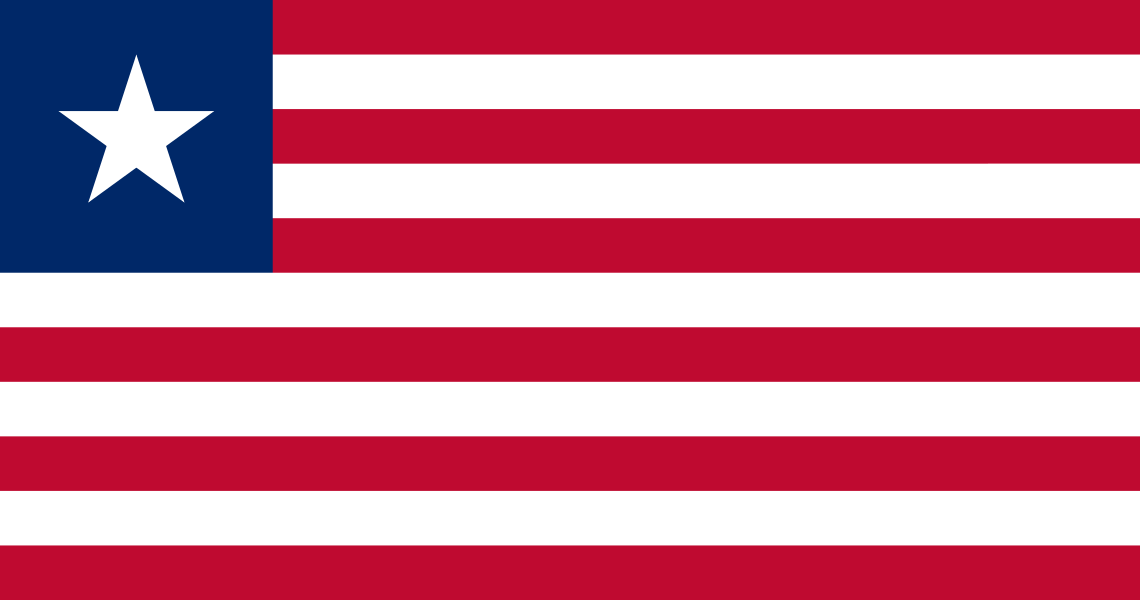
Liberia, a country on the West African coast, is known for its rich history, diverse culture, and beautiful landscapes. From the bustling capital of Monrovia to the serene beaches and lush rainforests, Liberia offers a unique travel experience.
Bomi_lake.jpg : Sahmeditor derivative work: Jjtkk · Public domain01
The best time to visit Liberia is during the dry season from November to April, when the weather is more pleasant and conducive for outdoor activities.
From November to April, this season offers the best weather for travel.
From May to October, expect heavy rains and humidity, affecting travel plans.
Short periods between the wet and dry seasons, with variable weather.
02
Pick the neighbourhood by how you want the day to start and end, not by distance to one museum.
The capital city offers a mix of urban life and coastal charm, with access to beaches and local markets.
Can be busy and noisy.
Known for its stunning beaches and surfing opportunities, this town is perfect for relaxation and water sports.
Limited amenities.
A central town that serves as a gateway to the interior, offering a glimpse into local life and culture.
Less touristy.
Home to beautiful natural scenery and wildlife, ideal for eco-tourism and adventure.
Remote access.
A coastal city with historical significance and beautiful beaches, great for a laid-back visit.
Limited nightlife.
Known for its vibrant markets and cultural experiences, offering a taste of local life.
Can be crowded.
A town surrounded by lush forests, perfect for exploring nature and local communities.
Basic facilities.
A picturesque coastal town with rich history and beautiful landscapes, ideal for exploration.
Limited transport options.
03
Everyday food, eaten the way locals do. Look for a busy place rather than a ranked list.
A popular West African dish made with rice, tomatoes, and spices, found in local eateries.
→ Try it with fried plantains.
A traditional dish made from cassava leaves, often served with rice or fufu, available at local restaurants.
→ Rich in flavor.
A spicy soup made with meat or fish, commonly found in local markets and food stalls.
→ Perfect for warming up.
A starchy side dish made from cassava or yams, often served with soups and stews.
→ A must-try with local dishes.
Freshly caught fish grilled and seasoned, available at beachside shacks.
→ Best enjoyed by the sea.
A smooth dough-like dish made from yams, often served with rich sauces.
→ Great with spicy stews.
04
An order that works on foot, with the trip out of the first city at the end.
Liberia's largest protected area, known for its rich biodiversity and hiking trails.
A beautiful lake surrounded by mangroves, perfect for birdwatching and relaxation.
Showcases the history and culture of Liberia through various exhibits.
A historic site where freed slaves first settled, offering a glimpse into Liberia's past.
A stunning waterfall located near Gbarnga, ideal for picnicking and photography.
An iconic structure in Monrovia, representing the country's architectural heritage.
A popular beach destination known for its soft sands and vibrant atmosphere.
A UNESCO World Heritage site, known for its unique flora and fauna.
A bustling market in Monrovia, showcasing local crafts and food.
A historic church in Monrovia, known for its beautiful architecture.
A significant building in Gbarnga, reflecting the town's history and governance.
A scenic area with beautiful views and hiking opportunities.
05
Airport to city, across the city, and onward to the next region.
Most international flights arrive at Roberts International Airport (ROB).
Shared taxis are a common way to get around cities, while motorbike taxis are popular for shorter distances.
Renting a car is an option for those looking to explore more remote areas.
Limited domestic flights connect major cities, but road travel is more common.
06
Liberia uses type C and D plugs, with a standard voltage of 120V.
US dollars are widely accepted, but it's advisable to carry some Liberian dollars for small purchases.
Tipping is appreciated but not mandatory; rounding up the bill is common.
English is the official language, but many local languages are spoken.
A travel eSIM covers maps and tickets after landing, ensuring connectivity.
A stay of at least one week is recommended to explore the main attractions.