_banner.jpg)
Dry Season
From November to April, enjoy cooler and drier weather.

Travel guide
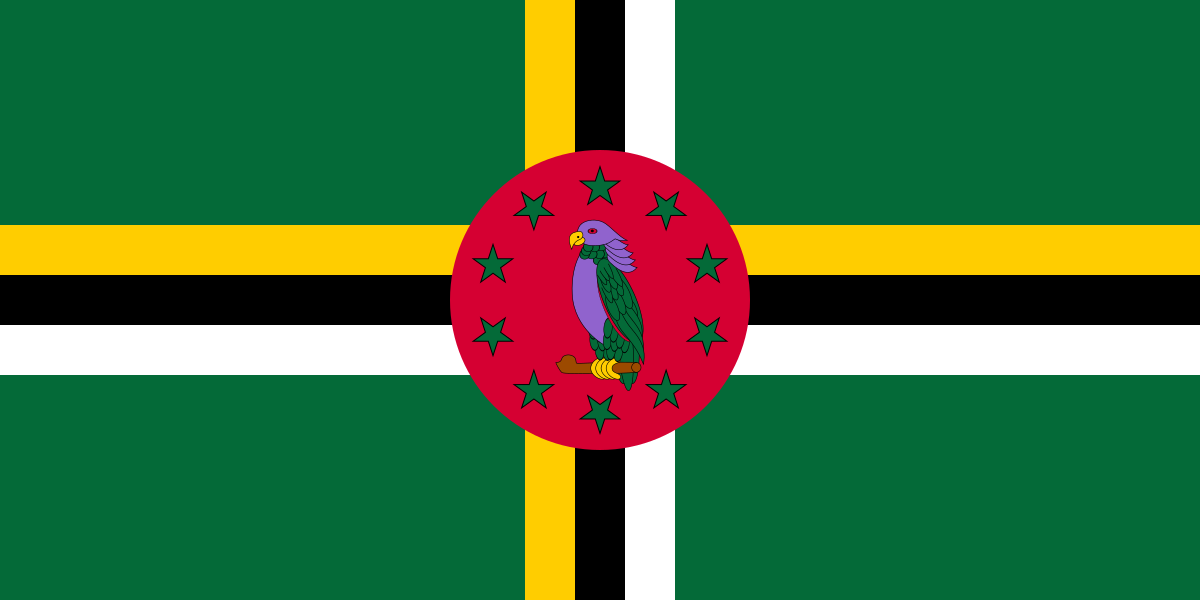
Dominica, known as the 'Nature Island', offers lush landscapes, vibrant culture, and rich biodiversity. Explore its natural wonders, from waterfalls to volcanic lakes.
Rita Nerwall · CC001
The best time to visit Dominica is from November to April when the weather is cooler and drier.
From November to April, enjoy cooler and drier weather.
From May to October, expect higher humidity and rainfall.
From June to November, be aware of potential storms.
02
Pick the neighbourhood by how you want the day to start and end, not by distance to one museum.
The capital city with a mix of colonial architecture and vibrant markets.
Busy during the day, quieter at night.
A charming town known for its historical sites and beautiful beaches.
Great for exploring the nearby Fort Shirley.
A coastal village with stunning beaches and local eateries.
Ideal for a laid-back atmosphere.
A small village known for its friendly locals and scenic views.
Less touristy, offering an authentic feel.
Stay near this UNESCO World Heritage site for easy access to hiking trails.
Perfect for nature enthusiasts.
Famous for its hot springs and the Sulphur Springs.
Can get crowded during peak hours.
A rural area known for its agriculture and local culture.
Experience local farming life.
A picturesque valley with lush greenery and rivers.
Great for photography.
03
Everyday food, eaten the way locals do. Look for a busy place rather than a ranked list.
A traditional soup made with callaloo leaves, often found in local markets.
→ Try it at street vendors for authenticity.
A local delicacy made from a type of frog, best enjoyed in local restaurants.
→ Ask for it at traditional eateries.
A hearty dish featuring crab meat and dumplings, popular in coastal areas.
→ Look for it in seaside shacks.
A common side dish, crispy and sweet, available at many food stalls.
→ Perfect as a snack.
A flavorful wrap filled with curried meats or vegetables, found in various eateries.
→ A filling option for lunch.
A pickled meat dish, often served cold, found in local markets.
→ Best enjoyed with a cold drink.
Fried dough often served with fish or as a snack, popular among locals.
→ Great for breakfast.
04
An order that works on foot, with the trip out of the first city at the end.
A geothermal wonder and one of the world's largest hot springs.
A stunning natural pool surrounded by lush rainforest.
A pair of beautiful waterfalls that are easily accessible.
A UNESCO World Heritage site with diverse ecosystems.
Home to historical ruins and hiking trails with panoramic views.
A vibrant market showcasing local produce and crafts.
A historic fort with stunning views of the Caribbean Sea.
A cultural hub showcasing local art and history.
A serene garden featuring native plants and a variety of trees.
A beautiful waterfall that requires a hike to reach.
Home to the indigenous Kalinago people, offering cultural insights.
A scenic village known for its diving spots and beautiful views.
05
Airport to city, across the city, and onward to the next region.
Dominica is accessible via Douglas-Charles Airport (DOM) and Canefield Airport (DCF).
Ferries connect Dominica with nearby islands like Guadeloupe and Martinique.
Minibuses are the primary mode of public transport, offering affordable travel options.
Renting a car provides flexibility to explore remote areas of the island.
06
Type A and B plugs are used, with a standard voltage of 230V.
US dollars are widely accepted, but local currency is also used.
Tipping is appreciated but not mandatory, usually around 10-15%.
English is the official language, with Creole widely spoken.
A travel eSIM covers maps and tickets after landing.
A week is ideal to explore the island's highlights.