
Dry Season
June to September offers pleasant weather and less rain.

Travel guide
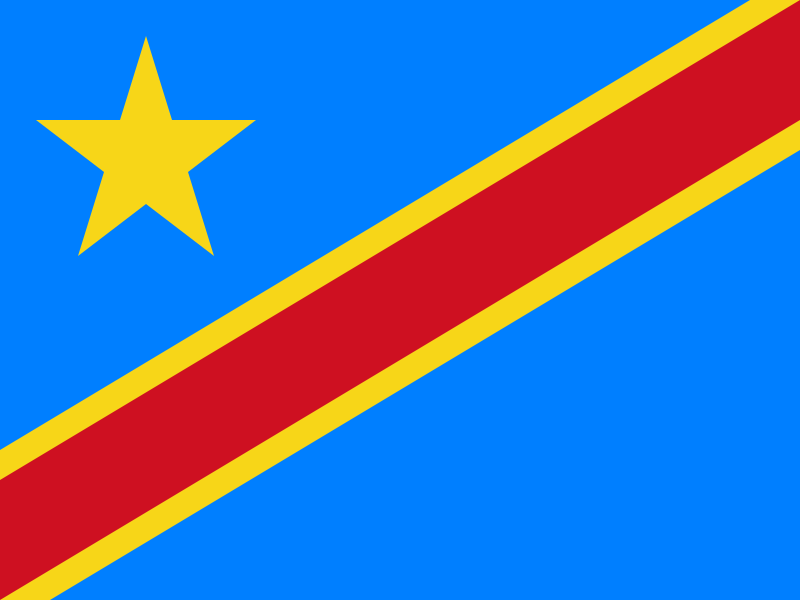
Congo - Kinshasa, the Democratic Republic of the Congo, offers a rich tapestry of culture, wildlife, and vibrant cities beyond its capital. Explore lush rainforests, bustling markets, and historical sites.
Lomami_River_at_Katopa_Camp,_Democratic_Republic_of_the_Congo.JPG : Christina Be · CC BY-SA 3.001
The best time to visit is during the dry season from June to September, when the weather is more pleasant for outdoor activities.
June to September offers pleasant weather and less rain.
October to May brings heavy rains, affecting travel plans.
April and October are transitional months with mixed weather.
02
Pick the neighbourhood by how you want the day to start and end, not by distance to one museum.
A lively neighborhood in Kinshasa known for its nightlife and restaurants.
Can be noisy at night.
A residential area with local markets and a glimpse into everyday life.
Less touristy, more authentic.
A peaceful area with access to nature and parks.
Quiet but further from city attractions.
A port city with historical significance and beautiful river views.
Longer travel time from Kinshasa.
The second-largest city, known for its mining industry and cultural sites.
Requires a domestic flight from Kinshasa.
Nestled by Lake Kivu, it's a gateway to the Virunga National Park.
Best for nature lovers.
A city on the Congo River, known for its biodiversity and research centers.
Remote, requires planning.
A city at the confluence of the Congo River and the Ruki River, rich in culture.
Less developed tourist infrastructure.
03
Everyday food, eaten the way locals do. Look for a busy place rather than a ranked list.
A traditional dish made with chicken in a sauce of palm butter, often found in local eateries.
→ Try it with fufu for a complete meal.
Cassava leaves cooked with ground peanuts, available in many restaurants.
→ A staple dish, rich in flavor.
Fish or meat wrapped in banana leaves and grilled, popular in street food stalls.
→ Look for vendors near markets.
A unique dish consisting of a hollowed-out loaf of bread filled with curry, found in urban areas.
→ A fusion of cultures.
A spicy sauce made from chili peppers, often served with grilled meats.
→ Ask for it if you enjoy heat.
Roasted wild game, often available in rural markets.
→ A delicacy best enjoyed fresh.
04
An order that works on foot, with the trip out of the first city at the end.
A UNESCO World Heritage site, home to mountain gorillas and diverse wildlife.
A sanctuary for orphaned bonobos, offering tours and educational programs.
Showcases the rich history and culture of the DRC.
A stunning lake offering opportunities for boating and relaxation.
One of the longest rivers in the world, perfect for boat tours.
A beautiful waterfall located near Kinshasa, ideal for picnics.
A serene place to explore native flora and fauna.
An architectural marvel in Kinshasa, showcasing colonial history.
The official residence of the President, offering a glimpse into governance.
Features contemporary Congolese art and exhibitions.
A vast area of rainforest, crucial for biodiversity.
A significant religious site reflecting the Islamic culture in the DRC.
05
Airport to city, across the city, and onward to the next region.
The main gateway to the DRC, connecting international flights.
Several airlines operate flights between major cities.
Buses and shared taxis are common for local travel.
Available in urban areas for more flexibility.
Boats operate on the Congo River for scenic travel.
06
Type C and D plugs are commonly used.
US dollars are widely accepted; carry small denominations.
Tip around 10% in restaurants.
French is the official language; Lingala is widely spoken.
A travel eSIM covers maps and tickets after landing.
A week is recommended to explore key attractions.
Maps, ferries and tickets are easier with data as soon as you land.