
Dry Season
From November to March, this season offers cooler temperatures and less rain, ideal for wildlife viewing.

Travel guide
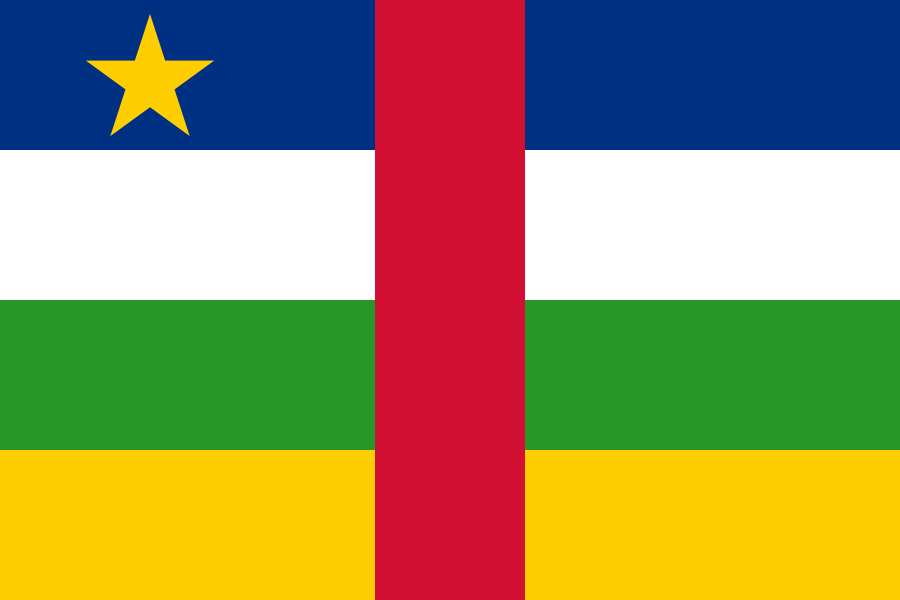
The Central African Republic, rich in natural beauty and cultural diversity, offers travelers a unique experience beyond its capital, Bangui. Explore national parks, vibrant markets, and traditional villages.
David Holt London, https://www.flickr.com/photos/zongo/ · CC BY-SA 2.001
The best time to visit is during the dry season from November to March when temperatures are cooler and wildlife is more active.
From November to March, this season offers cooler temperatures and less rain, ideal for wildlife viewing.
From April to October, expect heavy rains and higher humidity, which can affect travel plans.
The months between wet and dry seasons can be unpredictable, with occasional rain.
02
Pick the neighbourhood by how you want the day to start and end, not by distance to one museum.
The capital city with a mix of urban life and cultural attractions.
Busy and lively, but can be noisy.
Known for its lush landscapes and proximity to the Lobaye River.
Less developed infrastructure.
A gateway to the stunning wildlife of the Dzanga-Sangha National Park.
Remote, but rewarding for nature lovers.
A town with a rich history and access to local markets.
Limited amenities.
Famous for its vibrant local crafts and traditional ceremonies.
Small town charm.
Offers a glimpse into rural life and the surrounding natural beauty.
Basic facilities.
Located near the Congo River, known for its fishing and local culture.
Less touristy.
A town surrounded by rich mining areas and beautiful scenery.
Can be challenging to navigate.
03
Everyday food, eaten the way locals do. Look for a busy place rather than a ranked list.
A traditional dish made from cassava leaves, often served with meat.
→ Try it at local markets.
A popular meat stew usually made with goat or beef.
→ Look for it in family-run eateries.
A starchy side dish made from cassava or plantains.
→ Commonly served with stews.
A fish dish cooked in a rich sauce with spices.
→ Best enjoyed fresh from the river.
A staple food often served with various sauces.
→ Look for it in rural areas.
Popular street food, often seasoned and grilled over open flames.
→ Perfect for a quick snack.
04
An order that works on foot, with the trip out of the first city at the end.
A UNESCO World Heritage site known for its biodiversity.
Stunning waterfalls located near Bangui, perfect for a day trip.
A beautiful river ideal for canoeing and fishing.
Showcases the rich cultural heritage of the country.
Home to diverse wildlife including elephants and big cats.
A serene spot for relaxation and nature observation.
A vibrant market where locals sell crafts and produce.
Famous for handmade crafts and traditional art.
Experience local traditions and celebrations.
Explore the historical significance of mining in the region.
A historic landmark showcasing colonial architecture.
Known for its scenic beauty and wildlife.
A town rich in biodiversity and cultural experiences.
A remote village known for its traditional lifestyle.
A suburb of Bangui with local markets and eateries.
05
Airport to city, across the city, and onward to the next region.
The main airport is Bangui M'Poko International Airport (BGF), serving international and domestic flights.
Road conditions can vary; 4x4 vehicles are recommended for remote areas.
Shared taxis and buses are available but may not be reliable.
Motorcycle taxis are a common way to get around in cities.
06
Type C and E plugs are used; voltage is 220V.
Local currency is the Central African CFA franc; credit cards are not widely accepted.
Tipping is appreciated but not mandatory; round up the bill.
French and Sango are the official languages.
A travel eSIM covers maps and tickets after landing.
A week is recommended to explore key attractions.
Maps, ferries and tickets are easier with data as soon as you land.