
Dry Season
From November to June, the weather is dry and pleasant, ideal for outdoor activities.

Travel guide
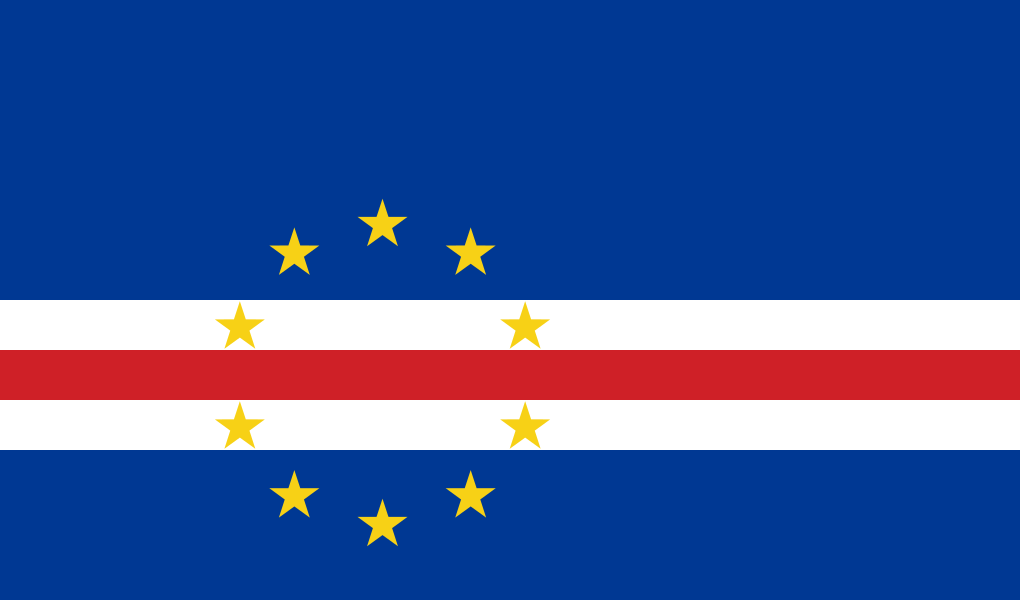
Cape Verde, an archipelago off the northwest coast of Africa, offers stunning landscapes, vibrant culture, and a rich blend of African and Portuguese influences. Each island has its unique charm, from volcanic mountains to beautiful beaches.
Road_to_caldera_in_Fogo_&_Pico_de_Fogo,_2010_12.jpg : Ximonic , Simo Räsänen der · CC BY-SA 3.001
The best time to visit Cape Verde is from November to June when the weather is pleasant and dry.
From November to June, the weather is dry and pleasant, ideal for outdoor activities.
From July to October, expect occasional rains and humidity, but still warm temperatures.
The months between seasons can be unpredictable, with varying weather.
02
Pick the neighbourhood by how you want the day to start and end, not by distance to one museum.
The capital city with a mix of modern amenities and traditional markets.
Busy urban environment.
Known for its lively music scene and colonial architecture.
Great for nightlife.
Famous for its beautiful beaches and water sports.
Tourist-heavy area.
Offers stunning dunes and serene beaches.
Less nightlife options.
Home to an active volcano and rich agricultural land.
Adventure seekers paradise.
Known for its lush landscapes and hiking trails.
Less developed tourism.
The largest island with historical sites and local culture.
Diverse experiences.
Offers rugged mountains and traditional villages.
Limited tourist infrastructure.
03
Everyday food, eaten the way locals do. Look for a busy place rather than a ranked list.
A traditional stew made with corn, beans, and meat, found in local eateries.
→ Try it for a hearty meal.
A spicy pastry filled with fish or meat, popular at street stalls.
→ Perfect for a quick snack.
A marinated pork sandwich, commonly available in cafes.
→ Great for lunch.
A lobster dish often served in coastal restaurants.
→ Best enjoyed fresh.
A local sugarcane rum, found in bars and homes.
→ Sample it responsibly.
A sweet milk pudding, often served as dessert.
→ A delightful treat.
04
An order that works on foot, with the trip out of the first city at the end.
The highest peak in Cape Verde, offering stunning views.
Salt flats in a volcanic crater, unique to the island of Sal.
A beautiful beach known for its clear waters and vibrant atmosphere.
A UNESCO World Heritage site with historical significance.
The highest point on São Vicente, offering panoramic views.
A charming town with colonial architecture and local culture.
A stunning bay known for its music festival.
Famous for its stunning beaches and water sports.
A protected area with diverse flora and fauna.
A hub for local arts and music.
A park surrounding the Fogo volcano, rich in biodiversity.
A serene beach known for its calm waters.
05
Airport to city, across the city, and onward to the next region.
Cape Verde is served by two main airports: [{"code":"SID","label":"Amílcar Cabral International Airport"},{"code":"RAI","label":"Nelson Mandela International Airport"}].
Ferries and domestic flights connect the islands, making it easy to explore.
Taxis and rental cars are available on each island for local travel.
Many towns are pedestrian-friendly, making walking a pleasant option.
Biking is a great way to explore the scenic landscapes.
06
Type C and F plugs are used, with a standard voltage of 220V.
The local currency is the Cape Verdean escudo (CVE).
A tip of 10% is appreciated in restaurants.
The official language is Portuguese, but Creole is widely spoken.
A travel eSIM covers maps and tickets after landing.
A week is ideal to explore multiple islands.