
Spring
A time of renewal, with blooming flowers and mild temperatures, perfect for exploring.

Travel guide
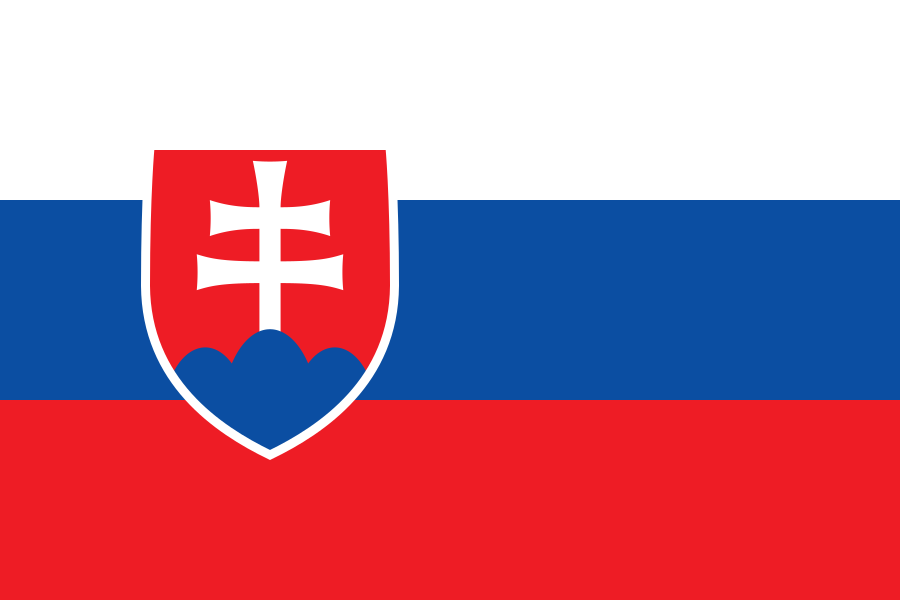
Slovakia, a land of stunning landscapes and rich history, offers travelers a blend of medieval towns, majestic castles, and breathtaking natural parks. Beyond its capital, Bratislava, the country is filled with charming villages and scenic mountains, making it a perfect destination for both culture enthusiasts and nature lovers.
Spis_Castle_01.JPG : József Süveg derivative work: Danapit · CC BY-SA 3.001
The best time to visit Slovakia is during the spring and fall when the weather is mild and the landscapes are vibrant with colors.
A time of renewal, with blooming flowers and mild temperatures, perfect for exploring.
Warm weather ideal for outdoor activities and festivals across the country.
A colorful season with cooler temperatures, great for hiking and sightseeing.
02
Pick the neighbourhood by how you want the day to start and end, not by distance to one museum.
Explore the historic heart of the capital with its cobbled streets and vibrant atmosphere.
Can be crowded during peak tourist season.
A stunning mountain range ideal for hiking, skiing, and enjoying nature.
Best for outdoor activities.
Experience the charm of Slovakia's second-largest city with its beautiful architecture.
Less touristy than Bratislava.
Known as the 'Rome of Slovakia' for its numerous churches and rich history.
A day trip from Bratislava.
One of the oldest cities in Slovakia, featuring a castle and vibrant local culture.
Can be explored in a few hours.
A UNESCO World Heritage site known for its mining history and beautiful scenery.
Plan for a full day visit.
A gateway to the Malá Fatra mountains with a charming town square.
Good for outdoor enthusiasts.
An impressive medieval castle perched on a hill, offering stunning views.
Check opening hours before visiting.
03
Everyday food, eaten the way locals do. Look for a busy place rather than a ranked list.
Traditional potato dumplings topped with sheep cheese, found in many local eateries.
→ A must-try Slovak dish.
A hearty sauerkraut soup often served during holidays, available in many restaurants.
→ Perfect for colder months.
Dumplings filled with various ingredients, commonly found in family-run establishments.
→ Look for homemade versions.
Potato pancakes typically served with duck or as a sweet dessert, found in traditional taverns.
→ Try both savory and sweet options.
Potato fritters that are crispy and delicious, often sold at local markets.
→ Best enjoyed hot.
Slovak sausage that can be found at street stalls and local butcher shops.
→ Great for a quick snack.
04
An order that works on foot, with the trip out of the first city at the end.
A historic castle offering panoramic views of the city and the Danube River.
A picturesque castle ruins at the confluence of the Morava and Danube rivers.
A stunning national park known for its hiking trails and natural beauty.
Showcasing Slovak art from the Middle Ages to contemporary works.
One of the largest castle complexes in Central Europe, a UNESCO World Heritage site.
Home to the High Tatras, offering breathtaking mountain scenery and wildlife.
A unique Art Nouveau church in Bratislava, known for its striking blue color.
A historic town famous for its mint and medieval architecture.
A lively square surrounded by historical buildings and cafes.
A popular destination for hiking and outdoor activities with stunning views.
A charming area with cobblestone streets and the impressive St. Elisabeth Cathedral.
A UNESCO World Heritage site showcasing unique wooden architecture.
05
Airport to city, across the city, and onward to the next region.
Slovakia is served by several airports, with Bratislava Airport (BTS), Košice Airport (KSC), and Poprad Airport (TAT) being the main entry points.
The train network connects major cities and regions, providing a scenic way to explore the country.
Buses complement the train system, offering routes to smaller towns and rural areas.
Renting a car can be a convenient way to explore remote areas and national parks.
06
Slovakia uses type C and E plugs, with a standard voltage of 230V.
The currency is the Euro; credit cards are widely accepted but carry some cash for small purchases.
Tipping around 10% is customary in restaurants; rounding up is also appreciated.
The official language is Slovak; English is commonly spoken in tourist areas.
A travel eSIM covers maps and tickets after landing, ensuring connectivity.
A week is ideal to explore major cities and natural attractions.