
Dry Season
From November to April, characterized by low humidity and pleasant temperatures.

Travel guide
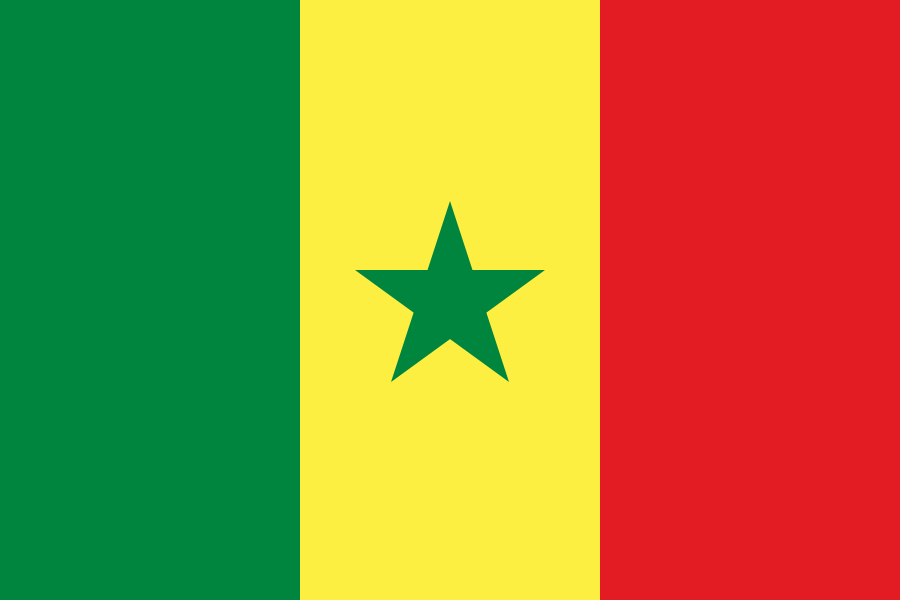
Senegal, a vibrant West African nation, offers a rich tapestry of culture, history, and natural beauty. Beyond its capital, Dakar, explore diverse landscapes, from the serene beaches of Saly to the historical sites of Saint-Louis. Experience the warmth of Senegalese hospitality and indulge in its culinary delights.
Arensond · CC001
The best time to visit Senegal is during the dry season, from November to April, when temperatures are more moderate and rainfall is minimal.
From November to April, characterized by low humidity and pleasant temperatures.
From May to October, featuring higher humidity and rainfall.
Short periods between dry and wet seasons, with variable weather.
02
Pick the neighbourhood by how you want the day to start and end, not by distance to one museum.
The bustling capital with vibrant nightlife and cultural attractions.
Busy and lively atmosphere.
A popular beach resort area known for its beautiful coastline.
Relaxing beach vibe.
A UNESCO World Heritage site with colonial architecture and rich history.
Quieter than Dakar.
A serene village near the Sine-Saloum Delta, great for eco-tourism.
Off the beaten path.
Known for its bustling markets and traditional crafts.
Authentic local experience.
The capital of the Casamance region, surrounded by lush greenery.
Less touristy.
A coastal town known for its fishing and vibrant local life.
Great seafood.
A region rich in culture and known for its traditional music.
Experience local traditions.
03
Everyday food, eaten the way locals do. Look for a busy place rather than a ranked list.
A flavorful fish and rice dish, often found in local eateries.
→ Try it at a local 'maquis'.
Chicken or fish marinated in lemon and onions, popular in homes and restaurants.
→ Best enjoyed with family.
A peanut stew served with rice, commonly found in markets.
→ A hearty meal option.
A refreshing hibiscus drink available at street vendors.
→ Perfect for hot days.
Savory pastries filled with fish or meat, found in snack shops.
→ Great for a quick bite.
A traditional dish of rice and fish, often served during celebrations.
→ A must-try for food lovers.
04
An order that works on foot, with the trip out of the first city at the end.
A UNESCO site known for its historical significance in the slave trade.
Famous for its pink waters, a unique natural phenomenon.
A wildlife reserve where you can see various African animals.
A towering statue symbolizing African independence.
Known for its colonial architecture and vibrant culture.
A stunning lake with a unique color, great for photography.
Vibrant markets like Sandaga and Kermel offer local crafts and foods.
A beautiful river ideal for boat trips and exploring nature.
An impressive mosque showcasing Islamic architecture.
A UNESCO World Heritage site known for its biodiversity.
A stunning desert landscape perfect for adventure seekers.
A poignant museum on Gorée Island, reflecting on the slave trade.
05
Airport to city, across the city, and onward to the next region.
International flights arrive primarily at Blaise Diagne International Airport (DSS) and Ziguinchor Airport (ZIG).
Buses and shared taxis are common for getting around cities and towns.
Available in major cities for those who prefer driving.
Bicycles can be rented in some tourist areas for a unique experience.
06
Type C and D plugs are used; consider bringing an adapter.
Cash is widely used; ATMs are available in cities.
Tipping is appreciated; round up the bill or leave a small amount.
French is the official language; Wolof is widely spoken.
A travel eSIM covers maps and tickets after landing.
A week is ideal to explore the main attractions.