
Dry Season
The dry season offers the best conditions for wildlife viewing and trekking.

Travel guide
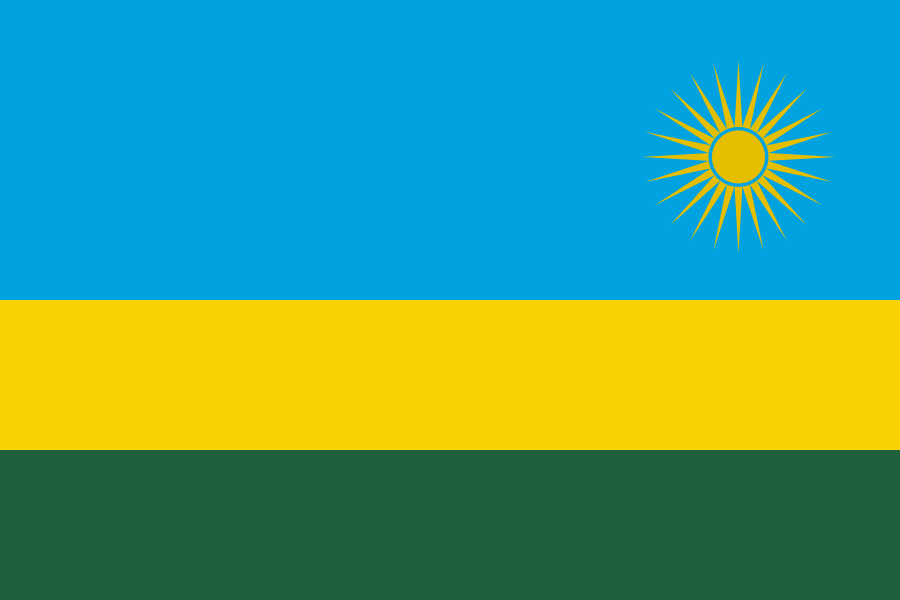
Rwanda, known as the Land of a Thousand Hills, offers stunning landscapes, rich culture, and diverse wildlife. Beyond its capital, Kigali, explore national parks, vibrant markets, and historical sites.
Peace Batuma · CC BY-SA 4.001
The best time to visit Rwanda is during the dry seasons from June to September and December to February, which are ideal for trekking and wildlife viewing.
The dry season offers the best conditions for wildlife viewing and trekking.
The wet season brings lush landscapes but can hinder outdoor activities.
The cool season is pleasant for exploring cities and cultural sites.
02
Pick the neighbourhood by how you want the day to start and end, not by distance to one museum.
The bustling heart of Rwanda, filled with shops, restaurants, and cultural attractions.
Can be noisy and busy.
A stunning rainforest known for its biodiversity and chimpanzee trekking.
Limited amenities nearby.
A beautiful lake offering relaxation and water activities, surrounded by picturesque towns.
Popular tourist destination.
Gateway to Volcanoes National Park, known for gorilla trekking and stunning landscapes.
Higher altitude, cooler temperatures.
Home to the National Museum of Rwanda and rich cultural heritage.
Less touristy, more local experience.
A charming town on Lake Kivu, known for its beaches and relaxing atmosphere.
Can get crowded in peak season.
Another lakeside town with beautiful views and a vibrant local market.
Limited nightlife options.
A serene town on the shores of Lake Kivu, perfect for unwinding.
Fewer tourist facilities.
03
Everyday food, eaten the way locals do. Look for a busy place rather than a ranked list.
A dish made from cassava leaves, often served with plantains or rice. Look for it in local eateries.
→ Try it with grilled meat for a complete meal.
Skewered and grilled meat, popular as street food. Found at roadside stalls and markets.
→ Best enjoyed with a cold drink.
Fried or grilled pork, a favorite among locals. Available in many restaurants.
→ Pair with a side of vegetables.
A staple made from maize flour, often served with stews. Commonly found in homes and local restaurants.
→ A filling accompaniment to any dish.
Small fried fish from Lake Kivu, often served as a snack or appetizer. Look for them at lakeside restaurants.
→ Enjoy with a squeeze of lemon.
Rwandan-style fried potatoes, often seasoned and served with various dishes. Available at local food stalls.
→ Perfect for a quick bite.
04
An order that works on foot, with the trip out of the first city at the end.
Home to the endangered mountain gorillas, offering trekking opportunities.
A biodiversity hotspot with hiking trails and primate watching.
A stunning lake perfect for relaxation and water sports.
A poignant site commemorating the victims of the 1994 genocide.
A cultural site showcasing Rwanda's royal history.
National Museum of Rwanda, highlighting the country's heritage.
A savannah park known for its wildlife, including the Big Five.
A vibrant art center showcasing local artists' work.
A memorial site for the genocide, offering insight into Rwanda's history.
A popular spot for relaxation and enjoying the lake.
A fascinating geological site with beautiful rock formations.
A bustling market where you can experience local life and buy crafts.
An active volcano offering hiking opportunities with stunning views.
05
Airport to city, across the city, and onward to the next region.
The main gateway to Rwanda, well-connected to international destinations.
Serves the western region, offering domestic flights and access to Lake Kivu.
Buses and moto-taxis are widely available for getting around cities and towns.
Available for those who prefer to explore at their own pace.
06
Rwanda uses type C and J plugs. Voltage is 230V.
The local currency is Rwandan Franc (RWF). Credit cards are accepted in major cities.
Tipping is appreciated but not mandatory. Round up the bill or leave small change.
Kinyarwanda is the official language, but English and French are widely spoken.
A travel eSIM covers maps and tickets after landing.
A stay of 7 to 10 days is recommended to explore the highlights.