
Dry Season
The dry season offers sunny days and minimal rain, ideal for beach activities.

Travel guide
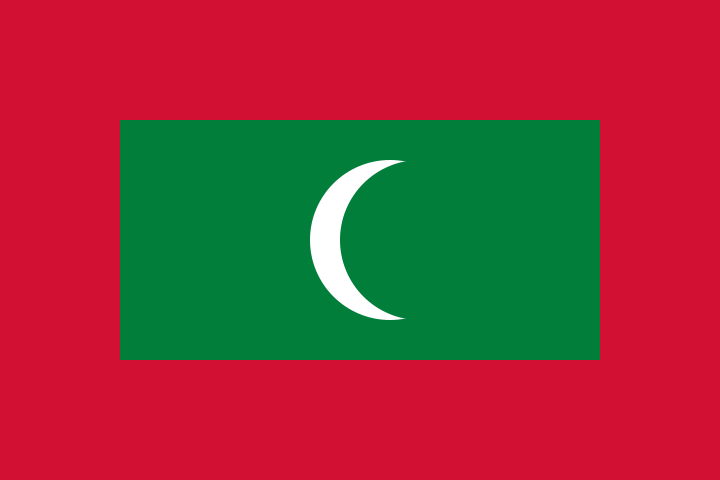
The Maldives is an archipelago known for its stunning beaches, crystal-clear waters, and vibrant marine life. Beyond the capital, Malé, explore the diverse islands, each offering unique experiences from luxury resorts to local culture.
Steevie · CC001
The best time to visit the Maldives is between November and April when the weather is dry and sunny.
The dry season offers sunny days and minimal rain, ideal for beach activities.
The wet season brings occasional rain and humidity but fewer tourists.
The shoulder season sees a mix of good weather and lower prices.
02
Pick the neighbourhood by how you want the day to start and end, not by distance to one museum.
The bustling capital city with markets, mosques, and local cuisine.
Busy urban environment.
A local island known for guesthouses and water sports.
Less luxurious than resort islands.
Famous for surfing and local culture.
Limited amenities.
A serene island with beautiful beaches and whale shark sightings.
Less nightlife.
Known for its friendly locals and traditional Maldivian lifestyle.
Limited tourist infrastructure.
Unique island with freshwater lakes and diverse wildlife.
Requires more travel time.
A local island with a laid-back vibe and proximity to surf spots.
Limited luxury options.
A small, luxurious resort island with stunning reefs.
Higher cost.
03
Everyday food, eaten the way locals do. Look for a busy place rather than a ranked list.
A traditional breakfast dish made of tuna, coconut, and onion, often found in local cafés.
→ Try it fresh in the morning.
A fish soup served with rice and lime, available in local restaurants.
→ Best enjoyed with fresh lime.
Grilled fish seasoned with spices, commonly served at beachside shacks.
→ Look for local catches.
Maldivian snacks like fish cakes and pastries, found in local markets.
→ Perfect for a light bite.
A pastry filled with fish or vegetables, available in local eateries.
→ Great for a quick snack.
A thick fish paste served with rice, found in traditional homes.
→ A staple in Maldivian cuisine.
A savory fish cake made with coconut and spices, often found in local shops.
→ Enjoy it with a side of chutney.
04
An order that works on foot, with the trip out of the first city at the end.
An ancient mosque in Malé made from coral stone, showcasing intricate carvings.
A bustling market where locals sell fresh seafood, reflecting the local lifestyle.
Home to artifacts that highlight Maldivian history and culture.
A popular diving site known for its vibrant coral and marine life.
A historical site that offers insight into the local justice system.
A UNESCO World Biosphere Reserve known for its rich biodiversity.
The historic home of a famous Maldivian sultan, showcasing traditional architecture.
Known for its surf breaks and local culture, perfect for adventure seekers.
Unique lakes offering a different landscape and wildlife experience.
A small island resort with a focus on marine conservation and activities.
A diving site famous for manta ray sightings, attracting divers from around the world.
Known for its unique geography and rich marine life, ideal for exploration.
A local island offering a mix of relaxation and adventure activities.
A luxurious resort island known for its stunning reefs and tranquility.
A long stretch of beach known for its beauty and whale shark sightings.
An atoll known for its diving spots and local culture.
05
Airport to city, across the city, and onward to the next region.
Domestic flights connect major islands efficiently.
Speedboats offer quick transfers between nearby islands.
Public ferries are an economical way to travel between islands.
Chartering a yacht is a luxurious way to explore the atolls.
06
The Maldives uses type G plugs, with a standard voltage of 230V.
Maldivian Rufiyaa is the local currency; cash is preferred in local markets.
Tipping is appreciated but not mandatory; rounding up the bill is common.
Dhivehi is the official language; English is widely spoken in tourist areas.
A travel eSIM covers maps and tickets after landing.
A week is ideal to explore multiple islands and relax.
Maps, ferries and tickets are easier with data as soon as you land.