
Dry Season
May to September offers cooler temperatures and clear skies.

Travel guide
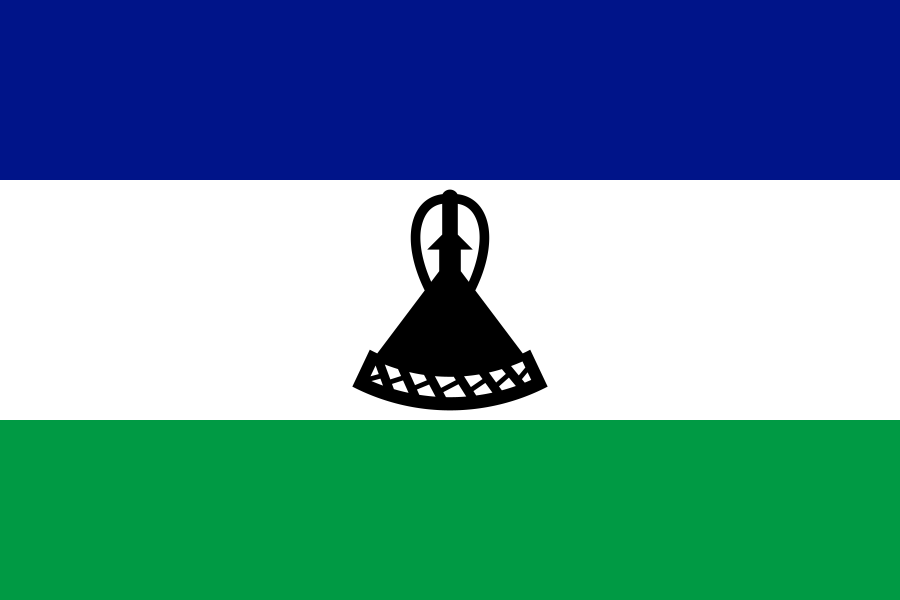
Lesotho, known as the Kingdom in the Sky, offers stunning mountain landscapes, rich culture, and unique experiences. Explore its highlands, traditional villages, and vibrant markets.
LesothoPanorama.JPG : User:Kentstander derivative work: Jjtkk · CC BY 2.501
The best time to visit Lesotho is during the dry season from May to September, when temperatures are cooler and the scenery is most accessible.
May to September offers cooler temperatures and clear skies.
October to April brings rain and warmer temperatures.
Winter months (June to August) can be quite cold, especially at night.
02
Pick the neighbourhood by how you want the day to start and end, not by distance to one museum.
The capital city offers a mix of urban amenities and cultural experiences.
Busy city life with limited nature access.
A historical site with stunning views and cultural significance.
Limited accommodation options.
Known for its breathtaking Maletsunyane Falls and adventure activities.
Remote location may require planning.
Famous for its vibrant markets and traditional crafts.
Less tourist infrastructure.
A picturesque village ideal for hiking and pony trekking.
Limited dining options.
Offers a glimpse into rural life and stunning landscapes.
Far from major attractions.
Known for its high-altitude beauty and hiking trails.
Higher altitude may affect acclimatization.
A quiet area with beautiful scenery and local culture.
Limited tourist facilities.
03
Everyday food, eaten the way locals do. Look for a busy place rather than a ranked list.
A staple made from maize, often served with meat or vegetables.
→ Try it at local eateries.
A traditional stew made with various meats and vegetables.
→ Look for it in village homes.
Dried cured meat, popular as a snack.
→ Available at markets.
A local beer brewed in Lesotho.
→ Enjoy it at local bars.
Sweet, syrupy pastries often enjoyed with tea.
→ Find them at bakeries.
Traditional bread, often served with meals.
→ Look for it in local homes.
04
An order that works on foot, with the trip out of the first city at the end.
One of the highest waterfalls in Africa, located in Semonkong.
A historical mountain and fortress of the Basotho people.
The largest dam in Lesotho, offering scenic views.
A breathtaking mountain pass connecting Lesotho and South Africa.
Historical caves with ancient rock art.
Known for its stunning landscapes and hiking opportunities.
A UNESCO World Heritage site with diverse flora and fauna.
Caves with impressive rock formations and historical significance.
An annual festival celebrating Basotho culture and arts.
A traditional hat symbolizing Basotho culture, found in markets.
A historical site with beautiful architecture.
Showcases the history and culture of the Quthing region.
05
Airport to city, across the city, and onward to the next region.
Moshoeshoe I International Airport (MSU) is the main entry point for international flights.
Renting a car is the best way to explore Lesotho's remote areas and stunning landscapes.
Minibus taxis are available for short distances but may be crowded.
Walking is a great way to explore villages and local culture.
06
Type M plugs are used; a universal adapter is recommended.
Cash is preferred, especially in rural areas; ATMs are available in cities.
Tipping is appreciated but not mandatory; round up the bill.
Sesotho and English are the official languages.
A travel eSIM covers maps and tickets after landing.
A week is ideal to explore the main attractions.