
Dry Season
From May to October, this season offers pleasant weather with less humidity, making it ideal for outdoor activities.

Travel guide
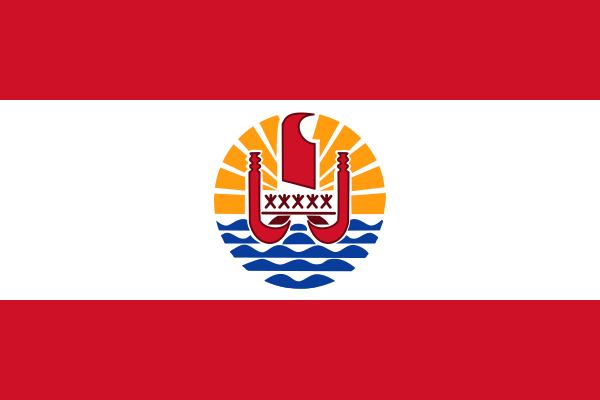
French Polynesia, a stunning collection of islands in the South Pacific, offers breathtaking landscapes, vibrant culture, and rich marine life. Beyond its capital, Papeete, explore the idyllic beaches, lush mountains, and unique traditions of this tropical paradise.
mcclave https://www.flickr.com/photos/mcclave/ · CC BY 2.001
The best time to visit is during the dry season from May to October when the weather is cooler and less humid.
From May to October, this season offers pleasant weather with less humidity, making it ideal for outdoor activities.
From November to April, expect higher humidity and rainfall, particularly in December and January.
The months of April and November can experience mixed weather, making them a good time for fewer crowds.
02
Pick the neighbourhood by how you want the day to start and end, not by distance to one museum.
The bustling capital with markets, shops, and nightlife.
Great for experiencing local life.
Known for its stunning lagoons and mountainous landscapes.
Ideal for outdoor activities.
Famous for its turquoise waters and luxury resorts.
Perfect for honeymooners.
A renowned diving destination with rich marine life.
Best for scuba enthusiasts.
Less touristy, with lush landscapes and authentic culture.
Experience local traditions.
Known for its vanilla plantations and serene atmosphere.
Great for a quiet getaway.
A UNESCO Biosphere Reserve with stunning coral reefs.
Ideal for eco-tourism.
A private island known for its luxury eco-resorts.
Requires advance booking.
03
Everyday food, eaten the way locals do. Look for a busy place rather than a ranked list.
A local dish of raw fish marinated in lime juice and coconut milk, found at local markets.
→ Try it at beachside eateries.
Fresh fish grilled or served in a variety of local preparations, available at many restaurants.
→ Look for it on the menu.
A staple root vegetable often served as a side dish, found in local homes and eateries.
→ A must-try for a local experience.
A sweet bread made with coconut, often found in bakeries.
→ Perfect for breakfast.
Made from locally grown vanilla, available at ice cream shops.
→ A refreshing treat.
A dish made from taro leaves cooked with coconut milk, found in traditional restaurants.
→ A unique local flavor.
04
An order that works on foot, with the trip out of the first city at the end.
The iconic peak of Bora Bora, offering stunning views.
A natural aquarium in Moorea where you can swim with marine life.
Located in Papeete, showcasing the history of pearl farming.
A beautiful waterfall located in Tahiti, accessible by hiking.
A UNESCO World Heritage site on Ra'iātea, significant in Polynesian culture.
A snorkeling paradise in Bora Bora with vibrant coral reefs.
A lively market in the capital, perfect for local crafts and food.
An ancient ceremonial site on Ra'iātea, rich in history.
Famous for its stunning blue waters and coral reefs.
Known for its lush landscapes and archaeological sites.
A private island with pristine nature and luxury resorts.
Beautiful botanical gardens in Tahiti with diverse flora.
05
Airport to city, across the city, and onward to the next region.
Faa'a International Airport (PPT) is the main gateway, with connections to various islands.
Ferries connect some islands, providing a scenic way to travel between them.
Renting a car is a convenient option for exploring larger islands like Tahiti and Moorea.
Biking is a popular way to explore smaller islands, especially Huahine.
06
Type C and E plugs are used; consider bringing an adapter.
Credit cards are widely accepted, but carry cash for small purchases.
Tipping is not customary but appreciated for good service.
French and Tahitian are the official languages.
A travel eSIM covers maps and tickets after landing.
A stay of 7 to 10 days is recommended to explore several islands.
Maps, ferries and tickets are easier with data as soon as you land.