
Spring
A beautiful time with blooming flowers and mild weather, ideal for sightseeing.

Travel guide
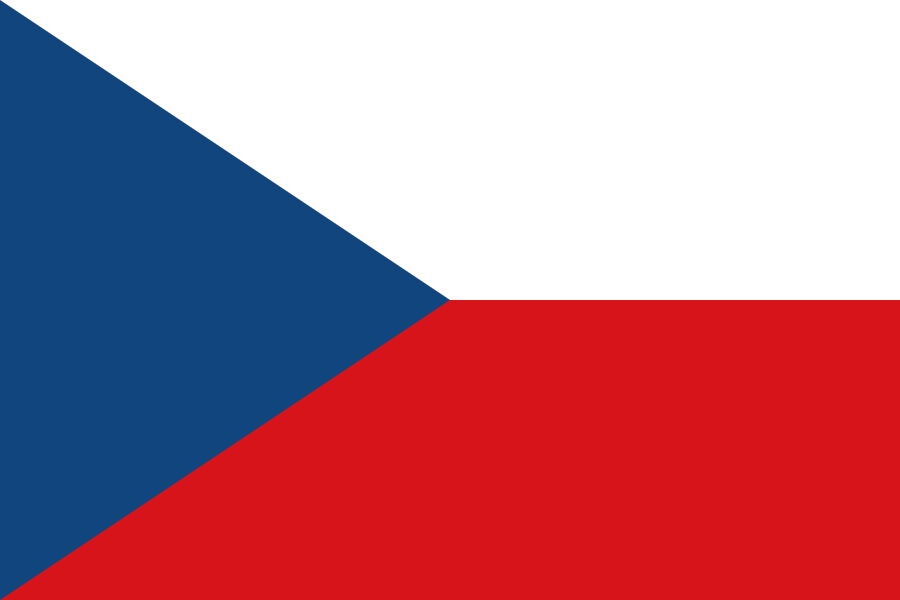
Czechia, known for its rich history and stunning architecture, offers a diverse range of experiences beyond its capital, Prague. Explore picturesque towns, natural landscapes, and cultural treasures throughout the country.
john mcsporran from Trossachs, Scotland · CC BY 2.001
The best time to visit Czechia is during the spring (April to June) and fall (September to October) when the weather is mild and the tourist crowds are smaller.
A beautiful time with blooming flowers and mild weather, ideal for sightseeing.
Warm weather attracts tourists, making it vibrant but crowded.
A picturesque season with colorful foliage and pleasant temperatures.
02
Pick the neighbourhood by how you want the day to start and end, not by distance to one museum.
The capital city, known for its historic architecture and vibrant culture.
Busy but full of attractions.
A charming town with a well-preserved medieval center and a stunning castle.
Can be crowded in summer.
The second-largest city, known for its modernist architecture and lively student population.
Less touristy than Prague.
Famous for its Pilsner beer, with a rich brewing history.
Visit breweries for tastings.
A historical city with beautiful squares and a UNESCO-listed Holy Trinity Column.
A hidden treasure.
Known for its hot springs and spa culture, ideal for relaxation.
Best visited during the film festival.
A city with a mix of historical and modern architecture, surrounded by nature.
Great for outdoor activities.
Home to the Ještěd mountain and a mix of nature and urban life.
Perfect for hiking enthusiasts.
03
Everyday food, eaten the way locals do. Look for a busy place rather than a ranked list.
A traditional Czech dish of marinated beef with creamy sauce, often found in local restaurants.
→ Try it with a side of bread dumplings.
A sweet pastry rolled in sugar and nuts, popular in tourist areas.
→ Best enjoyed warm from street vendors.
A hearty stew made with beef and spices, commonly served in pubs.
→ Pair it with Czech bread.
Sweet pastries filled with fruit or cheese, found in bakeries.
→ Perfect for breakfast or a snack.
The original Pilsner lager, best tasted in its birthplace, Plzeň.
→ Visit local breweries for fresh drafts.
Potato pancakes seasoned with garlic and herbs, often served at fairs.
→ Look for them at local markets.
Roast pork with sauerkraut and dumplings, a classic Czech meal.
→ Try it in traditional taverns.
04
An order that works on foot, with the trip out of the first city at the end.
A historic castle complex offering stunning views of the city.
A historic bridge adorned with statues, connecting the Old Town and Lesser Town.
The heart of Prague with the famous Astronomical Clock.
A UNESCO World Heritage site with beautiful gardens and views.
A unique chapel decorated with human bones, located in Kutná Hora.
Famous for its thermal springs and spa treatments.
The birthplace of Pilsner beer, offering tours and tastings.
A stunning Gothic cathedral located within Prague Castle.
A modern architectural landmark in Prague, known for its unique design.
A UNESCO World Heritage site, a baroque masterpiece in the city center.
A mountain offering hiking trails and a unique hotel and TV tower.
A historic castle with a museum and beautiful views of the city.
A UNESCO site showcasing the history of the Jewish community.
A picturesque castle resembling Windsor Castle, surrounded by gardens.
A historic castle set in a forest, offering tours and scenic views.
05
Airport to city, across the city, and onward to the next region.
Czechia is accessible via major international airports, including Václav Havel Airport Prague (PRG) and Brno-Tuřany Airport (BRQ).
The train network connects major cities and regions, offering a scenic way to travel.
Trams and buses in cities like Prague and Brno are efficient and easy to use.
Renting a car is a good option for exploring rural areas and national parks.
Many cities have bike rental services, making it easy to explore on two wheels.
06
Czechia uses type E plugs, with a standard voltage of 230V.
The currency is the Czech koruna (CZK). Credit cards are widely accepted, but carry some cash for smaller purchases.
Tipping is customary; round up the bill or add 10-15% for good service.
Czech is the official language, but English is commonly spoken in tourist areas.
A travel eSIM covers maps and tickets after landing.
A week is ideal to explore the main attractions and regions.