
Spring
Spring brings mild weather and blooming landscapes, making it a great time for outdoor activities.

Travel guide
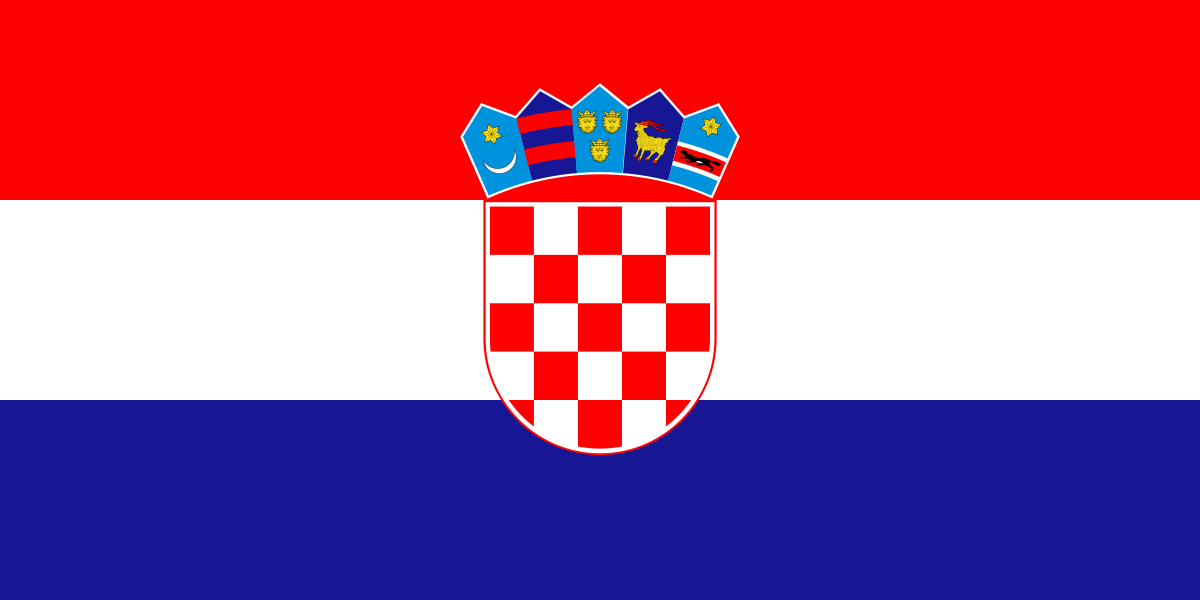
Croatia, known for its stunning coastline, rich history, and vibrant culture, offers a diverse range of experiences beyond its capital, Zagreb. From the picturesque towns of Dubrovnik and Split to the natural wonders of Plitvice Lakes National Park, Croatia is a treasure trove for travelers seeking both relaxation and adventure.
Wolfgang Steinkläubl · CC BY-SA 3.001
The best time to visit Croatia is during the shoulder seasons of spring (April to June) and fall (September to October) when the weather is pleasant and the tourist crowds are smaller.
Spring brings mild weather and blooming landscapes, making it a great time for outdoor activities.
Summer is hot and bustling, perfect for beachgoers and festival lovers.
Autumn offers cooler temperatures and beautiful fall colors, ideal for sightseeing.
02
Pick the neighbourhood by how you want the day to start and end, not by distance to one museum.
Explore the historic walls and vibrant streets of this UNESCO World Heritage site.
Can be crowded in summer.
Enjoy the blend of ancient Roman architecture and modern life around Diocletian's Palace.
Busy during peak tourist season.
Experience the city's rich history and vibrant arts scene in this charming district.
Best explored on foot.
Visit the well-preserved Roman amphitheater and enjoy the coastal atmosphere.
Less touristy than other coastal cities.
Stroll through the cobblestone streets of this picturesque fishing town.
Ideal for photography enthusiasts.
Discover the unique Sea Organ and the rich history of this coastal city.
Great sunset views.
Marvel at the stunning waterfalls and lakes in this UNESCO-listed national park.
Wear comfortable shoes for hiking.
Explore the Baroque architecture and vibrant cultural scene in this eastern city.
Less known, but rewarding.
03
Everyday food, eaten the way locals do. Look for a busy place rather than a ranked list.
A traditional dish of meat and vegetables slow-cooked under a bell-like lid, found in many konobas (taverns) across Dalmatia.
→ Best enjoyed with local wine.
Cabbage rolls stuffed with minced meat and rice, a staple in many homes, especially in Slavonia.
→ Try homemade versions for authenticity.
A seafood dish made with cuttlefish ink, popular along the Adriatic coast.
→ Look for it in coastal restaurants.
A pastry filled with cheese, often served baked or boiled, originating from the Zagorje region.
→ Perfect as a snack or dessert.
Istria is famous for its truffles; try them in pasta or as a topping on various dishes.
→ Seek out local truffle festivals.
Freshly caught fish grilled to perfection, available at many seaside restaurants.
→ Pair with local olive oil.
A strong fruit brandy, often homemade, served as an aperitif.
→ Enjoy responsibly.
04
An order that works on foot, with the trip out of the first city at the end.
Famous for its cascading lakes and lush greenery, a must-visit for nature lovers.
Walk along the ancient walls for stunning views of the Adriatic Sea.
An ancient Roman palace that forms the heart of Split's old town.
An architectural marvel that creates music from the waves.
One of the best-preserved Roman amphitheaters in the world.
Known for its beautiful waterfalls and swimming areas.
A charming coastal town with colorful buildings and a rich history.
A UNESCO World Heritage site known for its well-preserved medieval architecture.
Famous for its colorful tiled roof and historical significance.
A tranquil island park known for its saltwater lakes and lush forests.
A UNESCO World Heritage site known for its stunning architecture.
A unique museum dedicated to failed relationships, showcasing personal stories.
05
Airport to city, across the city, and onward to the next region.
Croatia is served by several major airports including Zagreb (ZAG), Split (SPU), and Dubrovnik (DBV).
Buses connect major cities, while ferries link the mainland with islands, providing scenic travel options.
Renting a car is a popular option for exploring the countryside and coastal regions at your own pace.
Many cities have bike rental services, making it easy to explore urban areas and coastal paths.
06
Type C and F plugs are used; the standard voltage is 230V.
The currency is the Croatian Kuna (HRK); credit cards are widely accepted.
Tipping is appreciated; rounding up the bill or leaving 10% is common.
The official language is Croatian; English is widely spoken in tourist areas.
A travel eSIM covers maps and tickets after landing.
A week is ideal to explore the main highlights of Croatia.