
Dry Season
From May to October, the weather is cooler and drier, ideal for travel.

Travel guide
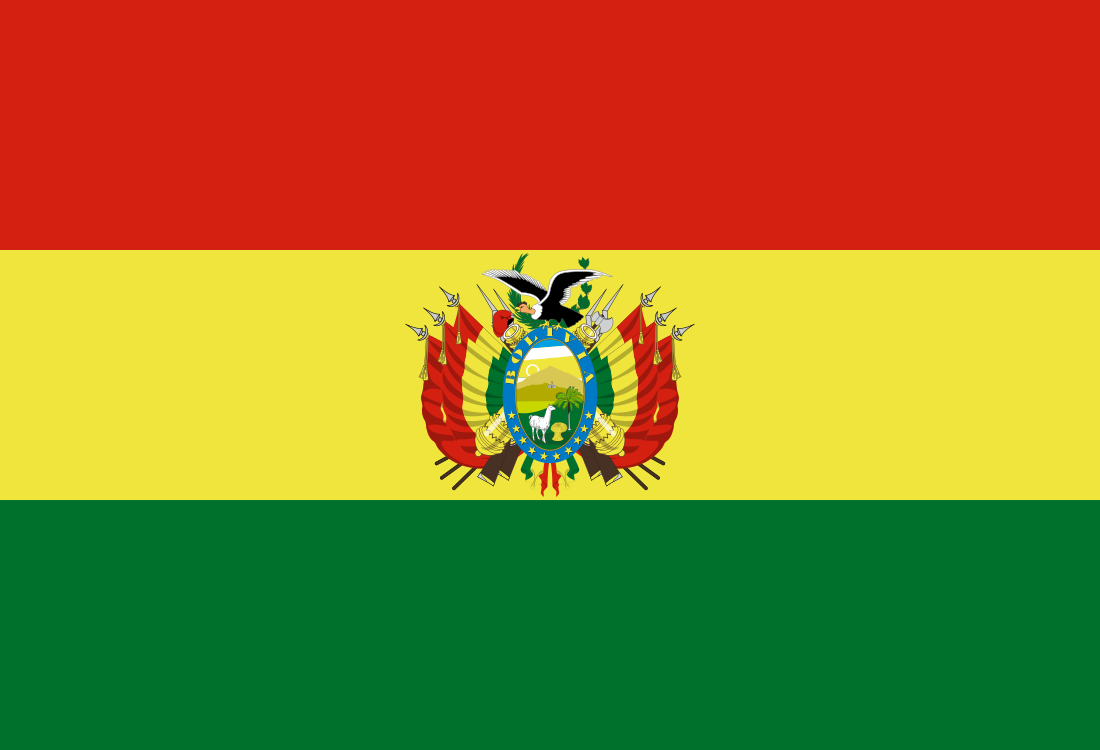
Bolivia, a landlocked country in South America, is known for its diverse geography ranging from the Andes mountains to the Amazon rainforest. It offers rich cultural experiences, vibrant cities, and stunning natural landscapes.
Martin St-Amant ( S23678 ); derivative work (noise reduction to sky) by Julia W · CC BY-SA 3.001
The best time to visit Bolivia is during the dry season from May to October when the weather is cooler and more stable.
From May to October, the weather is cooler and drier, ideal for travel.
From November to April, expect rain and warmer temperatures.
April and November can be unpredictable, with mixed weather.
02
Pick the neighbourhood by how you want the day to start and end, not by distance to one museum.
The administrative capital, known for its unique topography and vibrant culture.
Altitude can be challenging; acclimatize gradually.
Home to the famous salt flats, a must-see for any traveler.
Best visited during the dry season for stunning views.
Known for its pleasant climate and culinary delights.
Try local markets for authentic food experiences.
A bustling city with a modern vibe and rich history.
Explore both urban and natural attractions.
Famous for its silver mines and colonial architecture.
High altitude; take it slow to avoid altitude sickness.
The constitutional capital, known for its well-preserved colonial buildings.
A great place for walking tours.
A charming town near Cochabamba, known for its festivals.
Experience local traditions and festivities.
Gateway to the Amazon rainforest and a hub for eco-tourism.
Best visited during the dry season for easier access.
03
Everyday food, eaten the way locals do. Look for a busy place rather than a ranked list.
A popular Bolivian pastry filled with meat, vegetables, and spices. Look for them in local bakeries.
→ Best enjoyed fresh and hot.
A hearty dish of beef, sausage, and potatoes. Commonly found in local restaurants.
→ Perfect for sharing.
A peanut soup often served with chicken or beef. Try it in traditional eateries.
→ A comforting dish on cooler days.
A traditional soup made with meat, potatoes, and vegetables. Look for it in local markets.
→ A filling option after a long day of exploring.
A warm drink made from corn, often enjoyed for breakfast. Available at street vendors.
→ Pair it with a pastry for a complete meal.
A sweet corn cake often served as a snack. Find it at local food stalls.
→ A delightful treat to try.
04
An order that works on foot, with the trip out of the first city at the end.
The world's largest salt flat, offering breathtaking views and unique landscapes.
The highest navigable lake in the world, rich in cultural significance.
An ancient archaeological site with impressive ruins.
A biodiversity hotspot in the Amazon rainforest.
Historical silver mines that played a crucial role in Bolivia's history.
A unique landscape resembling a lunar surface, located near La Paz.
The main square surrounded by beautiful colonial buildings.
The mountain that looms over Potosí, famous for its mining history.
An island on Lake Titicaca, steeped in Incan mythology.
A mountain with stunning views, once home to the highest ski resort.
A giant statue of Christ offering panoramic views of the city.
Famous for its vineyards and wine production.
Known as the world's most dangerous road, offering thrilling views.
A vibrant festival known for its colorful parades and traditional dances.
A unique market selling traditional medicines and artifacts.
05
Airport to city, across the city, and onward to the next region.
Major airports include El Alto International Airport (LPB) and Viru Viru International Airport (VVI).
Long-distance buses connect major cities, offering a budget-friendly option.
Taxis are widely available in cities; agree on a fare before starting your journey.
Shared taxis known as trufis are a common way to get around in urban areas.
06
Type C and Type L plugs are used. Voltage is 230V.
Cash is widely used; ATMs are available in cities.
Tipping is appreciated but not mandatory. Round up the bill.
Spanish is the official language, with many indigenous languages spoken.
A travel eSIM covers maps and tickets after landing.
A trip of at least 10 days is recommended to explore key sites.