_banner.jpg)
Dry Season
Characterized by low rainfall and cooler temperatures, ideal for travel.

Travel guide
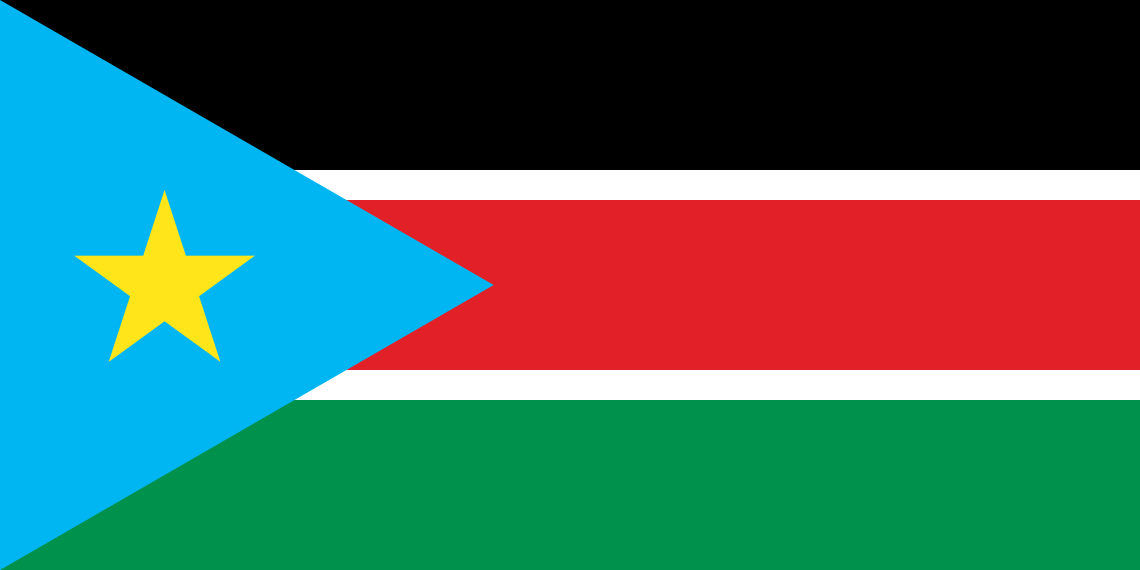
South Sudan, the world's youngest nation, offers a rich tapestry of cultures, landscapes, and wildlife. From the bustling capital of Juba to the serene banks of the Nile, it presents a unique travel experience.
Huts_in_Yei_township,_South_Sudan.jpg : SuSanA Secretariat derivative work: Jame · CC BY 2.001
The best time to visit South Sudan is during the dry season, from November to April, when the weather is cooler and more pleasant for outdoor activities.
Characterized by low rainfall and cooler temperatures, ideal for travel.
Heavy rains can disrupt travel, but the landscape is lush and vibrant.
A mix of dry and wet conditions, offering unique wildlife viewing opportunities.
02
Pick the neighbourhood by how you want the day to start and end, not by distance to one museum.
The capital city offers various accommodations, from guesthouses to mid-range hotels.
Busy and noisy, but convenient.
Located along the Nile, Malakal is known for its riverside views and local charm.
Less developed, but authentic.
A small town with a vibrant market scene and access to wildlife areas.
Limited options, but rich in culture.
Known for its historical sites and diverse communities.
Quiet, with fewer tourists.
A town with a strong agricultural presence and local traditions.
Rural experience, less infrastructure.
A gateway to nature reserves and lush landscapes.
Remote, but beautiful.
Famous for its lakes and traditional Dinka culture.
Limited amenities, but scenic.
A small town with access to the Imatong Mountains.
Less touristy, great for hiking.
03
Everyday food, eaten the way locals do. Look for a busy place rather than a ranked list.
A staple made from cassava or maize, often served with stews.
→ Try it at local markets.
A popular West African dish, often served at celebrations.
→ Look for it at community gatherings.
Grilled meat, typically goat or beef, enjoyed with ugali.
→ Best found at roadside stalls.
Savory pastries filled with meat or vegetables.
→ Common snack in local eateries.
A type of flatbread, often served with stews.
→ A must-try with any meal.
A traditional soup made with local greens.
→ Look for it in family-run restaurants.
04
An order that works on foot, with the trip out of the first city at the end.
The lifeblood of South Sudan, offering beautiful views and activities.
Famous for its wildlife, including elephants and migratory birds.
Known for its stunning landscapes and diverse fauna.
A bustling market where you can experience local life.
A national monument dedicated to the leader of South Sudan's independence.
A large lake known for its fishing and birdwatching opportunities.
An iconic church that reflects the local architecture.
A scenic river ideal for picnics and relaxation.
A picturesque area perfect for hiking and exploring.
A hub for river transport and local commerce.
Showcases the traditions and crafts of the local communities.
A stunning range offering hiking and breathtaking views.
05
Airport to city, across the city, and onward to the next region.
Juba International Airport (JUB) and Malakal Airport (MAK) are the main entry points.
Road conditions can vary; use caution and consider hiring a local driver.
Buses and shared taxis are common for local travel.
Several airlines operate flights between major cities.
06
Type G plugs are used in South Sudan.
US dollars are widely accepted; carry small denominations.
Tipping is appreciated, especially in restaurants and for guides.
English is the official language, but local dialects are also spoken.
A travel eSIM covers maps and tickets after landing.
A stay of at least one week is recommended to explore adequately.
Maps, ferries and tickets are easier with data as soon as you land.