
Spring
A beautiful time to witness cherry blossoms and mild weather.

Travel guide
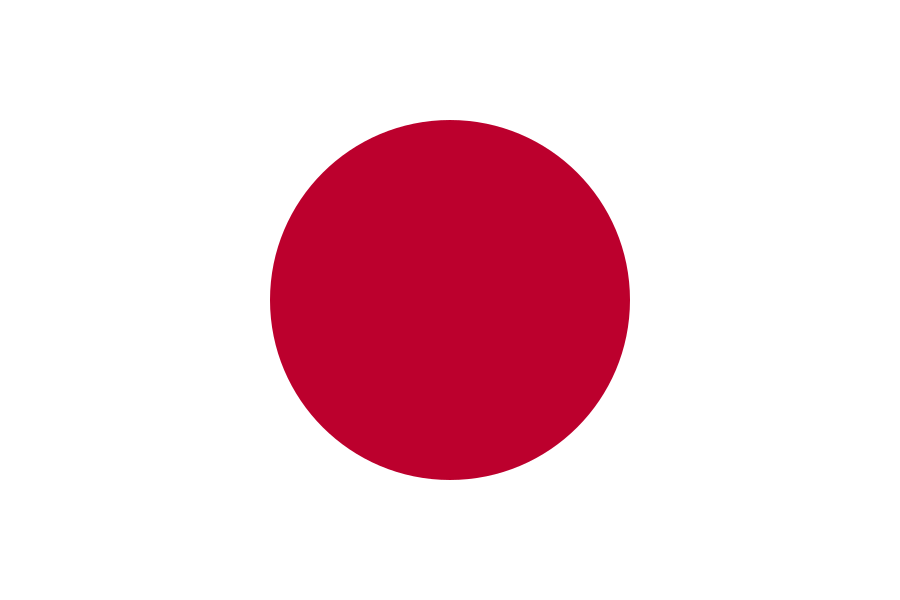
Japan is a captivating blend of ancient traditions and cutting-edge modernity, offering diverse landscapes, rich culture, and delicious cuisine across its many regions.
JurriaanH · CC BY-SA 3.001
The best time to visit Japan is during spring (March to May) and autumn (September to November) when the weather is mild and the scenery is stunning.
A beautiful time to witness cherry blossoms and mild weather.
Hot and humid, ideal for beach visits and festivals.
A stunning season with vibrant foliage and pleasant temperatures.
02
Pick the neighbourhood by how you want the day to start and end, not by distance to one museum.
A bustling district known for its vibrant nightlife, shopping, and dining options.
Can be crowded, but offers great access to transport.
Famous for its traditional wooden machiya houses and geisha culture.
Best visited in the evening for a magical atmosphere.
Home to free-roaming deer and historic temples, including Todai-ji.
A peaceful escape from city life.
Known for its Peace Memorial Park and vibrant food scene.
A poignant reminder of history.
Famous for its beer, skiing, and the annual Snow Festival.
Great for winter enthusiasts.
Known for its beautiful beaches and unique Ryukyu culture.
A different vibe from mainland Japan.
Famous for its well-preserved Edo-period districts and gardens.
Less touristy, offering a more authentic experience.
Known for its delicious street food and vibrant nightlife.
Try the local ramen at a yatai (food stall).
03
Everyday food, eaten the way locals do. Look for a busy place rather than a ranked list.
Enjoy fresh sushi at Tsukiji Outer Market in Tokyo.
→ Go early for the best selection.
Try tonkotsu ramen in Fukuoka or shoyu ramen in Tokyo.
→ Each region has its own specialty.
A savory pancake popular in Hiroshima and Osaka.
→ Watch it being made for a fun experience.
Delicious battered and fried seafood or vegetables, best found in Tokyo.
→ Look for specialty tempura restaurants.
Fried octopus balls, a street food favorite in Osaka.
→ Try them fresh from a street vendor.
A staple in Japanese cuisine, often served with breakfast.
→ Look for homemade versions in local eateries.
04
An order that works on foot, with the trip out of the first city at the end.
Japan's iconic peak, perfect for hiking and photography.
The Golden Pavilion, a stunning Zen temple surrounded by gardens.
A poignant site dedicated to the victims of the atomic bomb.
Home to a giant Buddha statue and beautiful park.
An iconic symbol of Tokyo, offering panoramic views.
A UNESCO World Heritage site showcasing Ryukyu architecture.
A massive bronze statue located in a serene setting.
One of the busiest pedestrian crossings in the world.
Japan's most beautiful castle, a UNESCO World Heritage site.
A stunning bamboo forest in Kyoto, perfect for a stroll.
Famous for their crystal-clear waters and white sand.
The primary residence of the Emperor of Japan, located in Tokyo.
05
Airport to city, across the city, and onward to the next region.
Japan's main airports include Narita (Tokyo), Haneda (Tokyo), Kansai (Osaka), and Chubu (Nagoya).
The Shinkansen (bullet train) connects major cities efficiently and comfortably.
Subways and buses are reliable and widely used in urban areas.
Many cities are bike-friendly, offering rentals for exploring at your own pace.
Walking is a great way to explore neighborhoods and discover hidden gems.
06
Japan uses Type A and Type B plugs, with a voltage of 100V.
Cash is widely used; credit cards are not accepted everywhere.
Tipping is not customary in Japan and may be considered rude.
Japanese is the official language; English is not widely spoken.
Free Wi-Fi is available in many urban areas, but consider renting a pocket Wi-Fi.
A week is ideal to explore major cities and attractions.