
Spring
Spring is a beautiful time to visit Nepal, with blooming flowers and mild weather.

Travel guide
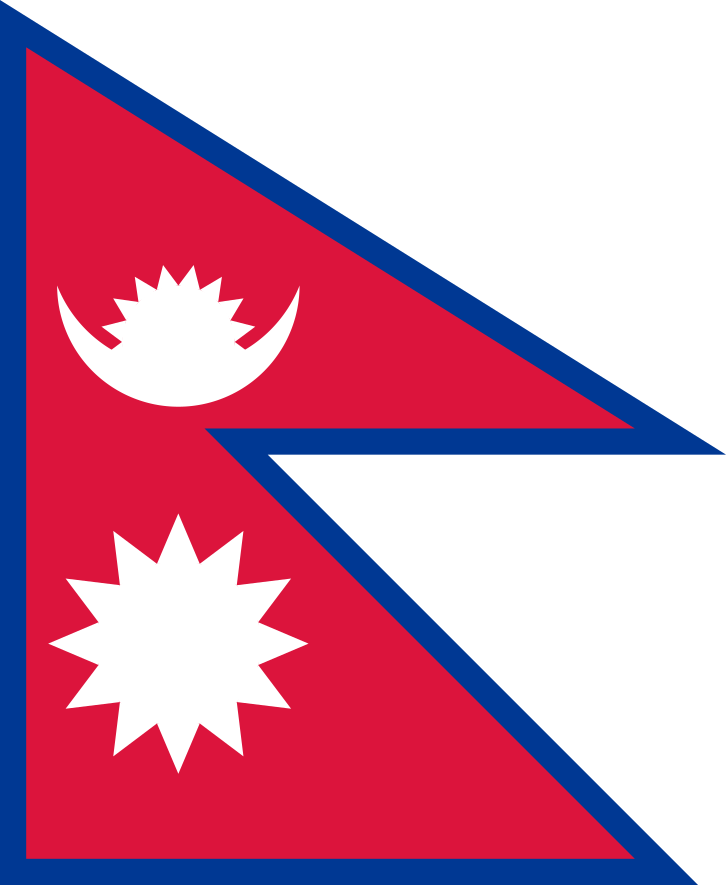
Nepal, a land of stunning landscapes and rich culture, offers travelers a unique experience from the bustling streets of Kathmandu to the serene beauty of the Himalayas. Explore ancient temples, trek through picturesque mountains, and immerse yourself in the vibrant local traditions.
Mountains_as_seen_from_Chisopani_-_panaroma_-_Flickr_-_thapa.laxman.jpg : Laxman · CC BY-SA 2.001
The best time to visit Nepal is during the spring (March to May) and autumn (September to November) when the weather is mild and the skies are clear.
Spring is a beautiful time to visit Nepal, with blooming flowers and mild weather.
The monsoon season brings heavy rains, making trekking difficult but the landscapes lush.
Autumn offers clear skies and pleasant temperatures, ideal for trekking and sightseeing.
02
Pick the neighbourhood by how you want the day to start and end, not by distance to one museum.
A bustling neighborhood in Kathmandu known for its vibrant nightlife, shops, and restaurants.
Can be crowded, especially during peak tourist seasons.
Famous for its rich cultural heritage and stunning architecture, Patan is a quieter alternative to Thamel.
Less touristy but still close to major attractions.
Known for its well-preserved medieval architecture and traditional crafts, Bhaktapur offers a glimpse into Nepal's history.
Entry fee required but worth it for the experience.
A picturesque city surrounded by lakes and mountains, perfect for adventure sports and relaxation.
Popular among trekkers and paragliders.
A UNESCO World Heritage site, this park is known for its wildlife and jungle safaris.
Best to book safaris in advance.
The birthplace of Lord Buddha, Lumbini is a pilgrimage site with beautiful gardens and monasteries.
A peaceful place for reflection.
Famous for its stunning sunrise views over the Himalayas, Nagarkot is a popular hill station near Kathmandu.
Best visited early in the morning.
A charming hilltop town that offers a glimpse of traditional Newari culture and stunning mountain views.
Less commercialized than other tourist spots.
03
Everyday food, eaten the way locals do. Look for a busy place rather than a ranked list.
A traditional meal consisting of lentil soup and rice, commonly found in local eateries.
→ Try it for an authentic Nepali experience.
Nepali dumplings filled with meat or vegetables, available at street stalls and restaurants.
→ A must-try snack or appetizer.
Fermented leafy greens, often served as a side dish in local homes.
→ Great for those wanting to try local flavors.
A traditional homemade rice-based doughnut, typically enjoyed during festivals.
→ Look for it at local markets.
A hearty noodle soup popular in the mountainous regions, found in many eateries.
→ Perfect for warming up after a trek.
Often referred to as 'Nepali pizza', this rice crepe is topped with various ingredients.
→ Best enjoyed fresh from local vendors.
04
An order that works on foot, with the trip out of the first city at the end.
Also known as the Monkey Temple, this ancient religious complex offers panoramic views of Kathmandu.
A sacred Hindu temple complex located on the banks of the Bagmati River.
One of the largest stupas in Nepal, it is a UNESCO World Heritage site and a center for Tibetan Buddhism.
The starting point for treks to Mount Everest, offering breathtaking views of the world's highest peak.
A popular trekking route that offers stunning landscapes and diverse cultures.
The largest lake in Nepal, known for its stunning beauty and tranquility.
A protected area known for its diverse flora and fauna, ideal for trekking and wildlife spotting.
A UNESCO World Heritage site featuring ancient palaces, temples, and courtyards.
Home to diverse wildlife including rhinos and tigers, offering jungle safaris.
A sacred alpine lake surrounded by stunning mountains, popular among trekkers.
Famous for its sunrise and sunset views over the Himalayas.
A peaceful garden complex that marks the birthplace of Buddha.
05
Airport to city, across the city, and onward to the next region.
The main international gateway is Tribhuvan International Airport (KTM) in Kathmandu and Gautam Buddha International Airport (GBD) in Lumbini.
Domestic flights connect major cities and trekking regions, providing a quick way to travel across the country.
Long-distance buses are available, but road conditions can be challenging, especially in rural areas.
Taxis are widely available in cities, but it's best to agree on a fare before starting your journey.
Renting a motorbike can be a fun way to explore the countryside, but ensure you have the proper license.
06
Nepal uses type C and D plugs, with a standard voltage of 230V.
ATMs are available in major cities, but it's advisable to carry cash for rural areas.
Tipping is appreciated but not mandatory; rounding up the bill is common.
Nepali is the official language, but English is widely understood in tourist areas.
A travel eSIM covers maps and tickets after landing.
A trip to Nepal should ideally last at least 10 days to explore major attractions.