![Ludovic Hirlimann https://www.flickr.com/photos/lhirlimann/ [ dead link ] · CC BY-SA 2.0](https://commons.wikimedia.org/wiki/File:Mongolian_landscape_banner.jpg)
Summer
Warm temperatures and vibrant landscapes make summer the ideal time for outdoor activities.

Travel guide
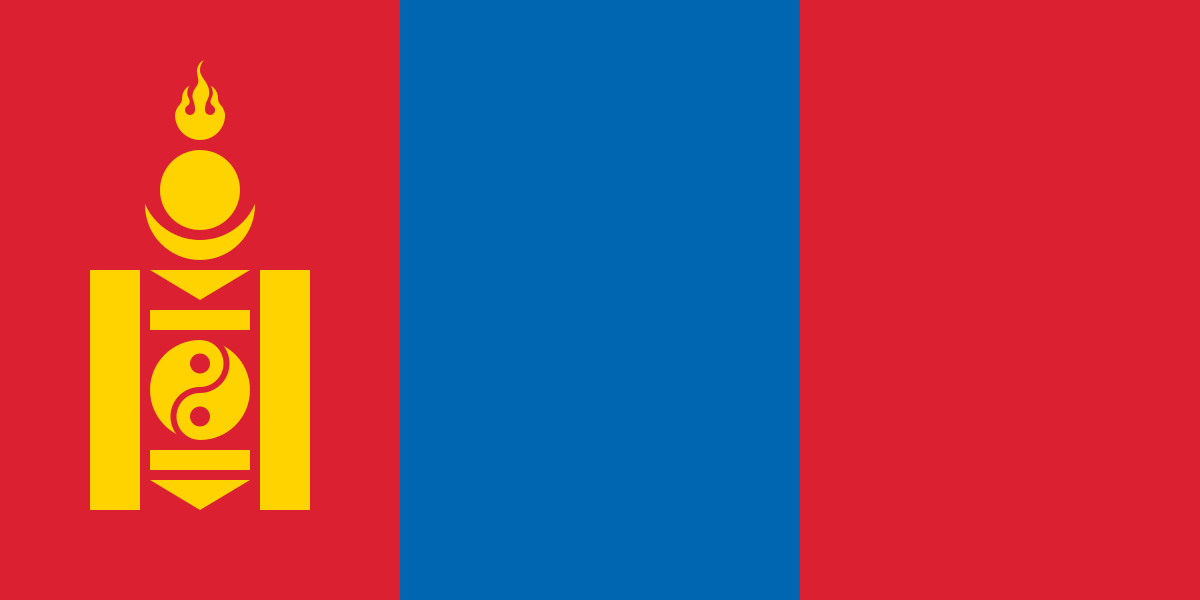
Mongolia, known for its vast steppes and nomadic culture, offers a unique travel experience beyond its capital, Ulaanbaatar. Explore the stunning landscapes, rich history, and traditional cuisine.
Ludovic Hirlimann https://www.flickr.com/photos/lhirlimann/ [ dead link ] · CC BY-SA 2.001
The best time to visit Mongolia is from June to September when the weather is mild and outdoor activities are plentiful.
Warm temperatures and vibrant landscapes make summer the ideal time for outdoor activities.
Cooler temperatures and colorful foliage create a picturesque setting for travel.
Harsh winters with snow-covered landscapes; suitable for winter sports enthusiasts.
02
Pick the neighbourhood by how you want the day to start and end, not by distance to one museum.
The capital city offers a mix of modern amenities and traditional culture, making it a great base for exploring Mongolia.
Busy city life can be overwhelming.
Once the capital of the Mongol Empire, this town is rich in history and close to the Erdene Zuu Monastery.
Limited accommodation options.
Known as the 'Blue Pearl' of Mongolia, this stunning lake offers opportunities for hiking and horseback riding.
Remote location requires planning.
A vast desert landscape with unique wildlife and geological formations, perfect for adventurous travelers.
Travel can be challenging.
The gateway to the Gobi Desert, offering basic amenities and tours to the surrounding attractions.
Limited dining options.
A charming town surrounded by mountains, known for its traditional architecture and local markets.
Less tourist infrastructure.
Famous for its stunning mountain landscapes and diverse ethnic cultures, particularly the Kazakh community.
Requires a longer trip.
A city known for its beautiful scenery and rich history, often overlooked by tourists.
Limited transport options.
03
Everyday food, eaten the way locals do. Look for a busy place rather than a ranked list.
Steamed dumplings filled with meat, commonly found in local markets and restaurants.
→ Try them with spicy sauce.
Fried meat pies that are a popular street food, especially during festivals.
→ Best enjoyed hot.
A traditional dish made from goat or sheep cooked with hot stones inside its skin.
→ Experience it at a local ger.
Dried curds that are a common snack, often found in rural areas.
→ Great for hiking trips.
A staple beverage made from black tea and milk, often served with salt.
→ Try it with a meal.
Fermented mare's milk, a traditional drink with a unique taste, found in rural areas.
→ Enjoy it fresh from the source.
04
An order that works on foot, with the trip out of the first city at the end.
A massive statue located near Ulaanbaatar, celebrating Mongolia's most famous historical figure.
The first Buddhist monastery in Mongolia, located in Kharkhorin, showcasing beautiful architecture.
A stunning national park near Ulaanbaatar, known for its scenic landscapes and rock formations.
The ancient capital of the Mongol Empire, rich in history and archaeological sites.
One of the largest freshwater lakes in Mongolia, ideal for outdoor activities and relaxation.
A national park in the Gobi Desert, known for its unique landscapes and diverse wildlife.
The central square of the capital, surrounded by important government buildings and monuments.
Home to Mongolia's highest peak, this park offers breathtaking views and trekking opportunities.
A UNESCO World Heritage site, known for its historical significance and stunning landscapes.
Famous for dinosaur fossils, these cliffs offer a unique geological experience.
A museum showcasing the history and culture of the Khovd region, often overlooked by tourists.
A museum dedicated to the history of the ancient capital, featuring artifacts from the Mongol Empire.
05
Airport to city, across the city, and onward to the next region.
Mongolia's main international gateway is Chinggis Khaan International Airport (ULN), connecting to various global destinations.
Domestic flights are available to major cities and tourist destinations, making travel convenient for visitors.
Buses and shared taxis operate in urban areas, but services can be infrequent.
Renting a car is a good option for exploring rural areas and national parks.
Joining guided tours can enhance your experience, especially in remote regions.
06
Mongolia uses Type C and Type E plugs, with a standard voltage of 220V.
Credit cards are not widely accepted outside of Ulaanbaatar; carry cash for rural areas.
Tipping is appreciated but not mandatory; rounding up the bill is common.
Mongolian is the official language; learning a few basic phrases can enhance your experience.
A travel eSIM covers maps and tickets after landing, ensuring connectivity during your trip.
A stay of at least 10 days is recommended to explore the main attractions.