
Dry Season
From November to April, this season offers sunny days and minimal rain, perfect for outdoor activities.

Travel guide
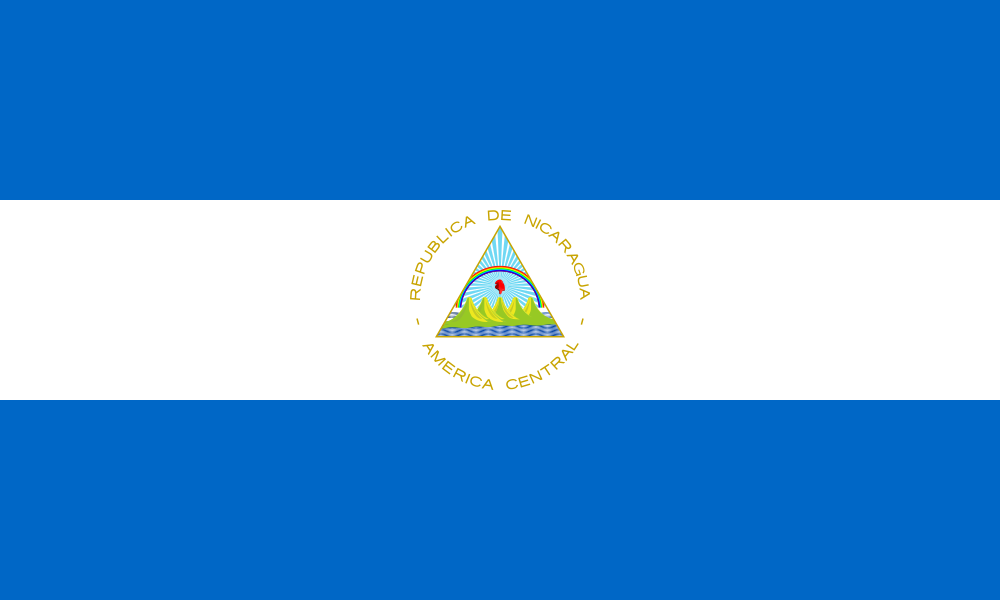
Nicaragua, known for its stunning landscapes, rich culture, and vibrant cities, offers travelers a diverse experience beyond its capital, Managua. Explore colonial towns, volcanic lakes, and pristine beaches.
Neil Palmer (CIAT) · CC BY-SA 2.001
The best time to visit Nicaragua is during the dry season from November to April, when the weather is pleasant and ideal for outdoor activities.
From November to April, this season offers sunny days and minimal rain, perfect for outdoor activities.
From May to October, expect heavy rainfall, especially in the afternoons, which can affect travel plans.
The months of April and November serve as transitions between the dry and wet seasons, offering mixed weather.
02
Pick the neighbourhood by how you want the day to start and end, not by distance to one museum.
A charming colonial city with colorful architecture and a vibrant atmosphere.
Popular among tourists, can be busy.
Known for its historical significance and stunning churches.
Less touristy than Granada.
A laid-back beach town famous for surfing and nightlife.
Can be crowded during peak season.
Famous for its vibrant markets and the Masaya Volcano.
Great for local crafts.
Known for its tobacco production and beautiful mountain scenery.
Quieter and more off the beaten path.
A unique island formed by two volcanoes in Lake Nicaragua.
Access requires a ferry ride.
A vibrant Caribbean town with a rich Afro-Caribbean culture.
Less accessible, requires a flight or boat.
A tropical paradise with stunning beaches and diving opportunities.
Requires a flight or boat from the mainland.
03
Everyday food, eaten the way locals do. Look for a busy place rather than a ranked list.
A traditional dish of rice and beans, often served for breakfast.
→ Try it at local eateries.
A popular dish made with yuca, pork, and cabbage salad.
→ Look for street vendors.
Nicaraguan tamales filled with meat and vegetables.
→ Best enjoyed on weekends.
A hearty tripe soup, often served at family gatherings.
→ Find it in local restaurants.
A popular snack of cheese wrapped in a tortilla with cream.
→ Great for a quick bite.
A seafood stew with coconut milk, popular on the Caribbean coast.
→ Best found in coastal areas.
04
An order that works on foot, with the trip out of the first city at the end.
A stunning park featuring an active volcano and diverse wildlife.
The largest lake in Central America, home to unique freshwater sharks.
A UNESCO World Heritage site and one of the largest cathedrals in Central America.
An island formed by two volcanoes, offering hiking and nature experiences.
Explore the beautifully preserved colonial buildings in Granada.
A popular beach destination known for surfing and sunsets.
Famous for volcano boarding and adventure activities.
A stunning crater lake perfect for swimming and relaxation.
A bustling market known for local crafts and food.
Experience the unique culture and music of the Caribbean coast.
A beautiful river offering boat tours and wildlife viewing.
A historic fortress with stunning views of the Río San Juan.
05
Airport to city, across the city, and onward to the next region.
Nicaragua is served by Augusto C. Sandino International Airport (MGA) and Corn Island Airport (RNI).
Buses are a popular and affordable way to travel between cities and towns.
Taxis are widely available in urban areas and can be hired for short distances.
Renting a car provides flexibility for exploring remote areas.
Ferries connect the mainland to Ometepe Island and the Corn Islands.
06
Type A and B plugs are used, with a standard voltage of 120V.
The currency is the Córdoba; credit cards are accepted in larger establishments.
Tipping is customary, usually around 10% in restaurants.
Spanish is the official language; English is spoken in some tourist areas.
A travel eSIM covers maps and tickets after landing.
A week is recommended to explore the main attractions.